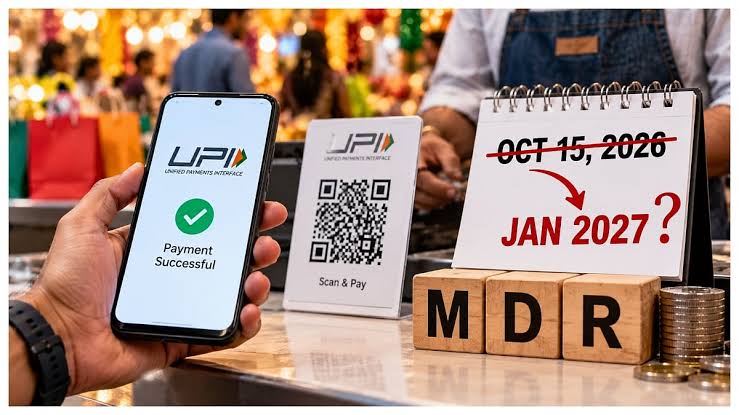
The Union Government and the National Payments Corporation of India (NPCI) are reportedly considering postponing the implementation of the Merchant Discount Rate (MDR) on large Unified Payments Interface (UPI) transactions by a few months.
Initially slated to go into effect on October 15, the new merchant fee framework could now be deferred until January, according to industry sources cited by Reuters. A final decision by the NPCI is expected in the coming days.
Reasons Behind the Potential Delay
Sources indicate that postponing the launch would serve two primary purposes:
- System Readiness: Giving payment aggregators and fintech companies adequate time to update and test technical infrastructure.
- Festive Season Relief: Avoiding disruption to consumer spending and merchant operations during India’s peak festive shopping period, following widespread pushback and “No UPI Day” protests organized by trade associations across several cities.
How the Proposed UPI MDR Framework Works
The legal groundwork for the charges was established following parliamentary approval of the Taxation and Other Laws (Amendment) Bill, 2026, which amended Section 10A of the Payment and Settlement Systems Act, 2007.
Under the notified structure, merchant transactions (P2M) exceeding ₹2,000 will attract fees:
- Flat ₹5 Fee Category: A fixed MDR of ₹5 per transaction applies to four specific high-frequency sectors—Railways, Telecom Services, Insurance, and Fuel stations—regardless of the transaction amount.
- 0.4% Variable MDR Category: All other commercial merchants receiving UPI payments above ₹2,000 will incur a 0.4% charge on the total transaction value, capped at ₹300 per transaction.
Who Remains Exempt?
To ensure everyday consumer transactions remain frictionless, four payment categories are completely exempted from MDR charges:
- Person-to-Person (P2P) transfers between individuals.
- All Person-to-Merchant (P2M) payments up to ₹2,000.
- Small vendors receiving up to ₹1 lakh a month (P2PM category).
- All RuPay debit card transactions.
If approved, the extension will provide temporary breathing room for retail merchants while payment networks finalize technical integration.