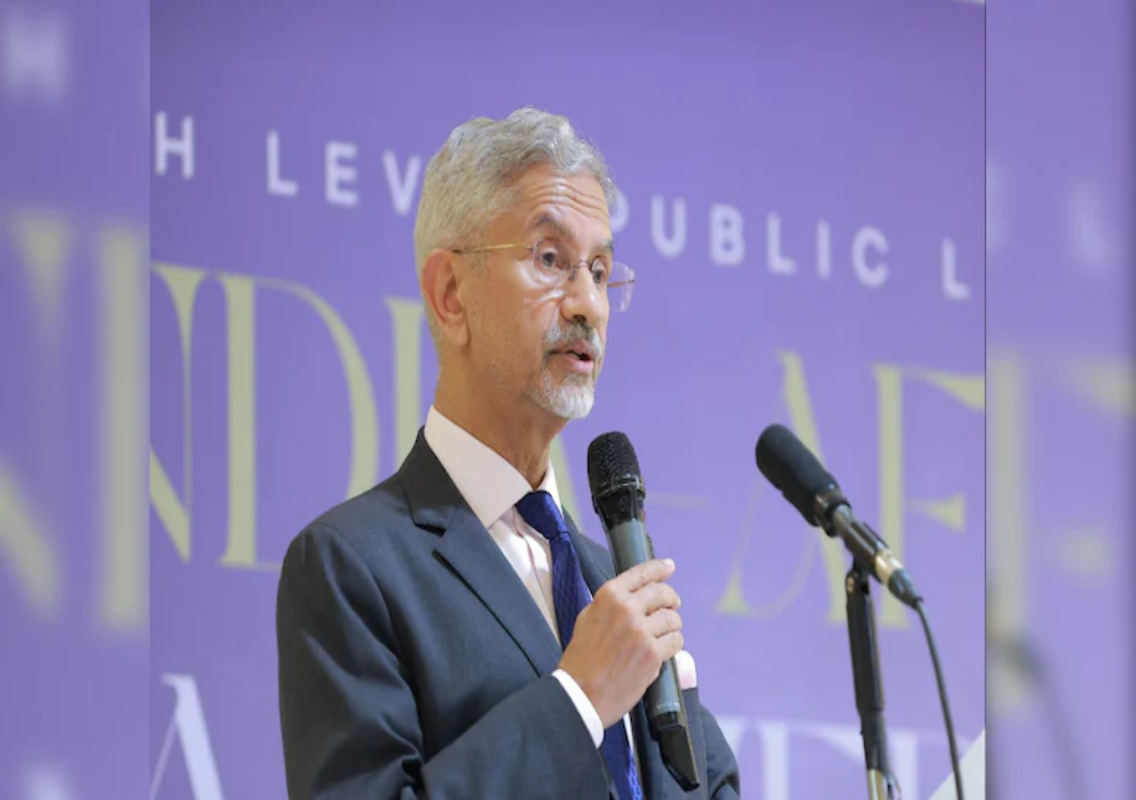
Addis Ababa: External Affairs Minister S Jaishankar has called for deeper cooperation between India and African nations in trade, artificial intelligence (AI), healthcare, infrastructure and skills development, highlighting the importance of a partnership based on shared development priorities and greater representation for developing countries in global institutions.
Speaking at Ethiopia’s Adwa Memorial Museum on October 9, 2026, during the final leg of his three-nation African tour, Jaishankar said India and Africa shared a history of resistance to colonialism and a common aspiration to determine their own development paths.
He emphasised that the relationship should go beyond traditional diplomacy to create jobs, develop local capabilities and support industrialisation across both regions.
India-Africa bilateral trade is nearing $100 billion, reflecting the expanding economic relationship between the two sides. Indian companies have invested in African markets across manufacturing, telecommunications, pharmaceuticals, energy, mining and financial services.
Jaishankar also highlighted India’s development cooperation across the continent, including projects in electricity, water supply, agriculture, railways, healthcare and public infrastructure.
The minister’s remarks come as India seeks to deepen its engagement with African countries amid changes in global trade, technology and geopolitical relationships.
Trade and investment form the foundation
Trade remains one of the central pillars of India-Africa relations. The two sides have developed commercial links across a wide range of sectors, including pharmaceuticals, energy, agriculture, manufacturing, telecommunications and information technology.
Indian businesses have established a presence in several African markets, while African countries offer opportunities for Indian companies seeking new customers, investment destinations and supply-chain partnerships.
Jaishankar stressed that economic cooperation should support industrialisation and help countries build productive capabilities. He cautioned against approaches that undermine domestic industries, whether through markets being flooded with cheap goods or through restrictions that prevent countries from accessing international markets.
The emphasis reflects a broader development challenge faced by many emerging economies: balancing international trade with the need to create local employment, build manufacturing capacity and move towards higher-value economic activity.
For India and African countries, stronger commercial ties could support manufacturing, improve access to technology and help businesses enter new markets. However, translating opportunities into sustainable growth requires investment, reliable infrastructure, skills development and predictable trading conditions.
Bilateral trade approaching $100 billion provides a substantial foundation, but further expansion will depend on the ability of both sides to diversify trade, strengthen logistics and develop partnerships that benefit local economies.
More than 220 development projects supported
Jaishankar highlighted India’s development partnership with African nations, saying India had supported more than 220 projects across the continent.
The projects cover areas such as power generation, electricity transmission, water supply, agriculture, railways, healthcare and public infrastructure.
India has described its approach as demand-driven, with projects designed around the priorities identified by partner countries. The objective is to support development while strengthening local capacity and allowing countries to build expertise and infrastructure suited to their needs.
Infrastructure development is particularly important for economic growth. Reliable electricity, improved transport networks and access to water can support businesses, agricultural production and the delivery of public services.
Healthcare infrastructure can help improve access to treatment, while agricultural projects can support productivity and rural livelihoods. Railway and other transport investments can also improve connectivity between production centres, markets and ports.
The effectiveness of such cooperation depends on the implementation of individual projects, their long-term maintenance and their ability to deliver lasting benefits.
Jaishankar’s comments placed these development initiatives within a wider partnership aimed at helping African countries strengthen their own capabilities rather than depend solely on external assistance.
AI and digital technology emerge as key areas
Technology is becoming an increasingly important part of India-Africa cooperation, particularly as governments look to expand access to public services and modernise their economies.
Jaishankar identified digital infrastructure, electronic payments, financial inclusion, space technology, drones and artificial intelligence as areas offering scope for closer collaboration.
India’s experience with digital public infrastructure could provide useful lessons for African countries seeking to expand digital payments and improve access to government services.
Digital platforms can help connect citizens with financial services, reduce barriers to transactions and make public services more accessible. However, the results depend on connectivity, affordability, digital literacy and appropriate safeguards for users.
AI could also support sectors such as agriculture, healthcare, education and public administration. Applications may include analysing agricultural conditions, assisting medical professionals, improving administrative processes and making information more accessible.
For cooperation to produce lasting benefits, countries will need to develop local technical skills, reliable digital infrastructure and appropriate governance frameworks.
Jaishankar’s emphasis on technology reflects the view that India and African countries can work together not only as consumers of technology but also as partners in developing solutions suited to their own economic and social needs.
Healthcare and affordable medicines remain priorities
Healthcare is another major area of cooperation between India and Africa.
Jaishankar highlighted India’s role in supplying affordable medicines and supporting healthcare needs across the continent. During the COVID-19 pandemic, India supplied more than 40 million vaccine doses to 42 African countries, according to figures cited in his remarks.
India has long been an important supplier of generic medicines to international markets. Its pharmaceutical industry offers opportunities for cooperation in medicine supply, manufacturing, training and healthcare delivery.
Jaishankar called for greater pharmaceutical manufacturing in Africa to improve access to medicines and strengthen local production capabilities.
Expanding local manufacturing could help African countries build more resilient supply chains, develop specialised skills and reduce dependence on imported products for some healthcare needs. Such efforts would require investment in manufacturing facilities, regulatory systems, quality assurance and trained personnel.
Cooperation in healthcare can also extend to medical education, hospital infrastructure, public health programmes and the exchange of professional expertise.
The wider objective is to combine India’s pharmaceutical and technical capabilities with African countries’ own development priorities and healthcare requirements.
Skills development and education strengthen long-term ties
Capacity building is another longstanding feature of India’s engagement with African countries.
Jaishankar said more than 70,000 African students and professionals had benefited from India’s training and education initiatives over the past decade.
These programmes provide opportunities for students and professionals to acquire knowledge and technical skills that can be applied in their home countries.
Training and education can support a range of sectors, including healthcare, information technology, public administration, agriculture and manufacturing. They can also help build institutional capacity by strengthening the expertise available within government agencies and local organisations.
As African economies seek to expand manufacturing and adopt new technologies, demand for specialised skills is likely to remain important.
The benefits of training programmes depend on whether participants can apply their knowledge in practical settings and whether institutions have the resources to sustain new capabilities.
For India, education and professional exchanges also strengthen people-to-people connections, helping build long-term relationships between businesses, universities, government institutions and communities.
Jaishankar calls for fairer global representation
Beyond economic cooperation, Jaishankar called for India and African countries to have a stronger voice in international institutions.
He argued that developing countries should receive fairer representation in global decision-making, including at the United Nations Security Council.
India has consistently supported reform of the UN Security Council, arguing that its structure should reflect contemporary geopolitical and economic realities rather than remain based primarily on the balance of power that existed when the institution was established.
African countries have also called for greater representation in global governance, including through the African Union’s position on Security Council reform.
Jaishankar’s remarks underline a shared interest in ensuring that developing countries have a greater role in decisions affecting international peace, security, trade and economic development.
The inclusion of the African Union as a permanent member of the G20 during India’s presidency in 2023 was an important development in the broader effort to strengthen Africa’s representation in international economic discussions.
India and African nations can use their cooperation in multilateral forums to advocate for reforms and raise concerns affecting developing economies.
Ethiopia visit concludes three-nation African tour
The address at the Adwa Memorial Museum formed part of Jaishankar’s visit to Ghana, Côte d’Ivoire and Ethiopia.
During the Ethiopia leg, he also held talks with Ethiopian Foreign Minister Gedion Timothewos. Discussions covered trade, investment, infrastructure, maritime security, technology and cultural ties.
The three-nation tour was aimed at strengthening India’s relationships with African partners and expanding cooperation in areas ranging from commerce and development to technology and capacity building.
India’s engagement with Africa has become increasingly important as both sides seek diversified partnerships in a changing global environment. Trade, digital technology, healthcare and industrial development offer opportunities to build cooperation that extends beyond conventional diplomatic relations.
The challenge ahead will be to convert policy discussions and existing partnerships into measurable outcomes, including stronger trade flows, effective development projects, local employment and greater technical capacity.
Jaishankar’s message was that India and Africa share a common interest in shaping their development paths, strengthening economic resilience and securing a more influential role for developing countries in global affairs.