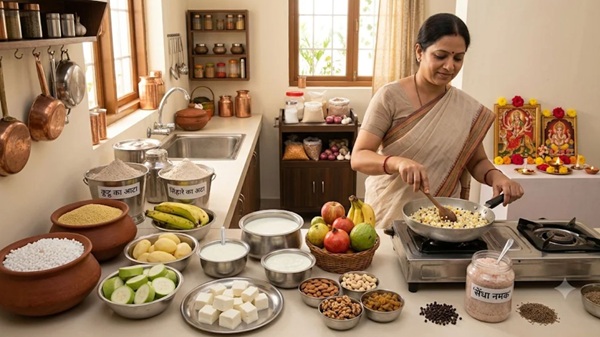
New Delhi. The festival of Navratri is considered special for the worship and worship of Maa Durga. During this time, a large number of devotees observe fast as per their faith and capacity. Some people fast on fruits for the entire nine days, while many devotees observe fast on the first and last days. Along with observing fast, taking care of purity and goodness in food is also a part of the prevalent religious tradition.
Those fasting during Navratri often have a question in their mind as to which things can be eaten and which should be avoided. Let us know the complete list of food items used in fasting and things considered prohibited.
What can you eat during Navratri fast?
1. Flour and grains used in fruit diet
During the fast, some alternative food items are consumed instead of the normal wheat and rice. These include:
buckwheat flour
water chestnut flour
Rajgira flour
Sago
sama rice
Puri, roti, khichdi, kheer and other dishes can be made from these for fasting.
2. Vegetables eaten during fasting
Many vegetables are traditionally consumed during Navratri fast. These include pumpkin, gourd, cucumber, potato, taro, yam, carrot and sweet potato. Tomato and ginger are also used in many families.
3. Milk and milk products
Milk, curd, cheese, mawa, buttermilk, lassi, butter and desi ghee can be consumed during the fast. They are also used in making fruit dishes.
4. Seasonal fruits
Fruits are a major part of the diet during fasting. Devotees can consume fruits like apple, banana, pomegranate, papaya and orange as per their choice and availability.
5. Dry fruits and nuts
Dry fruits and nuts are also eaten for energy during the fast. These include raisins, almonds, cashew nuts, makhana, walnuts and peanuts.
6. Use of salt and spices
There is a tradition of using rock salt instead of ordinary salt during fasting. Black pepper, cumin, green chilli, coriander and small cardamom are also used in many vrat dishes.
What things should be avoided during Navratri fast?
1. Wheat, rice and other common grain items
Wheat, normal rice, semolina, flour, oats and gram flour are generally not consumed during fruit fast. In many traditions all types of pulses are also avoided.
2. Packaged and processed foods
During the fast, it is advised to avoid packaged juices, processed snacks and sauces or ketchup available in the market. Before consuming any packaged product, check its ingredients and whether it is suitable for fasting.
3. Common salt and some spices
During fasting, rock salt is used instead of normal salt. In many traditions, turmeric, red chilli, garam masala, coriander powder, asafoetida and mustard are also not consumed. These rules may vary according to family and region.
4. Onion and Garlic
Onion and garlic are associated with Tamasic food during Navratri. Therefore, many devotees do not consume them not only during the fast but also for the entire nine days.
5. Non-vegetarian and alcohol
According to religious traditions, meat, fish, eggs and alcohol are avoided during Navratri. Many devotees take a pledge to eat satvik food for the entire nine days.
Keep these things in mind while fasting
The rules for fasting during Navratri are not the same in all regions and communities. Therefore, choose food according to your family tradition, religious beliefs and type of fast. Also, do not let your body lack water and eat fruits according to your health. If a person takes regular medications or has any kind of health problem, it is advisable to seek medical advice before fasting.
Disclaimer: This content is based on religious beliefs, prevalent traditions and available religious sources. The rules of fasting may vary according to different regions, communities and traditions. Consider this as general religious information.