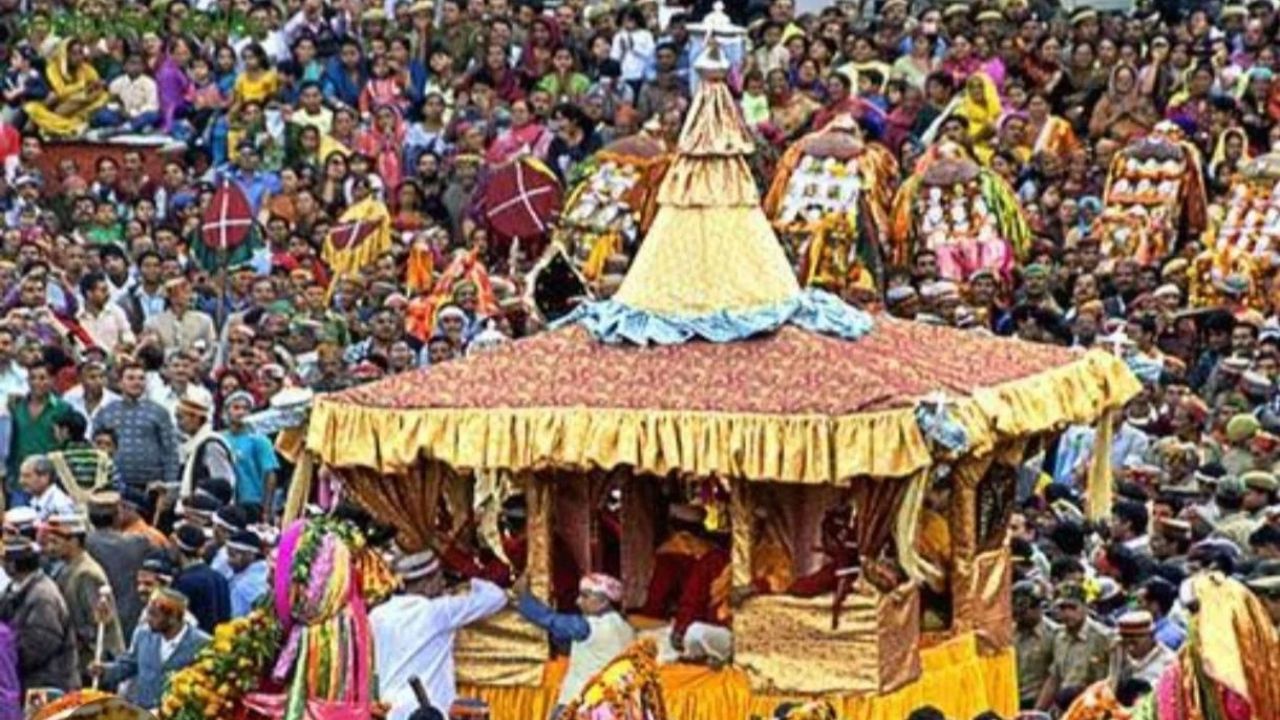
If you want to see a unique sight of the power of faith in the Devbhoomi of Himachal Pradesh, then International Kullu Dussehra is the biggest example of it. The arrival of Gods and Goddesses here not only means participating in a religious event, but also keeping the age-old traditions alive. This is the reason why many deities from Ani and Nirmand areas of Bahya Saraj will travel a distance of 150 to 200 kilometers on foot to participate in Kullu Dussehra. Despite the inaccessible hilly roads, long halts and difficult journey, the enthusiasm of the Dev Samaj makes this event special.
This time, invitations have been sent to 347 gods and goddesses for the International Kullu Dussehra to be organized at the historical Dhalpur grounds from 21st to 27th October. In the year 2025, 332 gods and goddesses were invited. This time, amidst the increased numbers, Dhalpur will once again witness a huge confluence of the rich divine culture of Himachal. The special thing about the event is that unlike other parts of the country, Dussehra is not limited to Ravana Dahan. Rath Yatra of Lord Raghunath, participation of Gods and Goddesses and traditional activities of Dev Samaj give it a distinct identity. The long journey of the gods and goddesses coming from Bahya Saraj further increases the religious and cultural importance of this festival.
Distance is no obstacle in the path of faith
The deities of Ani and Nirmand areas have to cover long distances to participate in Kullu Dussehra. The distance from some temples to Kullu is said to be 150 to 200 kilometers. In such a long journey, along with the deity, Devlu, Karkoon and other people associated with the Dev traditions also become a part of the journey. This travel is not just a medium to reach from one place to another. Local beliefs, traditional customs and collective participation of the Dev Samaj are associated with it.
Also read: Boiling in Chamba after the remains of cows were found, market was closed and road was blocked.
During the journey, stopping at designated stops, offering prayers and preparing for the further journey are part of this entire process. This journey is not easy due to the hilly geography. The length of the routes, uncertainty of the weather and maintaining arrangements during the journey can be a big challenge. Despite this, Dev Samaj remains ready to fulfill its traditions every year.
347 gods and goddesses invited, scope of event increased
This year the Dussehra festival committee has invited 347 gods and goddesses. Last year this number was 332. In this way the number of deities receiving invitation has increased by 15. About 15 to 20 gods and goddesses from Ani-Nirmand area are likely to participate in the festival. According to the details related to the event, about 25 to 30 percent of the total deities are those who have to cover a distance of 100 kilometers or more. The process of deities reaching Kullu is expected to start from October 20. With this, the beauty of the temporary camps in Dhalpur grounds will start increasing. In this event which will last for seven days, Devlu and Karkoon will stay in camps with their worshipers and will perform worship and traditional activities in the morning and evening.
Also read: Sukhu government is going through the test of coordination between government, organization and public.
The vibrant tradition of Dev Samaj descends in Dhalpur.
The biggest feature of Kullu Dussehra is that the Dev culture here is not limited to just stages, exhibitions or cultural programs. The chariots of the Gods and Goddesses, the Devlu accompanying them and the tunes of traditional musical instruments bring this culture to the fore. The gathering of Gods and Goddesses from different regions in Dhalpur is also important from the social and cultural point of view.
People coming from different valleys and villages participate in the same event. This provides an opportunity to strengthen traditional ties and connect the new generation with their cultural heritage. For the people who believe in the Dev tradition, this event is an opportunity to express reverence to their idol, while for the tourists it is a medium to understand the unique folk culture of Himachal closely.
Dussehra is linked to 366 years old tradition
The tradition of celebrating Dussehra in Kullu in the honor of Lord Raghunath dates back to the year 1660. According to the belief, after the tragic death of Brahmin Durga Dutt during the reign of Raja Jagat Singh, the king sought refuge with Siddhaguru Krishnadas Payahari for atonement. According to traditional accounts, on his instructions Damodar Das Gosain brought the idols of Lord Rama and Sita from Ayodhya to Kullu.
On the occasion of Ashwin Shukla Dashami, Yagya was performed under the chairmanship of Lord Raghunath. This tradition is linked to the beginning of Kullu Dussehra. According to Danvendra Singh, Kardar of Lord Raghunath, Dussehra is being celebrated in Kullu since the year 1660. In this sense, 366 years of this tradition are being completed in the year 2026. The form of the festival has broadened with time, but reverence for Lord Raghunath and the participation of gods and goddesses remains its core identity.
Also read: Hamirpur Medical College ragging case, 7 senior students under investigation
The market will be decorated with 2,500 shops, expected business of Rs 300 crore
Kullu Dussehra also has its identity as a big trade fair along with religious event. This time, during the festival, more than 2,500 shops are expected to be decorated and a business of around Rs 300 crore is expected. Traders from different parts of the country reach here. Various types of goods ranging from clothes, utensils, household items etc are purchased in the fair. This is a big market for traders, while local shopkeepers and small businessmen are also likely to benefit from the increased footfall of customers.
The increase in the number of tourists during Dussehra also boosts business related to hotels, transport, catering and other tourism services. Thus, organizing Dhalpur becomes important not only for religious faith but also for the local economy. Although the turnover is estimated at Rs 300 crore, it should not be considered as the final figure of the actual turnover. The actual economic activities can be assessed only after the festivities are over.
Big attraction for tourism too
International Kullu Dussehra gives an opportunity to tourists from India and abroad to get acquainted with the cultural diversity of Himachal. The Rath Yatra of Lord Raghunath and the gathering of a large number of gods and goddesses makes this event different from other fairs. Tourists come here not only to see the natural beauty, but also want to understand the traditions of Himachal, which are still a part of the life of the local society. Decoration of god chariots, traditional costumes, musical instruments and religious rituals give a special identity to the festival. The long journey of the Gods and Goddesses coming from Ani and Nirmand is an important aspect of this cultural heritage. This shows how much importance the local society gives to its traditional beliefs and collective participation even in modern times.
Confluence of faith, culture and business will be visible for seven days
The International Kullu Dussehra to be held from 21st to 27th October will once again bring together Dev Samaj, local people, traders and tourists on one platform. The invitation to 347 gods and goddesses, the long journey of the deities coming from outside Saraj and the preparations for a large trade fair underline the comprehensive nature of this event. The specialty of Kullu Dussehra is not just its grandeur, but the tradition that has been connecting people for generations. The gods and goddesses who travel a distance of 200 kilometers from Ani and Nirmand bring forward that aspect of this festival where faith, tradition and collective belief are more important than distance.