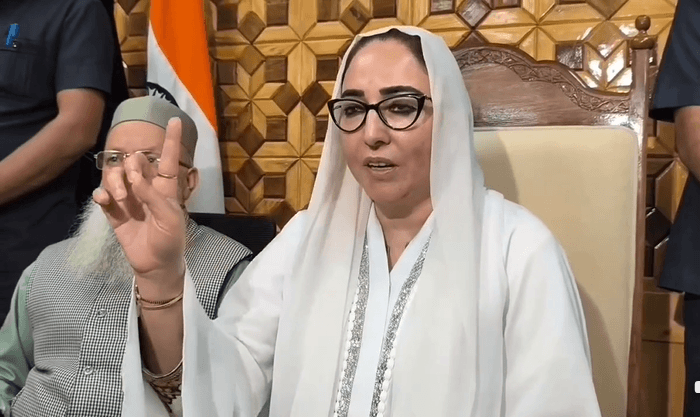
Chairperson of J&K Waqf Board Darakhshan Andrabi interacting with media persons.social media
A massive controversy has erupted in the Union Territory of Jammu and Kashmir over a proposal to introduce coordinated themes for Friday sermons at mosques and shrines across the region. The proposal has triggered a fierce political and religious row, with Chief Minister Omar Abdullah, the Peoples Democratic Party (PDP) and Mirwaiz Umar Farooq accusing the J&K Waqf Board of interfering in matters of faith.
Although J&K Waqf Board Chairperson Syed Darakhshan Andrabi clarified that the Board had issued no order making uniform Friday sermons mandatory, the proposal has sparked sharp reactions from political leaders and religious organisations.
Reports suggest that the Board was considering a mechanism under which Khutbas (Friday sermons) at thousands of mosques, shrines and religious institutions under its jurisdiction would focus on pre-selected themes approved by a committee of Islamic scholars.
These themes would address issues such as drug abuse, youth alienation, rising suicide rates, family disputes, delayed marriages and moral decline. If implemented, J&K would become the first region in the country to undertake such an exercise on this scale.
Even before any formal notification was issued, the proposal drew widespread criticism. Opponents described it as an unprecedented intrusion into religious affairs, arguing that the content of sermons falls within the domain of Ulema, Imams and recognised Islamic institutions, rather than a statutory body operating under government oversight.
Chief Minister Omar Abdullah led the political opposition to the proposal. In a strongly worded post on X, he described the move as an unacceptable attempt by the BJP to interfere in the religious affairs of Muslims. He demanded that the “BJP-appointed” Waqf Board chairperson immediately abandon the initiative, alleging that it was intended to please political masters rather than address genuine religious or social concerns.
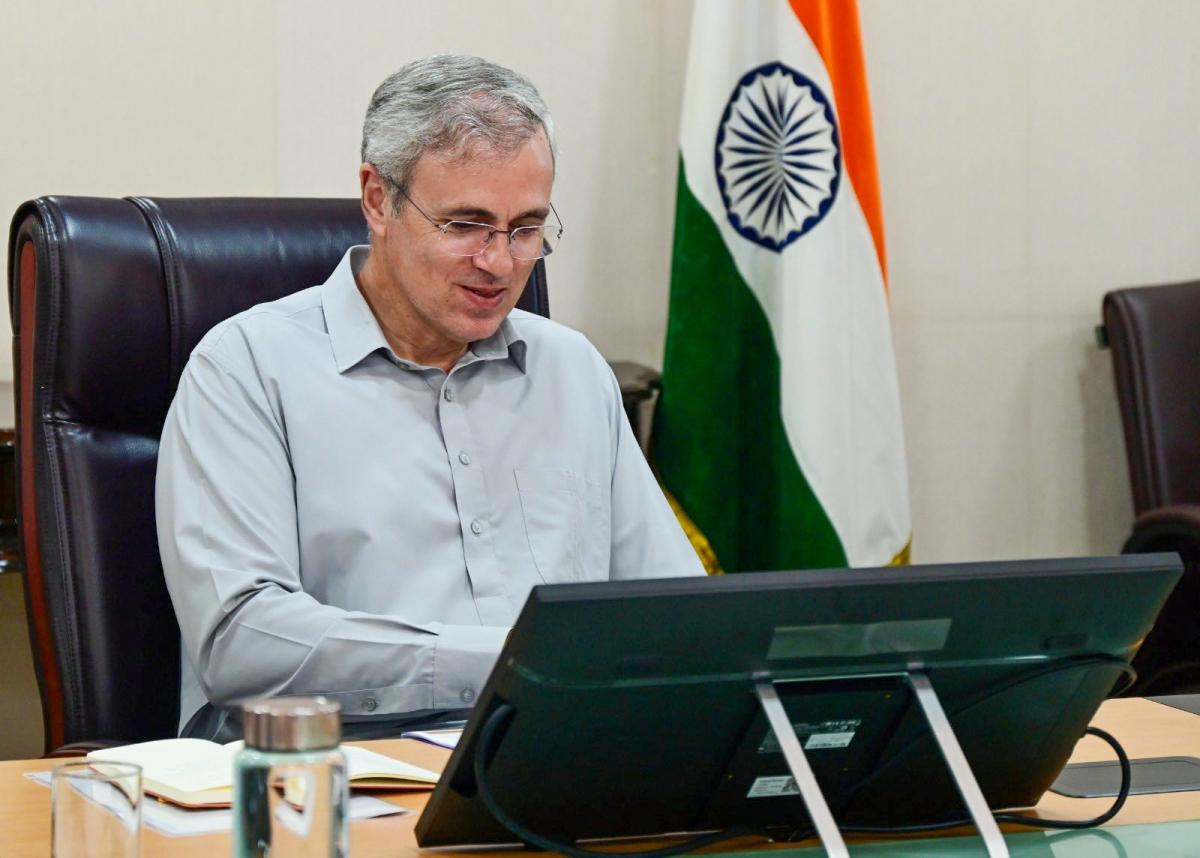
Omar AbdullahIANS
PDP president Mehbooba Mufti also opposed the Waqf Board’s reported move to introduce uniform Friday sermons, alleging interference in Muslim religious affairs. Speaking in Srinagar, she questioned the Board’s authority to prescribe sermon topics and demanded that the Waqf Board be brought under the control of the J&K Government.
The sharpest reaction came from the Mutahida Majlis-e-Ulema (MMU), an umbrella body headed by Mirwaiz Umar Farooq. It dismissed the proposal as “ridiculous”, asserting that the Mimbar (pulpit) is an Amanah (sacred trust) over which no state or government-linked body can claim authority.
The MMU drew a distinction between religious scholars voluntarily coming together to address social concerns and an administrative body prescribing themes or language for Friday sermons. The latter, it argued, would amount to forced state interference in religious affairs and violate constitutional guarantees of religious freedom. It advised the Waqf Board to concentrate on managing and protecting Waqf properties rather than courting controversy through what it described as a “devious agenda”.
Waqf Board Chairperson Dr Darakhshan Andrabi maintained that no directive had been issued and attributed the controversy to a misunderstanding of her remarks during a recent press briefing. She clarified that the intention was not to impose centrally drafted sermons but to encourage religious scholars and imams to collectively highlight pressing social issues.
According to Andrabi, Imams and Khateebs would retain the freedom to decide the content and manner of their sermons. She argued that a common message delivered simultaneously from multiple pulpits could have a greater impact on society.
Rejecting allegations that the initiative reflected the agenda of the BJP or the Rashtriya Swayamsevak Sangh (RSS), Andrabi accused political leaders of manufacturing a controversy to divert attention from their own failures. She also pointed out that Mirwaiz Umar Farooq himself had frequently used the pulpit to raise concerns about drug abuse and moral decline.
However, the clarification has failed to quell the controversy. With political leaders and influential religious figures opposing the reported proposal, what began as an administrative initiative has evolved into a broader confrontation over religious autonomy, state influence and the limits of government-linked institutions in matters of faith.