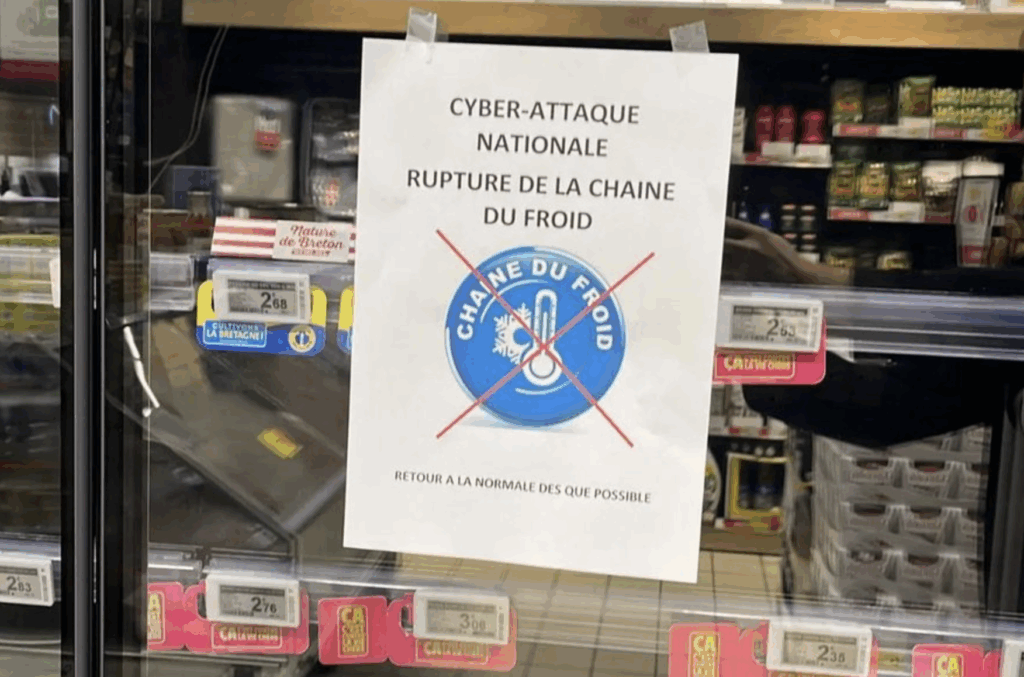
A major cyberattack targeting supermarket refrigeration systems across France has caused widespread food losses, disrupted store operations and raised serious concerns about the security of internet-connected devices. Hackers remotely manipulated refrigerators and freezers in hundreds of supermarkets, pushing temperatures as high as 50°C and causing fresh and frozen food to spoil. Some equipment also overheated enough to trigger fires.
The incident, which came to light earlier this week, has prompted a nationwide investigation and renewed scrutiny of cybersecurity vulnerabilities in essential infrastructure.
Hackers Turn Refrigerators Into Ovens
The attackers reportedly gained access to connected refrigeration controllers that allow supermarket staff and maintenance providers to monitor temperatures and manage equipment remotely.
By manipulating the systems’ defrost settings, the hackers caused refrigeration units to warm up instead of maintaining safe storage temperatures. In some cases, temperatures reportedly reached 50°C for several hours.
The resulting damage forced affected stores to discard large quantities of meat, frozen products and other perishable goods to prevent unsafe food from reaching consumers.
Intermarché, one of France’s major supermarket groups, warned that the financial damage could run into tens of millions of euros across the country in a single day.
Around 700 Supermarkets Affected
French authorities have estimated that approximately 700 supermarkets were affected by the incident. Stores belonging to major retail groups, including Carrefour, Intermarché, Monoprix and Coopérative U, were among those impacted.
The scale of the disruption highlights how a cyberattack targeting a seemingly ordinary piece of equipment can have significant consequences for businesses and supply chains.
Supermarkets rely on refrigeration systems to preserve food throughout storage and display. When those systems fail, retailers may need to close affected sections, discard products and arrange replacement supplies.
The attack has also raised concerns about whether similar vulnerabilities exist in other facilities that depend on connected refrigeration and temperature-control systems.
Outdated Software May Have Enabled the Attack
France’s national cybersecurity agency, ANSSI, is investigating the incident and has identified compromises involving refrigeration management systems from Danish company Danfoss and US-based Copeland, which owns the Dixell brand.
Some affected systems were running outdated software or had reached the end of their supported life, leaving them without security updates.
Cybersecurity researchers had previously identified vulnerabilities in certain refrigeration controllers that could allow attackers to bypass normal authentication and change temperature settings remotely.
Investigators are examining how the attackers gained access and whether the systems were unnecessarily exposed to the public internet.
No individual or group has publicly claimed responsibility, and the motive remains unknown. Authorities have not ruled out different possibilities, including deliberate disruption.
France Warns Businesses About Connected Device Security
French authorities have described the incident as a warning for businesses that depend on internet-connected operational technology.
The attack demonstrates that cybersecurity risks are not limited to computers, smartphones and corporate networks. Industrial controllers, refrigeration units, building-management systems and other connected devices can also become targets.
Experts recommend keeping supported systems updated, replacing obsolete equipment and preventing operational technology from being directly accessible through the public internet. Remote access should be protected through secure networks, strong authentication and carefully controlled permissions.
The incident also highlights the importance of checking whether third-party maintenance providers follow appropriate cybersecurity practices.
Could Similar Attacks Affect Other Countries?
Reports have indicated that refrigeration-related cyber incidents may have affected other European countries as well, although investigators are still determining whether the cases are connected.
The broader concern is that supermarkets, warehouses and food distribution centres increasingly depend on digitally connected equipment. A compromised controller could cause physical damage and interrupt operations without requiring attackers to steal customer data.
For businesses, the lesson is clear: cybersecurity must cover operational equipment as well as conventional IT systems.
Summary
A cyberattack on supermarket refrigeration systems in France affected approximately 700 stores, causing temperatures to rise as high as 50°C and forcing retailers to discard perishable food. Some equipment also caught fire. Authorities are investigating vulnerabilities involving refrigeration controllers, including outdated systems. No group has claimed responsibility, and the motive remains unknown. The incident has renewed calls for stronger security across internet-connected industrial equipment.
Image Source