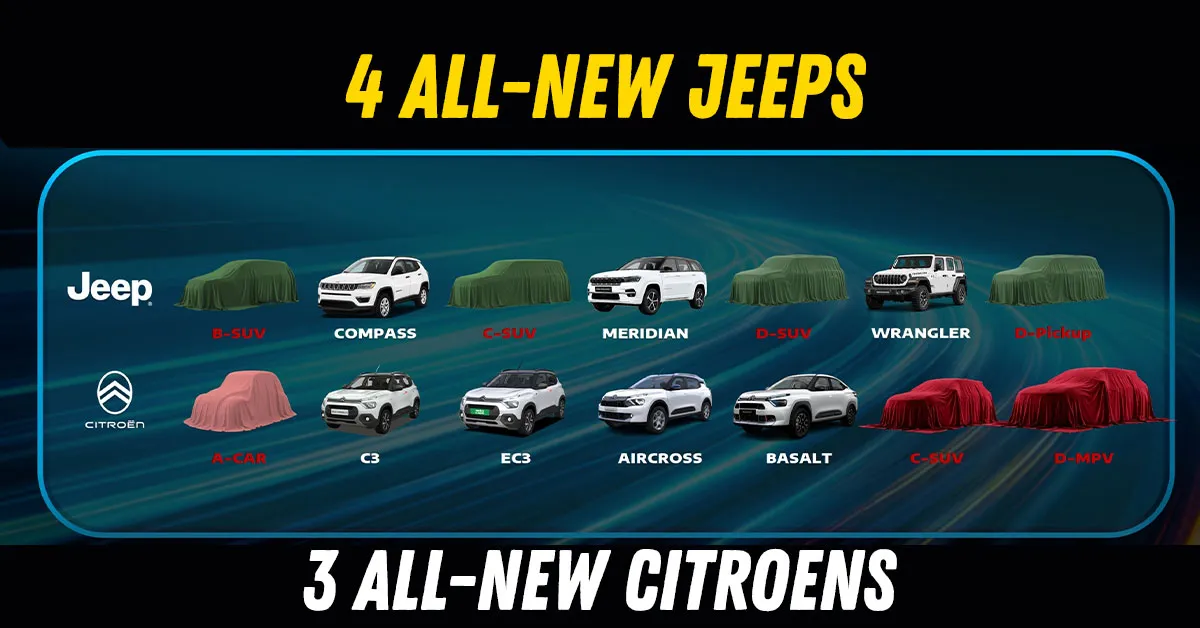
Stellantis has announced a fresh investment of approximately Rs. 4,000 crore (about 400 million Euros) in India, with its Jeep and Citroen brands set to introduce 12 products over the next three years under the FaSTLAne 2030 strategy. The roadmap includes seven all-new vehicles (four all new Jeeps, 3 all new Citroens) and five major upgrades. The first launch scheduled for the second quarter of 2027.
The investment will take Stellantis’ cumulative investment in India to approximately Rs. 15,000 crore by 2030. While Jeep will strengthen its presence in the premium SUV segment, Citroen will focus on expanding into higher-volume segments with more affordable products.
Jeep’s product offensive will include five launches, four of which are expected to be all-new vehicles. The entry-level offering will be a B-segment SUV positioned below the Compass. This could give Jeep access to a much larger customer base in India, where compact SUVs account for a significant share of passenger vehicle sales. The new SUV will use the ARGOS platform shared with the Tata Sierra.
The second new model is expected to be an all-new C segment SUV. It will be followed by an all-new D-segment, three-row SUV.
Jeep is also expected to introduce a pickup truck based on the new SUV architecture. This would expand the brand’s portfolio beyond conventional SUVs and potentially give it a new offering for lifestyle vehicle buyers.
The three other Jeep launches will be a major upgrades to existing models. The Compass and Meridian are expected to receive turbo-petrol engines sourced from Tata Motors, an arrangement that has already been announced. These engines could help Jeep improve the affordability and appeal of its SUVs in a market where diesel’s dominance in larger vehicles faces increasing competition from petrol powertrains. The Wrangler range is expected to be revised, following global updates to the flagship 4X4 SUV.
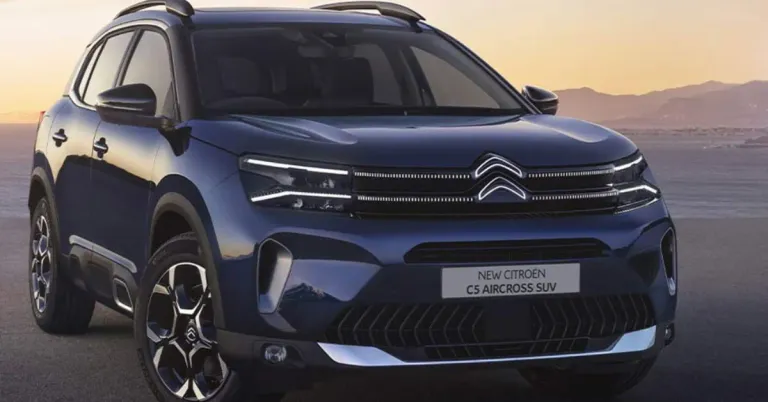
Citroen will account for five launches, including three all-new products and two facelifts or upgrades of existing models.
The first new model is expected to be an entry-level car positioned below the C3. This could help Citroen enter a more affordable segment and attract buyers who currently consider entry-level hatchbacks and compact cars.
The second is expected to be a new C-segment SUV, potentially taking on rivals such as the Mahindra XUV 7XO. A new Citroen MPV is also anticipated, with the Toyota Innova Hycross emerging as a potential rival, depending on its final size, positioning and powertrain.
The remaining two Citroen launches will comprise facelifts of existing models. These updates should help the brand keep its current range competitive while the all-new products expand its reach.

Stellantis says its future portfolio will follow a multi-energy strategy covering petrol and other internal combustion engines, hybrids, plug-in hybrids and battery-electric vehicles. The actual powertrain choices will depend on affordability, regulations, infrastructure and customer demand. The idea is to give people powertrain choices they can comfortably live with rather than forcing them to buy a specific powertrain.
The company is also targeting 90% localisation across Jeep and Citroen, while expanding its sales and service network, particularly in smaller cities. India will continue to serve as a manufacturing and export hub, with the company currently exporting vehicles and components to international markets.
With the new product blitz beginning next year, Stellantis’ factories at Tiruvallur, Hosur and Ranjangaon will be buzzing for the next 3 years. This could not only help the group achieve good volumes and profitability but also make the Indian operation a strategic pillar in the car maker’s global scheme of things.