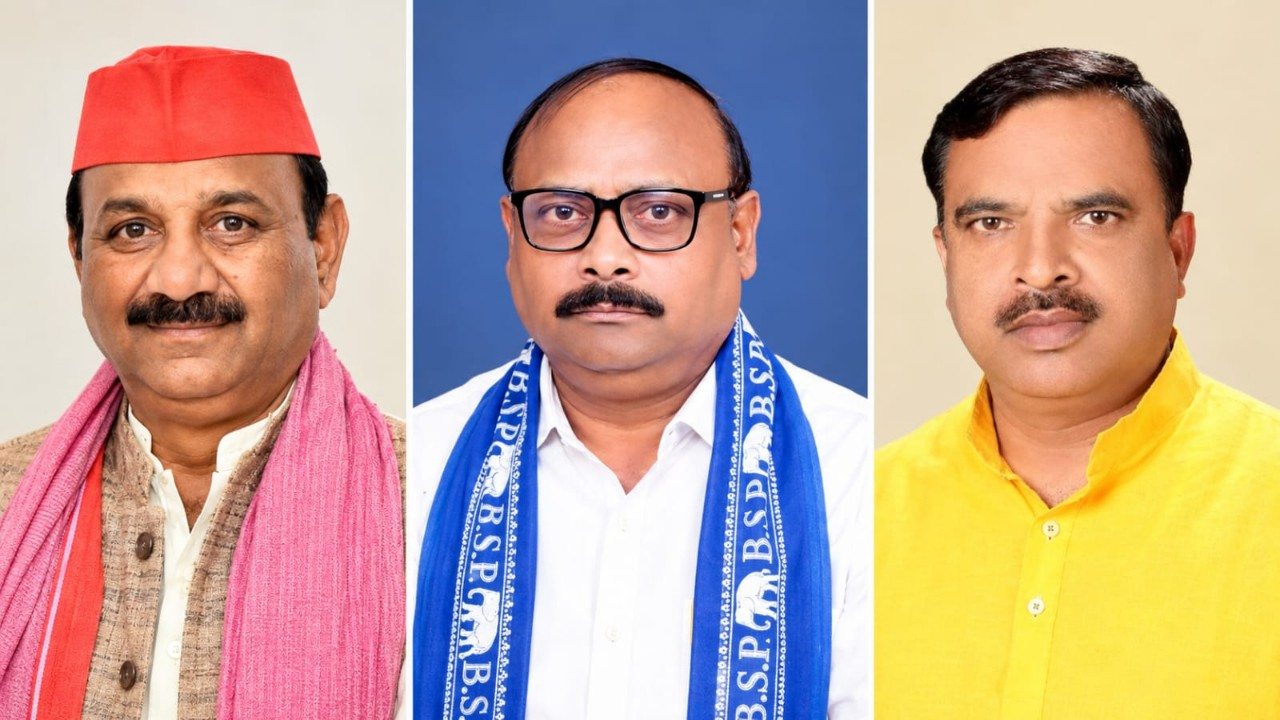
Lucknow. The political battle to strengthen caste equations has intensified before the 2027 assembly elections in Uttar Pradesh. After Yadav and Kurmi community, now political parties have also set their sights on Pal, Baghel and Dhangar communities. The reason is clear, this society has presence in many districts of the state and its voters have the ability to influence the election results in about 35 to 40 assembly seats. In such a situation, all three BJP, SP and BSP are working on the strategy of uniting this society with themselves. It is not enough to understand the politics of Pal society from population figures alone. The real question is which party gets the support of this society, which leader becomes its political voice and in which area its voters can change the course of the electoral contest. This equation can play an important role in many seats in the 2027 elections.
There are different estimates regarding the population of Pal, Baghel, Dhangar and Gadaria communities in Uttar Pradesh. According to an estimate, the combined population of these communities is considered to be about 3 to 4 percent of the total population of the state. The political importance of this society increases because the margin of victory and defeat in many assembly constituencies remains less. In such a situation, even a few thousand voters of a community can prove to be decisive in the electoral contest. The influence of Pal society is reported in Braj, Rohilkhand and Bundelkhand as well as in districts like Kanpur Dehat, Etawah, Prayagraj, Auraiya, Jalaun, Jhansi, Lalitpur, Mahoba, Mirzapur, Aligarh, Hathras, Agra, Kannauj, Farrukhabad, Badaun, Bareilly and Moradabad. This society is also found in districts of Awadh like Fatehpur, Rae Bareli and Pratapgarh. There is presence of.
BJP has faces from ministers to MPs
BJP has tried to strengthen its hold among this community by giving place to the leaders of Pal community in the organization and government. Ajit Singh Pal was elected MLA from Sikandra assembly seat and is a minister of state with independent charge in the Yogi government. Ravendra Pal Singh is MLA from Chharra and Prempal Dhangar is MLA from Tundla. SP Singh Baghel is also among the prominent leaders coming from this community in the central government. He was elected Lok Sabha MP from Agra. At the same time, sending Prakash Pal to Rajya Sabha is also being seen as an effort to increase political representation among the society. BJP's strategy is not limited to only election tickets. It wants to retain this society with itself through responsibility in the organization, representation in the government and activism of leaders at the local level.
Also read: Bhadohi: Brijesh Singh's son Amit Singh will contest assembly elections, who is worried?
SP created the equation by putting Shyamlal Pal forward
SP is also trying to connect Pal community with its political base. The party gave this community a prominent place in the organization by giving the responsibility of state president to Shyamlal Pal. SP is trying to increase its support among the backward classes and challenge BJP on the front of caste equations. In the 2022 assembly elections, Samar Pal Singh won from Naugawan Sadat seat of Amroha on SP ticket. Pooja Pal also became MLA from Chail Assembly seat on SP ticket. Later Pooja Pal joined the BJP camp. This makes it clear that the political position of the leaders of Pal community has been changing with time and the support of this community has not been limited to any one party.
BSP bets on Vishwanath Pal
Pal community has also been an important political base for BSP. The party has tried to unite this community again in a strong way by giving the responsibility of state president to Vishwanath Pal. BSP's strategy is to increase its support base among the extremely backward classes and reactivate old social equations. Leaders of Pal community have a long association with BSP.
Former Prayagraj MLA Raju Pal was promoted by Mayawati in politics. After his murder, Pooja Pal became a prominent face in politics. With time, due to change of leaders' parties and formation of new political equations, the support of this community has been divided among different parties. In such a situation, the challenge before the BSP is to connect the old supporters back along with reaching out to the new voters. Vishwanath Pal's organizational role is being considered an important part of this strategy.
Pal community did not stay with anyone
To understand the political stance of Pal community, it is important to look at its changing electoral history. In the initial phase, a part of this community remained with the Congress. Later, with the rise of BSP, a section of its voters moved towards BSP. Later, BJP also increased its base in this society, while SP also kept getting support in different elections. That is, it would not be right to consider Pal society as a permanent vote bank of any one party. The candidate's image, local leadership, development issues, employment, social representation and party's election strategy can influence the voters' decision on different seats. This is the reason why BJP, SP and BSP are emphasizing on giving place to leaders of all three communities in the organization and increasing political representation. This competition is likely to intensify as the elections approach.
Also read: Azam Khan's troubles increase, new FIR against Johar University, Rs 416 crore unaccounted for
Who will have a stronger social equation in 2027?
In the politics of Uttar Pradesh, along with the big caste groups, the role of small and extremely backward communities can also be important in many seats. The effort to woo the voters of Pal, Baghel and Dhangar communities is part of this broader political strategy. While BJP wants to maintain support on the basis of its organization and participation in power, SP is trying to strengthen the broad alliance of backward classes. BSP is also trying to reactivate its old social base.
However, the decision regarding which party Pal Samaj will go with in 2027 has not been decided yet. Regional differences and local issues within the community will influence electoral attitudes. Victory cannot be ensured solely on the basis of caste equation, but this equation can prove to be important in closely contested seats.