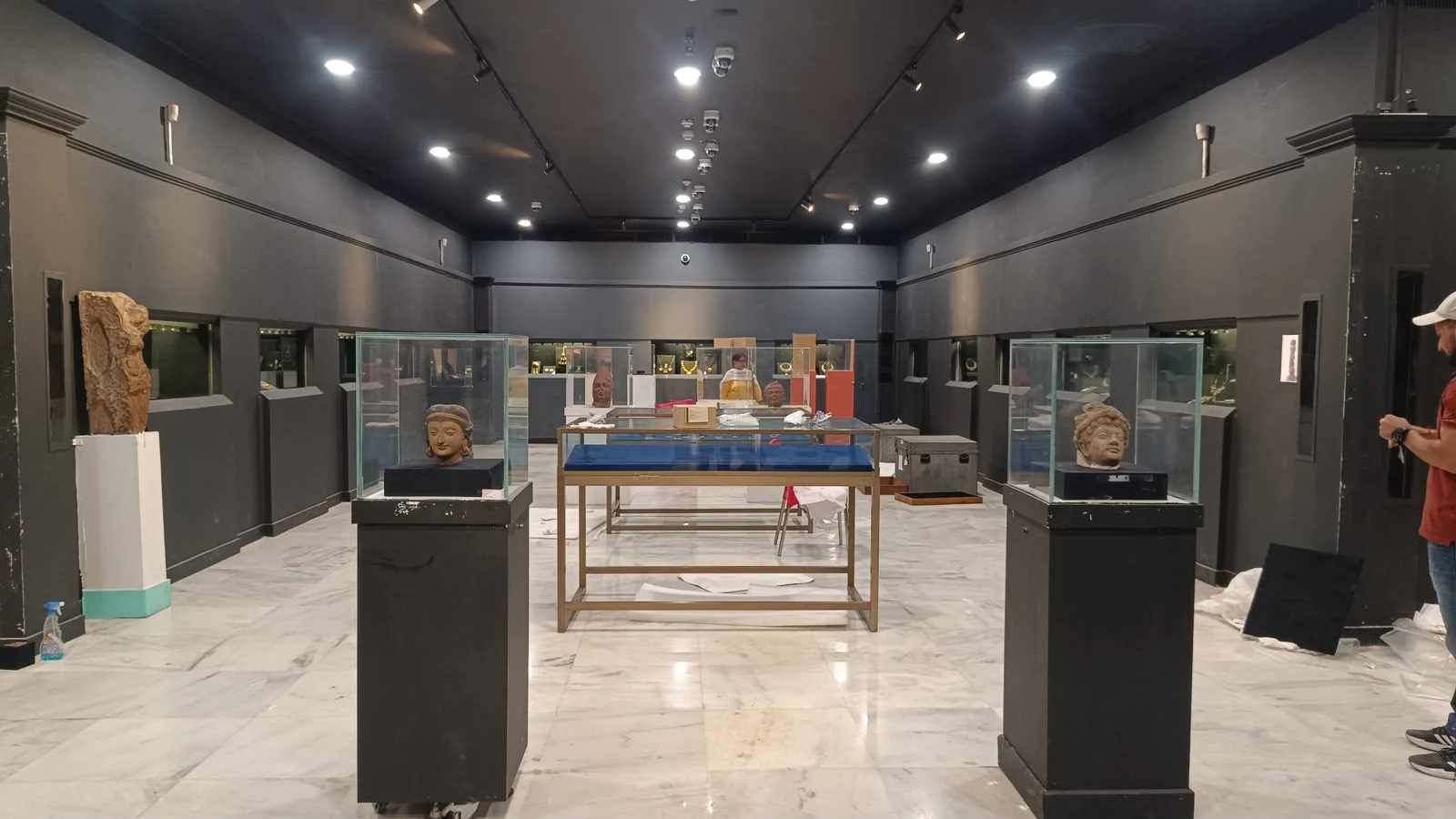
The Ramayan, Mahabharat and other important texts will feature in the Yuga Yugeen Bharat Museum, which is being developed in the North and South Blocks of the national capital, Culture Ministry Secretary Vivek Agrawal said, outlining plans for a civilisational museum that will trace India’s evolution through its knowledge traditions, literature, beliefs, science and arts.
The museum will chronicle India’s civilisational journey from the most ancient periods, including the pre-Vedic and post-Vedic eras, through medieval India, examining the evolution of its literature, spiritual traditions, knowledge systems and cultural expressions.
“We are looking at the evolution of India’s languages, scripts, literature, beliefs and spiritual traditions,” Agrawal said in an exclusive interview with News. The museum’s narrative will cover the Vedas, Smritis, oral and written traditions, and the development of languages and scripts.
“The Mahabharat, Ramayan and other important texts which are important texts would come in, and then the evolution of Buddhism, Jainism, other beliefs coming onto Sikhism,” the secretary said.
The museum will examine the continuity of India’s spiritual traditions and how society’s ideas evolved around spirituality, wellness and ways of life. “Whatever comes into the museum would be evidence-based and would be based on objects. One could interpret them, see them, and understand them,” Agrawal said.
Envisioned as a civilisational museum of Bharat, the institution will trace the country’s evolution through a range of themes, including adornments and jewellery, crafts, science, mathematics, medicine, architecture, cityscapes, performing arts, music and dance. It will also explore India’s historical connections with the rest of the world and the exchange of civilisational ideas.
The first gallery is being planned around the theme of adornments and is expected to open around the middle of 2027, Agrawal said.
The museum is expected to have approximately 30 galleries and draw on collections held by museums across the country. Agrawal said there are more than two million objects in India’s museums and that the new institution would bring in at least 20 to 30 per cent of them.
The displays will be dynamic, with objects rotated periodically and others preserved in storage. Visitors will be able to choose sections according to their interests and the time available to them.
The project involves adapting the existing North and South Block buildings for museum use while preserving their heritage character. The plan includes covering courtyards with freestanding glass roofs to expand exhibition space without placing additional weight on the original structures.
“We are not touching the heritage structures, but we are doing an adaptive reuse,” Agrawal said, adding that accessibility, elevators, escalators, secure storage and climate and humidity controls would be incorporated.
The museum’s experience will be centred primarily on physical objects, with technology playing a supporting role. “Around 80 per cent will be display and objects,” he said. Augmented reality, virtual reality and immersive technologies will complement the exhibits, while the central aim will be to stimulate curiosity through the objects themselves.
Agrawal said the project was being developed as a long-term cultural institution and should not be rushed. “We are trying to build a cultural institution, which would be best in the world, and which would stand the test of time,” he said.
India Biennale To Span 108 Days Across Delhi Monuments
Alongside the museum project, the Ministry of Culture is preparing for the India Biennale, which is scheduled to begin on December 4 and run for 108 days across heritage sites in Delhi.
Describing it as a public-private partnership, Agrawal said the event was being organised in collaboration with foundations, private groups, art galleries and artists. Unlike the first edition in 2023, which was centred on the Red Fort, the upcoming Biennale will spread across multiple monuments, including Purana Qila, the Red Fort, Safdarjung Tomb, Lodhi Gardens and the Mehrauli-Qutub complex.
“The idea is that all the monuments, apart from telling the story from their own origin and history, they should also become places for the gathering of the modern cultural aspects,” he said.
The event will feature more than 70 exhibitions and hundreds of artists, with participation from India and several other countries. The programme will span contemporary art, architecture and design, including pavilions showcasing architectural innovation.
India’s participation at the Venice Biennale will also be represented through a dedicated pavilion at the Delhi event. Agrawal said five contemporary Indian artists had been featured at Venice, with works drawing on materials and traditions such as embroidery, terracotta, bamboo, papier-mache; and soil. The works are expected to be presented to Indian audiences as part of the Biennale.
International participation is also planned, with displays from countries including Switzerland, Hungary and France, as well as presentations involving the Netherlands and Spain.
With exhibitions scheduled at historically significant sites, the ministry is also making arrangements for conservation, security and visitor management. Agrawal said additional security would be mobilised for the exhibitions, artworks would be stored securely before display, and volunteers would help guide visitors and safeguard the monuments.
The volunteers, including art students and art enthusiasts, will assist visitors in understanding both the heritage sites and the contemporary exhibitions, he said.
The Biennale, Agrawal added, is intended to bring contemporary cultural activity into historic spaces while ensuring that the monuments remain protected throughout the four-month event.