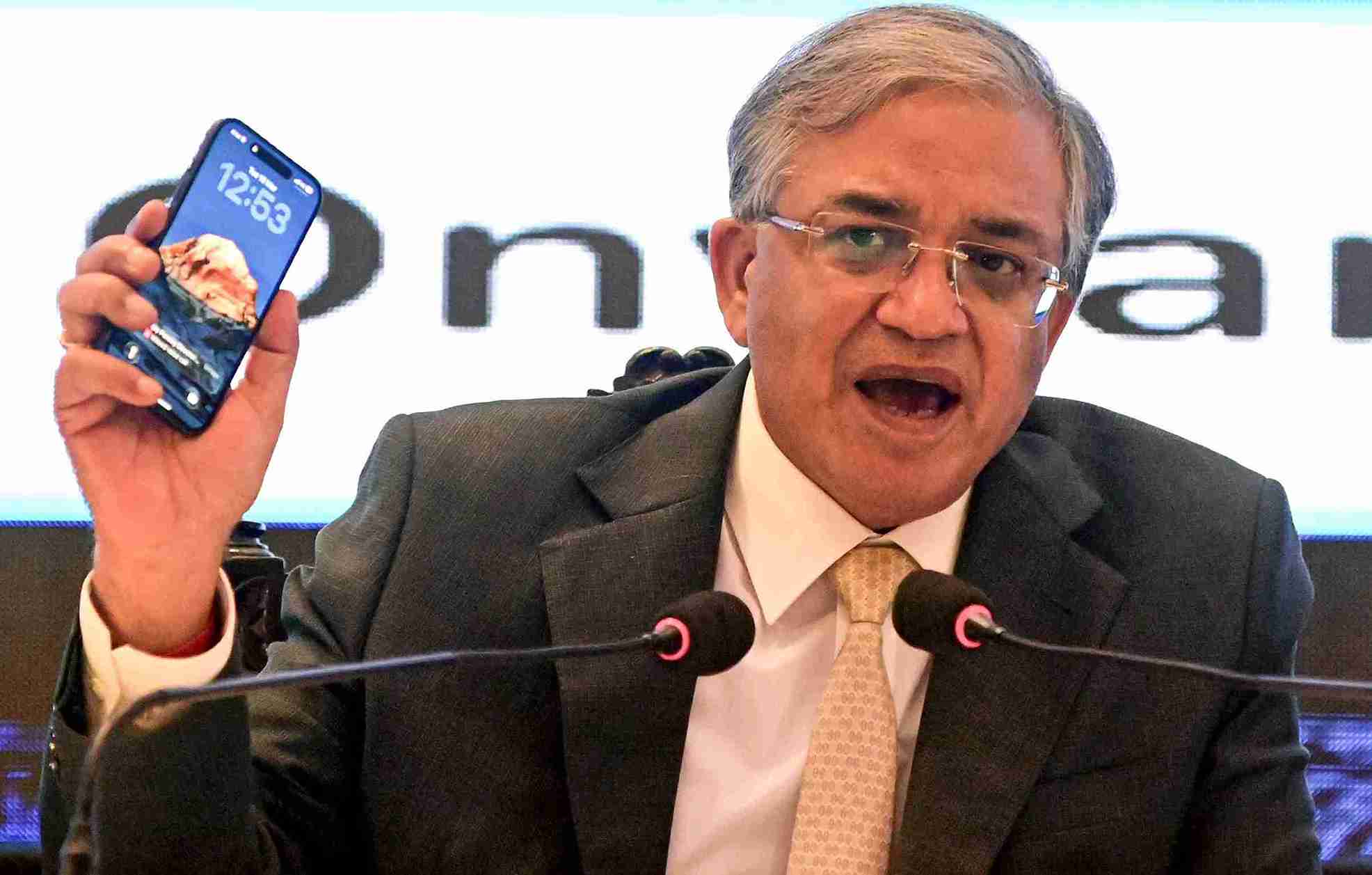
Electoral fights have to be between contesting parties and not between the parties and the authority conducting elections. This is how the current tussle over Chief Election Commissioner (CEC) Gyanesh Kumar’s fate turns the upcoming polls in five states into a virtual touchstone of electoral integrity.
Also read | ‘Why is Delhi jailed? ’: Rahul accuses Modi of protecting Gyanesh, says protests won’t stop
The states going to polls are Uttar Pradesh, Uttarakhand, Punjab, Goa and Manipur. So, in a few months, the outcome of the Assembly polls will not only shape new governments in these states but also test the credibility of the very office of the CEC.
Five states, one credibility test
Surely, his innocence and culpability are hanging in the balance since last month, when the top incumbent at the Election Commission (EC) reportedly appeared to have blocked, evaded or overriden the majority view of the three-member electoral panel headed by him as one of the equals among the three.
Elections were conducted in Bihar and West Bengal from last year to this year amid what was virtually a solo show by Kumar rather than a collective effort by the three-member panel. The two other Election Commissioners, Sukhbir Singh Sandhu and Vivek Joshi, were left out in the cold. So much so that the two often had to record their dissent in writing throughout this electorally crucial period.
Thus, it is against this backdrop that Gyanesh Kumar now has to oversee elections in five more states early next year. It goes without saying that, amid the public outrage he is facing, not just the contesting parties but even the common voter appears wary of the way the state elections are likely to be conducted around February next year.
But before that, an ‘undeclared emergency’ is what Opposition parties claim to be grappling within Delhi and beyond, as they bitterly protest against the CEC, often facing the ire of police and paramilitary forces. These parties clearly fear the spectre of a ‘pre-declared’ outcome in the state elections.
Poll boycott not on Opposition agenda
Union Home Minister Amit Shah has recently said that the BJP and the NDA led by it will keep winning elections until the next Lok Sabha polls in 2029, enabling them to rule the Centre for a fourth time. Before this, he had often asserted that the BJP’s winning streak would continue for decades to come.
So, the question is whether Gyanesh Kumar has lost the trust of the Opposition, civil society and people taking to the streets almost daily in Delhi and other towns across the country to protest against the Special Intensive Revision (SIR) of electoral rolls. If so, how will the results of polls held under his watch be acceptable to the stakeholders?
Gyanesh Kumar is already facing the Opposition’s opprobrium over real or perceived irregularities in voter lists and the poll process, but none of the parties is ready to boycott the forthcoming elections. Leader of the Opposition (LoP) Rahul Gandhi has opposed “deserting” the electoral field and instead exhorted people to oust Kumar from the post of CEC and bring transparency to the election process through “resistance”.
Also read | ‘Gyanesh Centre’s mascot of illegal activities; he must go, SIR must be scrapped’
Other Opposition leaders, such as Mamata Banerjee and Akhilesh Yadav, too, have opposed boycotting elections, though both have accused the EC of ordering large-scale deletions from voter lists at the CEC’s behest, besides alleging other irregularities before and during the West Bengal polls.
BJP and Opposition clash over EC
Earlier, at one stage, Akhilesh had remarked that “the 2027 election in UP would be the last in case this was to be rigged (by the EC).” Lately, he has been asking his Samajwadi Party (SP) workers to remain vigilant and alert at all polling booths in the state.
Bahujan Samaj Party (BSP) chief Mayawati has called for a return to ballot papers and the scrapping of Electronic Voting Machines (EVMs) to restore voters’ faith and trust in free and fair elections. Last month, she reminded the EC of its constitutional mandate to ensure visibly fair elections based on the principle of universal adult franchise, under which no voter should be prevented from exercising their vote out of fear.
In contrast to such reservations across a broad political spectrum about the way elections are conducted nowadays, BJP leaders such as Union Defence Minister Rajnath Singh and Uttar Pradesh Chief Minister Yogi Adityanath have backed the Election Commission. The BJP leaders have accused the Opposition of attempting to create anarchy by unjustifiably attacking the EC and CEC Gyanesh Kumar amid losses suffered in successive elections.
CEC controversy casts shadow over polls
These interventions by BJP leaders have been resented by the Opposition, which accuses the ruling party of hollowing out the EC, as well as the judiciary and other institutions. It is against this backdrop of a political tug-of-war that polls in five states are set to take place.
Since the BJP has vowed to defend the CEC more stoutly and possibly seek a debate on the issue in Parliament soon, Supreme Court lawyer Sanjay Hegde recently took to X to tweet, “Will prove that in the temple of democracy, Gyanesh was the equivalent of Champat Rai of the Ayodhya temple.”
Also read | Oppn protests across states seek CEC Gyanesh Kumar’s removal, turn up heat over SIR
Rai is the former general secretary of the Shri Ram Janmabhoomi Teerth Kshetra Trust (SRJTKT) in Ayodhya. He had to step down in the wake of reports of large-scale theft of alms offered by devotees at the temple for its upkeep and for charity to benefit the poor. But unlike the temple’s chief trustee, Gyanesh Kumar continues to remain in office amid apprehensions that his tenure could affect the very nature and course of not only elections but also politics.
But if, proverbially, politics is the art of the possible, the CEC, through elections, is feared to have the potential to turn it into the art of the impossible. This is how both lawmen and laymen feel: the sooner he goes, the better for him and for everyone else.