
Google AI ecosystem: For more than two decades, Google pretty much defined how humanity accessed information online. Their search engine became the front door to the internet, lining up billions of web pages into ranked lists of links. That approach ended up shaping not only the tech business, but also journalism, advertising, publishing, education, and basically digital culture itself
In 2026, Google is trying its most ambitious transformation yet. And yeah, the rise of generative AI has forced the company to rethink what “search” really means. Instead of only sending people toward websites, Google is moving toward answering questions directly with AI-generated responses. At the heart of this transition is Google Gemini, the company’s flagship model, built to drive a wide ecosystem of products and services.
This is not just a little product update. It feels like a structural shift in how information is created, uncovered, and consumed online. Google’s strategy points toward a future where users deal with fewer link-lists and more with AI-generated knowledge environments: conversational, contextual, and tightly woven into everyday computing.
Google AI ecosystem: From Search Engine to Knowledge Engine
Traditionally, Google Search mostly depended on indexing and ranking web pages, you know, the usual thing. People type in keywords,s and then algorithms decide which pages feel the most suitable. That way of doing things is still there, but AI is quietly, and I mean pretty fundamentally, changing the whole interface.
With AI-generated summaries, back-and-forth questions, and some deeper contextual understanding, Google seems to be heading toward what many analysts call a “knowledge engine,” not really a simple search engine. Instead of having users go through and open several websites, AI systems now tend to weave and merge the information straight into the answer.
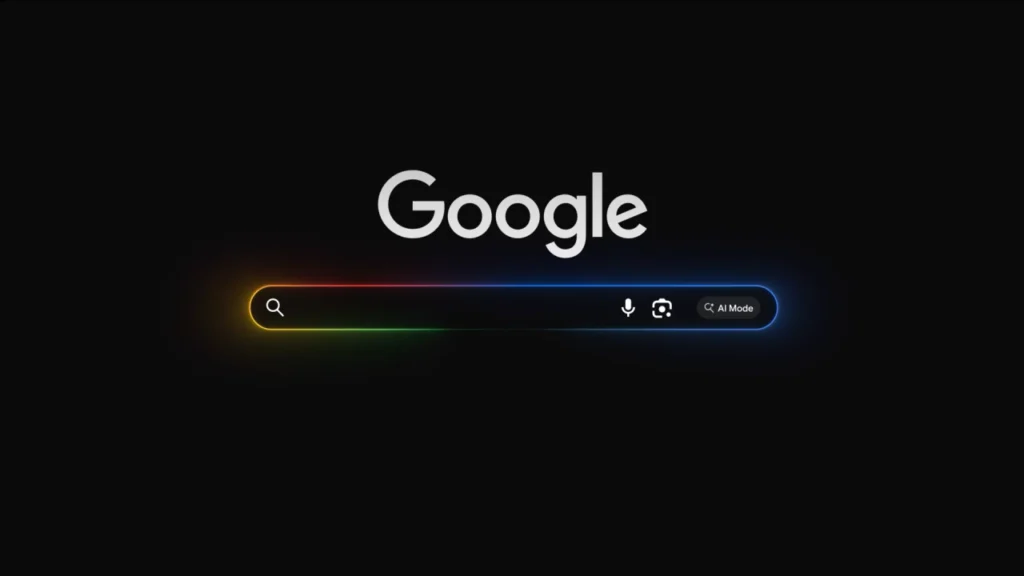
Users can see it in features like AI Overviews. Instead of only showing those familiar blue links, Google is now putting AI generated summaries at the top of the results, for lots of queries. Those summaries pull from multiple sources and then basically present one combined response.
The goal is convenience, plain and simple. Users get an answer right away, no need to click around and open a handful of sites. Still, this shift doesn’t just change the experience. It also reshapes the economics and the structure of the web itself.
Gemini: The Center of Google’s AI Strategy
At the core of Google ecosystem transformation is, of course, Google Gemini. Gemini isn’t just some chatbot that competes with other AI assistants. Instead, it works more like a baseline model, kind of built so it can slide into almost everything Google does.
Google has been putting Gemini into,
- Search
- Android
- Gmail
- Google Docs
- Chrome
- Cloud services
- Workspace applications
This whole widespread integration really shows a bigger play. Google is trying to sell AI not as a single product you buy and forget, but as an operating layer that adds capability to every corner of the ecosystem.
In Android, Gemini is starting to replace more traditional voice assistants with conversational AI interactions. In Workspace, it helps with writing and summarization plus analysis, and then even workflow automation. In Search, it delivers AI-generated responses and more contextual understanding, like it’s seeing the situation in a broader way.
The ecosystem advantage looks huge. Unlike standalone AI companies, Google basically controls:
- The world’s largest search engine
- One of the largest mobile operating systems
- A massive cloud infrastructure
- Billions of daily users across services
With that kind of reach, Google can push AI features out faster and in more places than most competitors, not even close most days.
AI Overviews and the Reinvention of Search
One of the most controversial pieces of Google’s plan is AI Overviews. Back in the day, search traffic mostly flowed outward. Google pushed people toward external websites, which in turn sent visitors to publishers, blogs, and businesses.
AI Overviews kinda flip that. By summarizing what it finds directly inside the search results, Google makes it less necessary for users to click through to outside links. For users, it feels pretty smooth and efficient. For publishers though, it brings existential jitters.
News orgs and content creators are increasingly uneasy, because AI generated summaries could mean less website traffic, lower ad revenue, and reduced visibility. In other words, if someone gets the answer right inside Google, fewer people may bother visiting the original page.
And that tension points to something bigger. AI systems often rely on content made by other people, but they can also quietly erode the economic reasons for creating that content in the first place.
Google says AI-enhanced search still sends meaningful, valuable traffic and improves the overall user experience. Critics reply that the power balance is shifting even more toward platform dominance, and that’s not exactly comforting.
Conversational Search And The Slow Slide Out Of Keywords
AI is changing how people actually talk to search, too. Back in the “traditional” days, search basically depended on short keyword bits like:
“best smartphones 2026”, “weather Mumbai”, “AI regulation Europe”.
Now, conversational AI kind of invites a more natural, almost human way of asking, for example: “Which smartphone is best for photography and gaming, under my budget?”
“Compare Europe’s AI laws with U.S. regulations.”
And Google’s AI systems are getting better at reading not just what you type, but also intent, context, and even follow-up questions that come right after. This shift is important because it changes the whole way information is retrieved. Search becomes less like a quick transaction and more like something interactive.

So instead of searching again and again, users end up having an ongoing conversation with the AI system, rather than treating every question as a totally separate task.
Search Is Getting More Personalized
AI lets Google tune the whole info experience, kind of more deeply than before, honestly. Back then, most search results looked relatively standard, pretty much the same across people. Now AI-based systems can reshape what you see using user behavior and not just that, your search history too, plus your location, the device context, and even your own day-to-day productivity habits.
So the outcome is a more individualized information environment, for real. Supporters say this kind of personalization makes things more relevant and faster, while critics argue it might reinforce algorithmic filtering and quietly limit your exposure to a range of perspectives.
Google’s real task is finding the right balance between personalization and openness, while still keeping trust intact.
The Browser, Android, and the AI Ecosystem Loop
Google’s AI strategy is kind of powerful because it ties together multiple platforms into one broad ecosystem, and it just keeps going. A user can search with Gemini, then continue tasks in Chrome, or maybe receive suggestions. After that, they can use Gemini on Android and store workflows in Workspace.
So it forms this ecosystem loop where AI sort of follows the user across devices and different moments in the day, not just in one app.
Unlike older software generations, where apps basically worked in their own bubble, the AI integration lets systems keep continuity between environments, like there’s less of that “switching” feeling. Overall, it boosts user dependence on the Google ecosystem a bit, while also making everything feel more effortless and seamless.
Competition in the AI Search Era
Google’s transformation is also kind of defensive.
Generative AI systems from competitors have been threatening Google’s classic search grip; they do this by giving direct conversational answers, not the old link-first way you used to get from search results.
And then the whole fast rise of AI assistants basically pushed Google to speed up its AI roadmap, like immediately. Gemini, in that sense, turned into a response to competition, but also a wider reinvention play.
At the same time, competitors are going in different directions, some of them a bit more standalone. Some go for AI assistants on their own. Others lean into privacy-minded AI systems
Some prioritize enterprise AI tools instead of building around consumer ecosystems
Still, Google’s edge comes from integration. Not many companies steer as many layers of the digital experience all at once.
The Publisher Dilemma
Maybe the most important unresolved issue is what happens to publishers and open web content, like really what comes next.
Google’s search ecosystem in the past basically helped a huge digital economy by pushing traffic outward. But now, those AI-generated answers kind of mess with that whole balance and relationship.
Publishers are starting to run into hard questions like:
- How do they stay visible when AI search is doing most of the pointing around?
- How do they monetize the original reporting if a neat summary just replaces the whole click thing?
- Should AI systems compensate the content creators more directly, not only “indirectly” via distribution
And honestly, this debate might end up shaping the next era of the internet economy.
If there aren’t sustainable incentives for people to keep making content, then the quality and diversity of online information could fade over time, slowly but steadily.
Trust, Accuracy, And The Risk with AI Knowledge Systems
AI-powered search stuff also brings fresh risks, not just “better results”.In the old days, traditional search gave you multiple sources, so you could sort of compare things yourself. But AI-generated answers tend to fold interpretation into one synthesized response, so you don’t really get that same cross-check. And yeah, this makes a few areas way more important, like:
- Accuracy
- Source transparency
- Bias mitigation
- Citation systems
Still, AI hallucinations and misinformation stay a serious problem, especially for health, law, politics, or science related topics.
Google is trying to make things more reliable by using retrieval systems, source integration, and tighter ranking controls. Yet the challenge is still pretty big.
And as AI systems become the main doorway to information, trust becomes the real defining issue, not accuracy alone.
The Future of Knowledge Access
Google’s strategy seems to point toward a wider transformation in the way people deal with information, like not just “read it” anymore, but more like “get it explained.” The internet might evolve from a network of linked pages into AI-mediated knowledge systems, and yeah, users may start talking with synthesized answers instead of raw sources — summaries that feel almost immediate.
On one hand, that could make knowledge easier to reach and faster to use. Yet on the other hand, it could also concentrate a massive amount of leverage in the hands of companies that control the AI infrastructure itself, and that part is kinda hard to ignore.
So, the future of knowledge probably won’t depend only on what exists online, but on how AI systems decide to interpret it and then choose how to present it, right?
Conclusion: Google Is Rebuilding the information layer of the Internet
Google’s whole AI ecosystem plan is about much more than just dropping chatbots into Search. In reality, the company is remaking its entire information architecture around artificial intelligence, and not in some small way. With Gemini, AI Overviews, conversational interfaces, and those ecosystem-wide integrations, Google is basically changing how people find knowledge and how they engage with it afterward.
This shift brings huge opportunities, like quicker access to information, more contextual computing, smoother workflows, and a kind of personalized digital assistance that feels almost conversational all the time.Still, it also creates thorny problems for publishers’ sustainability, platform power, trust, and even what the web structure will look like in the next years.
So by 2026, Google isn’t only organizing the world’s information. It is more and more the one deciding how that information gets interpreted, summarized, and experienced.
(Source)