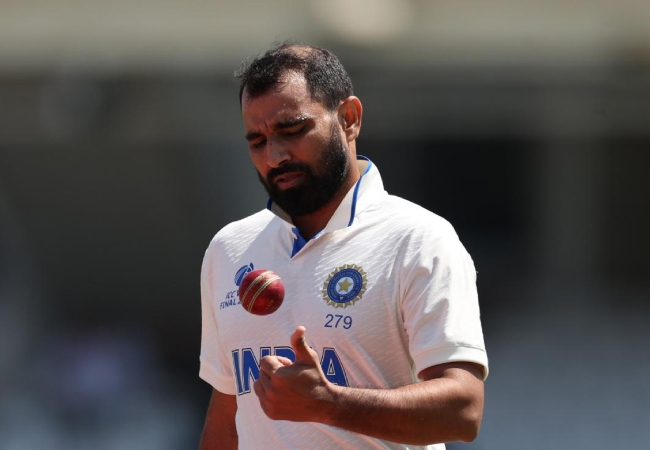
New Delhi: Indian fast bowler Mohammed Shami has sent a strong message to the national selectors amid his continued absence from the Indian cricket team, insisting that he still believes in his abilities and has plenty to offer at the highest level. The experienced pacer’s comments have renewed the debate over his future in international cricket, with questions being raised about his exclusion despite his experience and performances in domestic cricket.
Shami has not represented India since the ICC Champions Trophy final against New Zealand on 9 March 2025. Although he has continued to work on his fitness and compete in domestic cricket, the 36-year-old fast bowler has remained outside the national setup.
His continued absence has attracted attention among cricket followers, particularly given his outstanding performances in major international tournaments. Shami was India’s leading wicket-taker at the 2023 ICC Men’s Cricket World Cup, finishing the competition with 24 wickets.
Mohammed Shami makes his position clear
Shami’s latest remarks reflect his determination to continue playing competitive cricket and his confidence in his own abilities. The phrase “Aaj bhi peak par hain”, meaning that he is still at his peak, captures the central message behind the pacer’s response to his continued exclusion.
The fast bowler has repeatedly maintained that selection is ultimately the responsibility of the team management and the selection committee. His position has remained consistent: he is prepared to perform whenever an opportunity comes his way.
Rather than treating selection as something within his control, Shami has emphasised the importance of preparation, fitness and performance. He has also made it clear that he does not intend to stop working towards a return to the Indian team.
For a bowler who has played a significant role in India’s success across formats, the prolonged absence represents a difficult phase in his career. However, Shami’s public statements suggest that he remains motivated to continue playing.
His comments also underline a broader issue in Indian cricket: how experienced players returning from injuries are assessed against younger players competing for places in the national team.
Shami’s international career remains under scrutiny
Shami’s last international appearance came during the Champions Trophy final in March 2025. Since then, he has missed several opportunities to return to the national side.
Injuries and concerns about his physical readiness have featured prominently in discussions about his absence. The selectors have previously indicated that fitness and workload management are important considerations when deciding whether to include him in the squad.
Shami, meanwhile, has maintained that he is willing to play whenever he is considered ready and selected for the team.
The difference between the player’s assessment of his readiness and the selection committee’s requirements has become a recurring subject of discussion.
For fast bowlers, fitness involves more than being able to participate in a match. International cricket can require players to bowl repeated spells, recover quickly between matches and manage demanding schedules across different formats.
A bowler returning from a significant injury must demonstrate that he can sustain these demands without an unacceptable risk of another setback.
Nevertheless, Shami’s supporters believe his experience and ability to take wickets make him a player worth considering when he is available.
Why Shami remains an important option for India
Shami has established himself as one of India’s most effective fast bowlers, particularly in conditions that offer movement off the pitch and through the air.
His ability to maintain a challenging line and length, generate seam movement and strike with the new ball has made him a valuable part of India’s bowling attack over the years.
His performance at the 2023 ODI World Cup remains one of the strongest examples of his effectiveness. Despite initially not being part of India’s first-choice playing XI, he seized his opportunity and finished the tournament with 24 wickets, becoming its leading wicket-taker.
That campaign demonstrated his ability to deliver under pressure against some of the world’s leading batting line-ups.
Shami has also contributed significantly to India’s performances in Test cricket, where his ability to bowl extended spells and extract movement has been particularly valuable.
His experience in high-pressure international matches is an asset that cannot be measured solely through recent statistics. However, past achievements alone do not guarantee selection, especially when the team management must balance current form, fitness, workload and future plans.
The selectors must also consider the availability of other fast bowlers and the requirements of each format before finalising a squad.
Domestic cricket offers Shami a route back
Domestic cricket has remained an important platform for Shami as he seeks to demonstrate his readiness for a return to international competition.
Performances in domestic tournaments can help players regain match fitness, build confidence and provide selectors with evidence of their current form.
For a fast bowler returning from injury, competitive matches are particularly important because they test physical endurance and the ability to recover between spells.
Shami’s involvement in domestic cricket has therefore remained a key part of the discussion surrounding his future.
His supporters argue that consistent performances should keep him in contention for selection. They believe his experience could prove useful to India, particularly in demanding conditions where skilled fast bowlers can make a substantial difference.
At the same time, selectors must determine whether a player’s domestic performances translate into the demands of international cricket. They also need to consider how frequently the player can be expected to remain available throughout a series.
The challenge is to strike a balance between rewarding current performances and ensuring that the bowling attack is physically prepared for the demands ahead.
Selection debate puts the spotlight on India’s pace attack
Shami’s continued absence has prompted questions about how India intends to manage its experienced fast bowlers while preparing for upcoming international assignments.
India has invested in developing a pool of pace options capable of handling different conditions and formats. Younger bowlers offer the team opportunities to build depth, while experienced campaigners bring tactical knowledge and the ability to handle pressure.
The selection committee must assess both groups while ensuring that the team has the right combination for each assignment.
Shami’s case is particularly significant because he has previously demonstrated his ability to perform in major tournaments. His experience could be valuable in situations where early breakthroughs and control during crucial phases of an innings are essential.
However, his age, recent injury history and the physical demands of fast bowling are factors the selectors cannot ignore.
A potential comeback would therefore depend on more than his confidence in his own abilities. It would require the team management to be satisfied with his fitness, workload capacity and suitability for the format under consideration.
Clear communication between the player and the selection committee could also help provide a better understanding of what is required for a return.
What lies ahead for Mohammed Shami?
Shami’s latest message makes one thing clear: he has not given up on his ambitions in cricket.
His confidence reflects a determination to continue competing, while his domestic appearances offer opportunities to demonstrate his readiness on the field.
Whether those efforts result in an international comeback remains uncertain. The selectors will have to assess his performances, fitness and the team’s requirements before making a decision.
For now, Shami’s immediate challenge is to maintain his physical condition and continue producing performances that strengthen his case for selection.
His career has already included major achievements, including his outstanding showing at the 2023 World Cup and his contributions to India’s international campaigns. A return to the national team would provide another opportunity to add to that record.
Ultimately, selection decisions will rest with the team management and the BCCI selection committee. Shami can control his preparation and performances, but the final decision lies beyond his hands.
His message, however, signals that he remains ready to compete and believes he still has the ability to contribute at the highest level.
Conclusion
Mohammed Shami’s continued absence from the Indian team has raised questions about the balance between experience, fitness and selection strategy. While his past achievements underline his value, his prospects of a comeback will depend on his current performances and the selectors’ assessment of his readiness. For a bowler who continues to express confidence in his abilities, the door to international cricket remains a matter of performance, opportunity and selection.