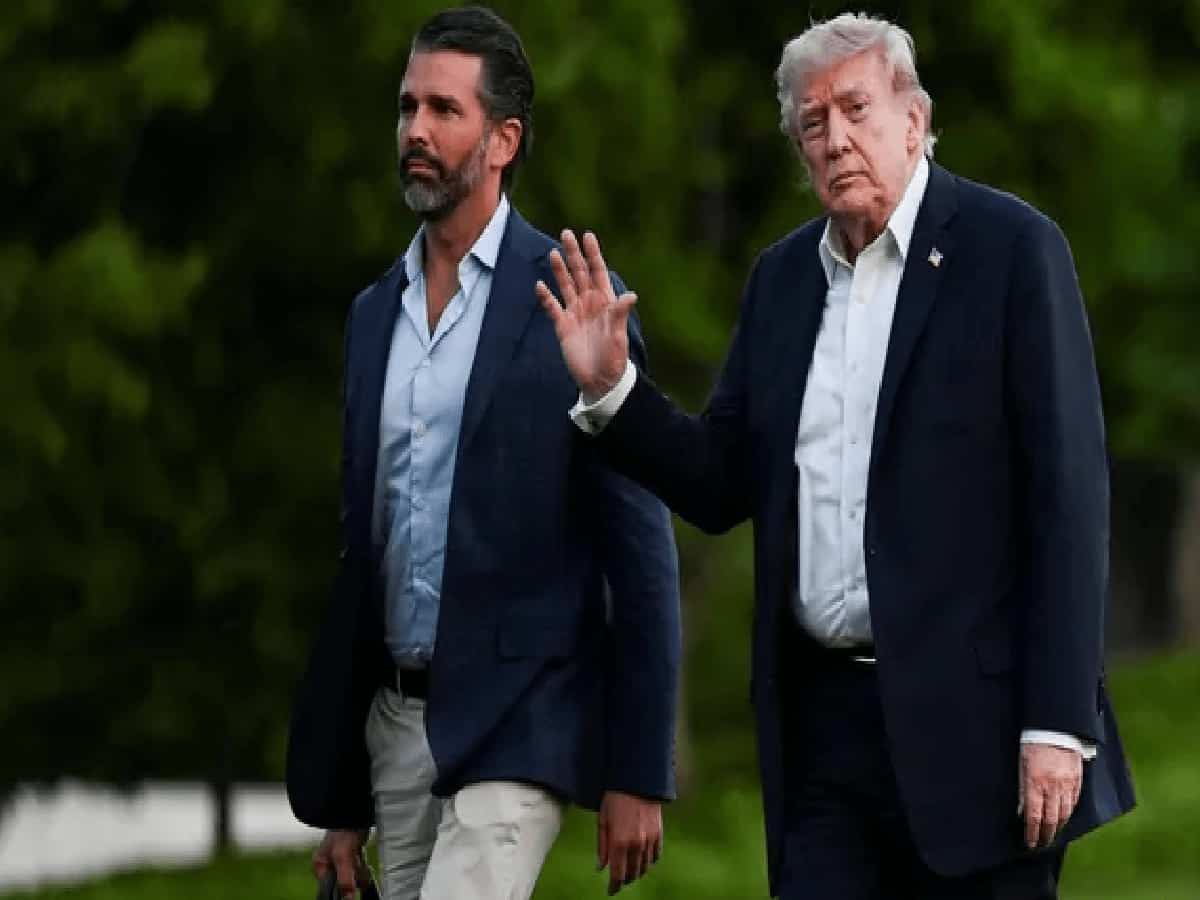
In a revelation underscoring growing ideological friction within the upper echelons of the Make America Great Again (MAGA) movement, Donald Trump Jr., the eldest son of US President Donald Trump, has privately opposed a war against Iran from the very beginning. According to an investigative account published by The AtlanticTrump Jr. directly conveyed his profound concerns to his father, arguing that the United States must steer clear of another costly, protracted military entanglement in the Middle East. While strictly avoiding any public display of discord with the Commander-in-Chief, sources close to the 48-year-old political figure affirmed that his private stance is rooted in an ‘America First’ non-interventionist doctrine, directly challenging the aggressive foreign policy posture promoted by hawkish factions inside the Washington establishment.
Private Resistance Behind Closed Doors: Loyalty to Father Maintained in Public
Despite harboring deep reservations regarding escalating tensions with Tehran, Donald Trump Jr. has maintained total public solidarity with the President:
Direct Advice to the Oval Office: Two individuals with direct knowledge of discussions confirmed that Trump Jr. articulated his explicit opposition to entering a shooting war with Iran, urging restraint and domestic focus.
A Disciplined Public Front: A close associate emphasized that Trump Jr. keeps his reservations strictly private, noting that while he would never break ranks with his father in public, his deep anti-interventionist worldview comes as no surprise to those within his inner circle.
Commitment to the 2024 Campaign Doctrine: Throughout the 2024 presidential trail, Trump Jr. repeatedly amplified his father’s core pledge that the United States would reject the endless overseas warfare characteristic of previous administrations.
Vocal Record on Middle East Restraint: In April 2024, Trump Jr. pushed back against critics on platform X, writing, “Remember when they said Trump would push us into a full-blown war with Iran?”, hailing his father’s resolve to keep the nation out of regional quagmires while maintaining credible deterrence.
The Widening MAGA Rift: Non-Interventionists Clash with Foreign Policy Hawks
The escalating hostilities with Iran have exacerbated faultlines across the broader MAGA coalition, pitting traditional conservatives against America First populists:
America First Non-Interventionists: One faction strongly argues that military adventures abroad drain trillions of dollars, deplete critical military stockpiles, and divert focus from urgent domestic crises like border security and economic stability.
The Neoconservative Hawkish Wing: The opposing camp within conservative circles advocates for aggressive force projection, insisting that overwhelming military deterrence is necessary to dismantle regional proxies and counter adversaries.
A Growing Philosophical Tug-of-War: The disagreement over Iran has become one of the most visible tests of the populist right’s foreign policy consensus, challenging the administration’s ability to balance transactional diplomacy with hardline deterrence.
Hesitation Among Key Administration Figures: Vance, Ratcliffe, and Rubio Flagged Concerns
Donald Trump Jr. is not the only high-ranking voice within the conservative orbit to raise red flags regarding unchecked regional escalation:
Vice President JD Vance’s Skepticism: The report disclosed that Vice President JD Vance had also expressed private misgivings regarding direct military confrontation in the region, reflecting his established isolationist leanings.
Pushback Against Regime-Change Blueprints: CIA Director John Ratcliffe and US Secretary of State Marco Rubio harbored notable skepticism when Israeli Prime Minister Benjamin Netanyahu presented a comprehensive regime-change strategy targeting Tehran in February.
Caution Over Strategic Quagmires: The internal hesitations shared across national security leadership and the President’s closest confidants reflect profound worries that regional strikes could spiral beyond controlled parameters, trapping American resources in open-ended conflict.