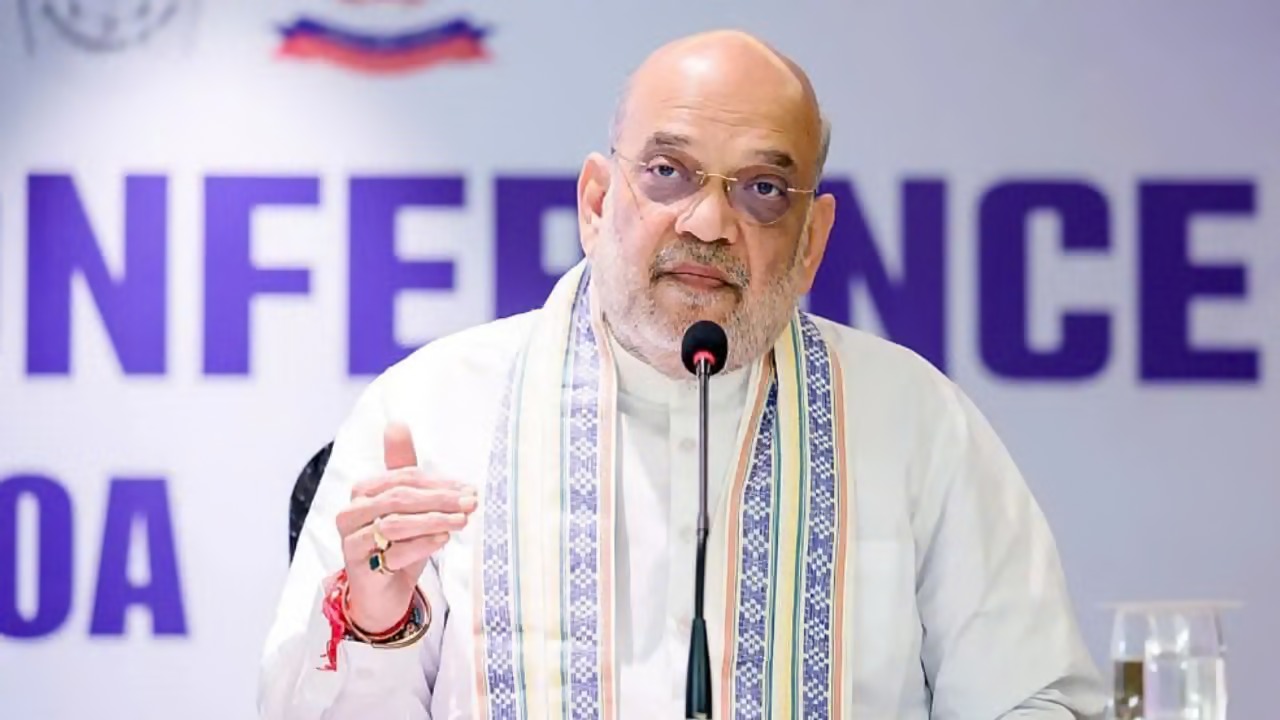
New Delhi: Is the Bharatiya Janata Party preparing to revive its long-standing political partnership with the Shiromani Akali Dal in Punjab? Union Home Minister Amit Shah has triggered fresh speculation after saying that the state is heading towards an NDA government, bringing the possibility of a pre-poll alliance back into focus.
Speaking at a program in the national capital, Shah took aim at the Congress and the Aam Aadmi Party while projecting confidence in the NDA's prospects in Punjab. His remarks have drawn attention because the BJP and the Akali Dal have been exploring the possibility of coming together ahead of the 2027 Assembly elections, even as the BJP has spoken publicly about preparing to contest all 117 constituencies.
The political significance is substantial. A renewed understanding between the two parties could reshape the contest involving the ruling AAP, the Congress and other political players. However, Shah's statement should not be treated as confirmation of a signed agreement: the alliance announcement, seat-sharing formula and leadership arrangements remain unconfirmed in the information available.
Amit Shah Targets Congress and AAP
Besides his remarks about the NDA's prospects, Shah launched a sharp attack on the Congress and the AAP. He predicted that the Congress would remain out of power for decades, blaming what he described as its negative politics, and said voters would reject the AAP government in Punjab.
Shah also criticized Congress leader Rahul Gandhi over allegations of “vote theft” and questioned the consistency of the party's criticism of the Election Commission. These remarks place the potential alliance discussion within a broader BJP campaign strategy focused on challenging both the Congress and the AAP.
The claims and political predictions reflect Shah's position as a senior BJP leader; they are not independent assessments of how Punjab voters will cast their ballots.
##Why a BJP–Akali Dal Alliance Matters
The BJP and the Shiromani Akali Dal were long-standing allies before their relationship broke down in 2020 over the now-repealed farm laws. Their earlier partnership combined the BJP's urban support base with the Akali Dal's traditional strength in sections of rural Punjab.
A reunion could allow both parties to seek a wider electoral coalition, but the political landscape has changed since their split. The parties contested separately in the 2022 Assembly elections and the 2024 Lok Sabha polls, and rebuilding trust among their respective supporters would be a major challenge.
Recent reporting has highlighted three unresolved questions: how many seats each party would contest, which constituencies would go to each partner, and who could be projected as the chief ministerial face. These issues could prove decisive even if both sides see electoral value in an alliance.
Seat-Sharing Could Be the Biggest Hurdle
According to the information provided by party sources, the BJP has conducted surveys across Punjab's 117 Assembly constituencies to assess voter sentiment and the feasibility of a tie-up. The BJP is reportedly seeking a substantially larger share of seats than it contested under the previous arrangement.
A proposed allocation giving the BJP around 60 per cent of the seats has been discussed in the supplied account, but this figure has not been confirmed through a formal agreement. It should therefore be treated as a reported expectation, not a settled formula.
For the Akali Dal, accepting a reduced share could raise questions about its position within the alliance and its ability to retain influence in rural constituencies. For the BJP, demanding more seats would reflect its ambition to expand beyond its earlier role as the junior partner.
The next major signal will be whether the BJP and the Akali Dal formally announce an alliance and disclose the terms of their arrangement. Until then, Shah's remarks are an important political indication, but not a substitute for an official declaration.
Punjab's 117-seat Assembly will be the central battleground in 2027, with the AAP, Congress, BJP and Akali Dal all facing questions about leadership, voter support and electoral strategy. If the BJP and Akali Dal reach an agreement, the seat-sharing formula and the choice of leadership could reveal which party expects to set the terms of the partnership. For now, Shah's statement has intensified the alliance debate. Whether it marks the beginning of a formal political reunion or a strategic message ahead of the polls remains to be seen.