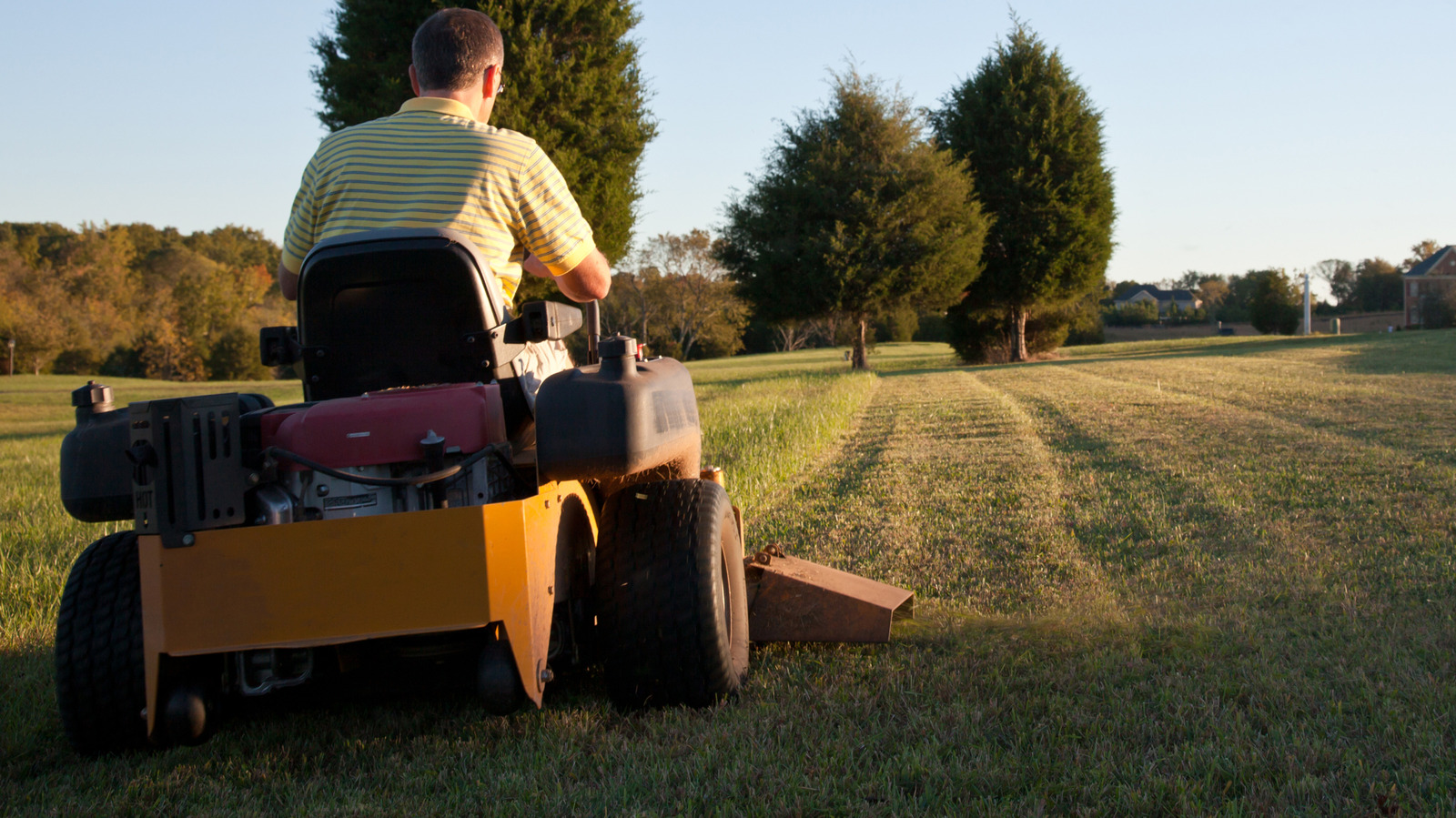
Some people are still using their zero-turn mowers to mow their yards, even as fall temperatures continue to set in across the U.S. But what happens when your mower starts pulling to one side while you’re working? This sometimes happens because the back tires have uneven air pressure. Fixing it is easy, as you can just adjust the tire pressure as needed. But be sure you check the owner’s manual for the recommended air pressure.
The mower’s tracking could also be the culprit, and that takes a bit more time to address. You can typically find the tracking bolts at the base of the mower’s steering bars, and to adjust them, Tour recommends first parking the mower on level ground. Set the control levers to Park, disengage the blades, turn off the mower, and remove the key. Next, use a wrench to make small adjustments on the side opposite the one the mower has been pulling toward. Start the mower and drive it forward, checking to see if it’s still pulling to that side. If so, stop and repeat the process. You can also check the steering linkage system. Visually inspect the system for damage and contact your local dealer for advice and replacement parts, if needed.
If the steering linkage looks fine, a more serious problem may be happening with the mower’s hydraulic drive system, which can cause the back wheels to behave differently and lead to veering left or right. In that case, your best bet is to have the mower serviced by a professional technician.
Drive system problems and unsafe mowing conditions
When a zero-turn mower’s drive system begins having problems, it can lead to issues during operation. This can affect the machine’s ability to move, as well as its traction on the ground. The mower’s deck belts can become damaged as well, and the engine itself can overheat during heavy-duty work. Regular wear and tear can also take its toll, leading to component rust and eventual breakdown.
But knowing how to properly use a zero-turn mower can affect how it performs as well. This is especially true when trying to mow on a slope or other uneven ground, as the machine’s wheels could potentially slide from one side to another. If the effect is serious enough, the wheels can also do damage to the lawn, which can create long-term problems. The biggest concern is that a sliding mower can smash into an obstacle, or even flip over.
It’s also important to maintain a safe and steady speed while mowing and not take any sudden turns. Mowing on wet grass or right next to open water is not a good idea, and operating near steep drop-offs can cause the mower to lose traction. If the machine has a rollover protection system, the roll bar should be raised and locked, and the seat belt should be worn while mowing. For more safety tips on how to use your specific model, consult the owner’s manual.