
Pick up a flagship phone after 20 minutes of running a real-time translation app, generating AI images, or processing video with on-device models.
The back of the glass will be noticeably warm, not dangerously so, but enough to make you wonder what’s actually happening in there. The answer involves engineering borrowed from aerospace, gaming laptops, and even industrial refrigeration, all crammed into a slab less than 8mm thick.
The thermal challenge inside modern smartphones is genuinely difficult.
AI workloads, whether it’s computational photography, voice recognition, live translation, or generative features like Samsung’s Galaxy AI or Apple Intelligence, push the Neural Processing Unit (NPU), GPU, and CPU to run simultaneously at high clock speeds, which generates heat fast, and unlike a laptop, a phone has nowhere to send it.
This is the central tension: smarter phones generate more heat, but users still expect them to feel comfortable in hand, perform consistently, and not throttle to a crawl mid-task.
Why AI Workloads Hit Different
Standard tasks — scrolling, browsing, even streaming video — put modest strain on a processor.
AI inference is different.
When a phone runs on-device AI, it activates multiple compute cores at once.
The NPU processes the model, the GPU renders results, and the CPU coordinates the pipeline. Memory bandwidth spikes. All of this happens in milliseconds, repeatedly.
The heat generated during an AI workload compared to standard use:
| Task | Average Chip Temperature | Power Draw |
| Idle / basic browsing | 35–40°C | ~1–2W |
| HD video streaming | 45–52°C | ~3–4W |
| Gaming (high settings) | 55–65°C | ~5–7W |
| Real-time AI inference | 60–72°C | ~6–9W |
| Sustained generative AI (image/video) | 70–80°C+ | ~8–12W |
The Cooling Technologies Actually Inside Your Phone
Vapor Chambers: The Workhorse Solution
The most widely adopted premium cooling method right now is the vapor chamber, a sealed flat chamber filled with a small amount of liquid (typically distilled water or a refrigerant). When heat hits the chamber from the chip stack, the liquid evaporates, carries the thermal energy across the chamber, condenses on the cooler end, and flows back to repeat the cycle.
- Samsung’s Galaxy S26 Ultra uses a multi-layer vapor chamber system covering a larger area than its predecessor
- Apple’s A18 Pro chip in the iPhone 16 Pro is paired with a refined thermal architecture that spreads heat across the stainless steel frame itself
- Qualcomm’s Snapdragon 8 Elite, used in most 2025–2026 Android flagships, was designed with thermal efficiency as an explicit benchmark
Graphene and Carbon-Based Layers
Graphene has thermal conductivity roughly 5x better than copper by weight. Phone manufacturers, particularly Xiaomi, ASUS, and OnePlus, have layered graphene films between the vapor chamber and the phone’s back panel to help thermal energy disperse faster.
This matters because the final step in any cooling system is dissipating heat into the environment.
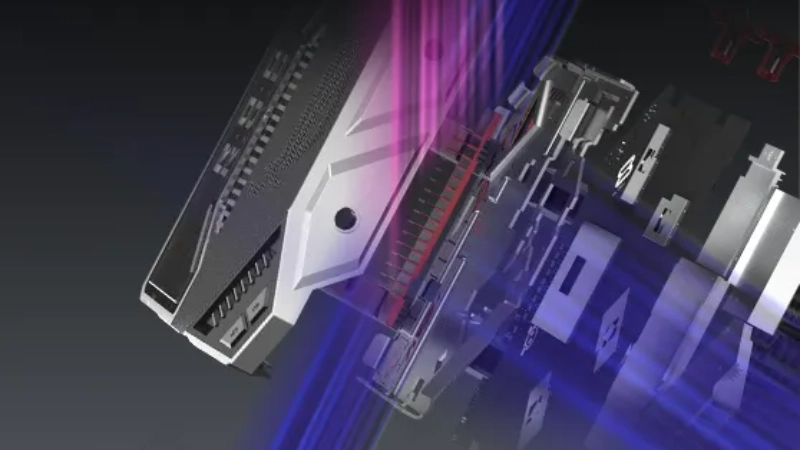
You can move heat away from the chip, but eventually it has to go somewhere. Graphene layers accelerate that final transfer into the chassis and ambient air.
Smart Thermal Management in Software
Hardware alone doesn’t solve the problem. Modern phones run sophisticated thermal management software that:
- Monitors chip temperature in real-time (often every 10-100ms)
- Dynamically shifts AI inference tasks between the NPU, CPU, and GPU based on thermal headroom
- Reduces clock speeds on individual cores before throttling the whole chip
- Prioritizes cooling during sustained tasks like video recording or gaming sessions
Who Feels This Most in Daily Life?
Creators and Video Editors
Running 4K video export, AI upscaling, or real-time effects on a phone generates the most sustained thermal load of any common use case.
Phones without proper vapor chambers will throttle within 8-12 minutes, causing frame drops and longer render times. Flagships handle this significantly better, but even premium devices benefit from a short rest between heavy sessions.
Students and Remote Learners
Live transcription, AI note summarization, and real-time language translation apps are increasingly common in classrooms.
These tasks are moderate in intensity but continuous, exactly the scenario where thermal management consistency matters. A phone that throttles mid-lecture is a genuine problem.
Mobile Gamers
Games with ray tracing or AI-enhanced graphics (increasingly common in 2025–2026 titles) push thermal systems hard. Many gaming-oriented phones, such as the ASUS ROG Phone and Xiaomi Black Shark, add physical cooling accessories: magnetic clip-on fans that blow air across the back panel.
It looks unusual, but it works.
Small Business Owners
Batch-processing documents, generating AI summaries of meetings, or running translation in client calls are real use cases.
The difference between a phone that handles them smoothly and one that slows down under load is a practical business issue, not just a benchmark number.
Thermal Performance Comparison: 2025–2026 Flagships
| Phone | Cooling System | Sustained AI Performance |
| Samsung Galaxy S26 Ultra | Multi-layer vapor chamber + graphene | Excellent; minimal throttling |
| Apple iPhone 16 Pro Max | Titanium frame dissipation + refined thermal stack | Excellent; consistent over long tasks |
| Google Pixel 9 Pro | Copper heat pipe + graphene layers | Good; some throttling in sustained video |
| OnePlus 13 | Large vapor chamber + graphene film | Very good; strong value at price point |
| Xiaomi 15 Ultra | Carbon fiber + vapor chamber | Very good; competitive with Samsung |
The Environmental Side Nobody Talks About
Phones that throttle under heavy AI loads compensate by running tasks longer, using more battery to complete the same job. That means more charging cycles, faster battery degradation, and ultimately shorter device lifespans.
A phone with efficient cooling:
- Completes AI tasks faster, reducing total energy consumed per task
- Extends battery cycle life by reducing thermal stress on cells
- Delays device replacement, the most environmentally significant factor in smartphone sustainability
The sustainability argument for good thermal design is real.
A phone that runs cool, runs efficiently, degrades more slowly, and gets replaced less often is genuinely better for the environment, even if that’s rarely how it’s marketed.
Final Thoughts
Smartphone cooling has gone from an afterthought to a core engineering challenge in under five years. The shift is driven entirely by AI: on-device models need serious compute, serious compute generates serious heat, and serious heat requires serious engineering to manage.
For anyone buying a phone in 2026, thermal performance under AI workloads is worth checking in reviews, not just peak benchmark scores. How a phone handles sustained load matters more than what it can do for 30 seconds in a test environment.
Even some flagships, as the Galaxy Z Flip 8 battery situation suggests, don’t always keep pace with competitors on thermal-related specs. Knowing what’s inside the device helps make that call more clearly.
(Source)