Festive Rush Comes At A Cost
India’s ecommerce sellers are heading into the festive rush with a growing cost burden. While Amazon India and Flipkart have cut commissions to attract more sellers, higher cancellation penalties, platform fees and logistics costs are denting their margins just as festive demand peaks. Meanwhile, subdued discretionary spending and rising logistics costs are adding to their woes. But what’s really happening?
Flipkart’s Penalty Shot: Flipkart’s zero-commission push across fashion categories in July has nearly doubled seller onboarding. However, its new penalty structure charges sellers ₹30 for delayed dispatches and another ₹60 for cancelled orders, regardless of order value. This flat fee is hurting smaller sellers and low-value orders, taking the shine off its zero-commission model.
Amazon Plays Spoilsport, Too: The ecommerce giant has followed suit. It has revised its cancellation fee structure, linking charges to order value instead of slapping a flat fee. Amazon’s flat tier-based penalty for cancelled orders can go up to 10% of the order value for orders up to ₹10,000, falling to 8% for orders between ₹10,001 and ₹50,000, 5% for orders between ₹50,001 and ₹1 lakh, and 2% for orders above ₹1 lakh. An additional 18% GST applies to these charges.
Deliveries Turn Costlier: Rising logistics costs are also adding to the festive-season strain, with Amazon raising closing fees and Delhivery introducing a surcharge on D2C shipments. Flipkart is also considering a revision in seller fulfilment fees. Quick commerce is adding to the pressure, with frequent, smaller shipments increasing vehicle requirements and waiting times at distribution hubs.
Sellers In A Tight Corner: The shift to value-linked cancellation fees adds to the cost of doing business on marketplaces, particularly for those operating on thin margins. Sellers have also flagged the difficulty of contesting such charges, saying the process can be cumbersome even when they have evidence of timely dispatch.

With penalties, surcharges and logistics costs piling up, here’s how ecommerce sellers are paying the price.
From The Editor’s Desk
👨💻 WeWork India Q2 Profit Jumps 219%
- WeWork India’s net profit surged 219% YoY to ₹20.4 Cr in Q2 FY27, while operating revenue rose 33.6% to ₹767.8 Cr. The company added a record 11,700 desks during the quarter.
- Operational capacity grew 26.9% YoY to 1,45,300 desks across 85 centres in eight cities. Its member base rose 32.5% to 1,21,700, while occupancy stood at 83.7%.
- Value-added services and digital revenue grew 38% to ₹108.8 Cr, outpacing core revenue growth. WeWork India also reported a net cash position of ₹23.1 Cr, compared with net debt of ₹310.5 Cr a year earlier.
📱 Baillie Gifford Funds Mark Down VerSe By Up To 80%
- Two funds managed by Baillie Gifford slashed the value of their VerSe Innovation holdings by around 80% over different periods. One fund’s assessment implied a valuation of about $576 Mn, nearly 90% below its $5 Bn valuation in 2022.
- VerSe Innovation, the parent of Dailyhunt and Josh, last raised $805 Mn in April 2022 at a reported $5 Bn valuation. The company has raised nearly $1.7 Bn from investors including Google, Microsoft and Peak XV Partners.
- VerSe reported an 88% YoY rise in FY25 operating revenue to ₹1,930 Cr, while its EBITDA burn narrowed 20% to ₹738 Cr. However, the latest markdowns reflect investor concerns and do not establish a definitive company-wide valuation.
🩺 Practo Cofounder’s Cent Raises $15 Mn
- Healthtech startup Cent raised $15 Mn in a Series A round led by Blume Ventures and South Park Commons. It also acquired AI-powered radiology platform Medsee to improve reporting workflows.
- Founded by Practo cofounder Shashank ND and two other executives, Cent combines AI, radiology and biomarkers to screen asymptomatic patients for over 300 conditions, including cancer and cardiac disease.
- Cent said it has completed 10,000 preventive whole-body scans across Bengaluru, Mumbai and Delhi NCR. It plans to use the fresh capital to expand its AI, engineering and clinical teams, and scale to 1 Cr scans by 2035.
🚀 Parsec Aerospace In Talks To Raise $10 Mn
- Bengaluru-based Parsec Aerospace is in talks to raise around $10 Mn in a funding round led by Nexus Venture Partners, with participation from existing investor Lightspeed Venture Partners, sources told Inc42.
- Founded by former Pixxel engineer Effy John, Parsec Aerospace is developing next-generation engines for aerospace applications. Incorporated in September 2025, the startup remains in stealth mode.
- The funding talks come as Indian deeptech startups raised $290 Mn across 28 deals in Q3 2026, nearly 2.8X the $105 Mn raised in the year-ago quarter. Recent investments include aerospace propulsion startup D-Propulse Aerospace’s ₹25 Cr fundraise.
📊 IndiaMART’s Q2 Snapshot
- IndiaMART’s net profit rose 9.8% YoY to ₹90.7 Cr in Q2 FY27, while operating revenue grew 10% to ₹428.6 Cr. EBITDA fell 2% to ₹156 Cr, but margins improved 300 bps to 40%.
- Customer collections increased 9% YoY to ₹443 Cr during the quarter. The B2B ecommerce platform recorded 2.7 Cr unique business enquiries, while its paying suppliers stood at 2.2 Lakh.
- Annualised revenue per paying supplier rose 10% to around ₹72,000, supporting marketplace revenue growth. However, profit declined 47.3% sequentially from ₹172.2 Cr in Q1 FY27.
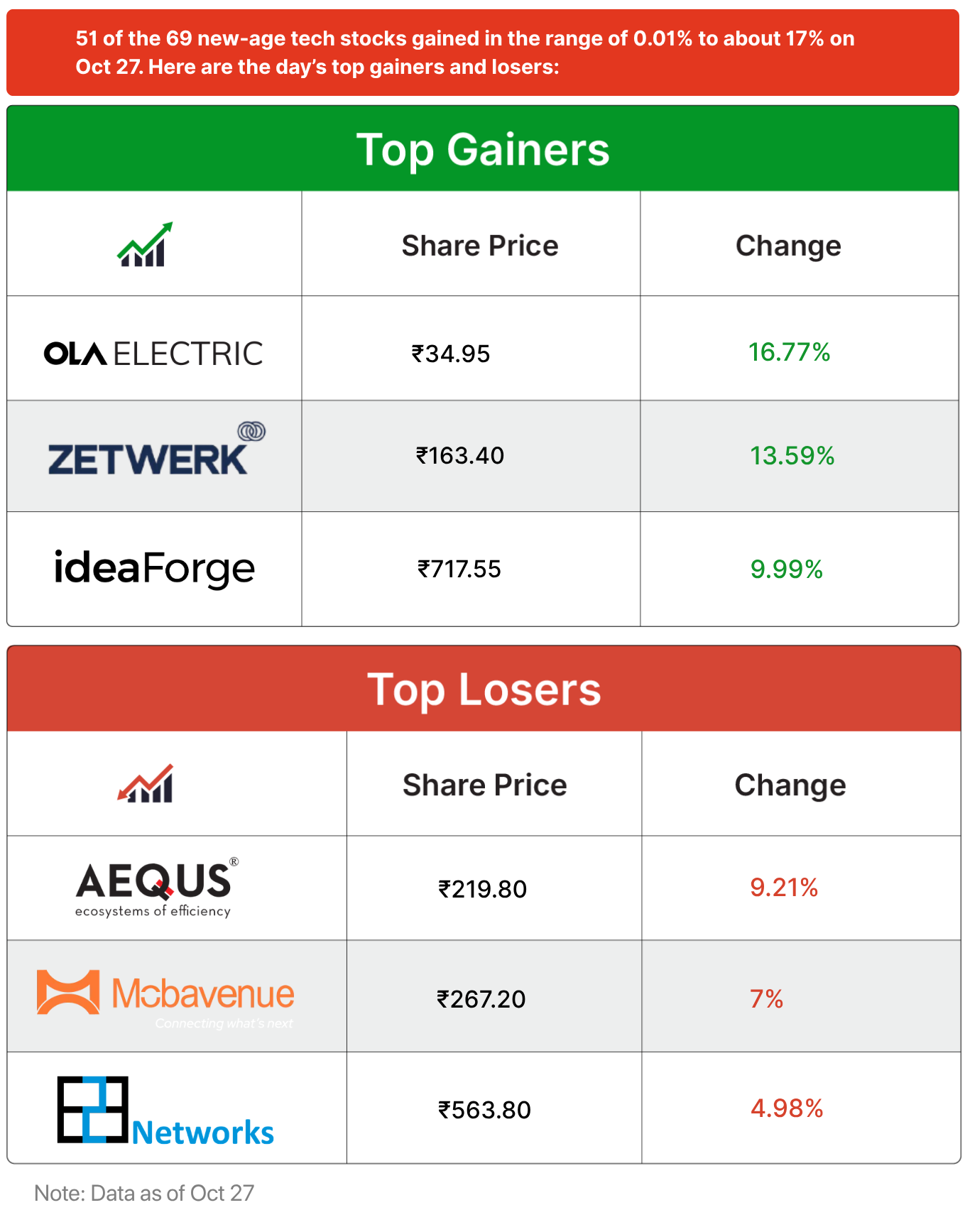
Inc42 Markets
Inc42 Startup Spotlight
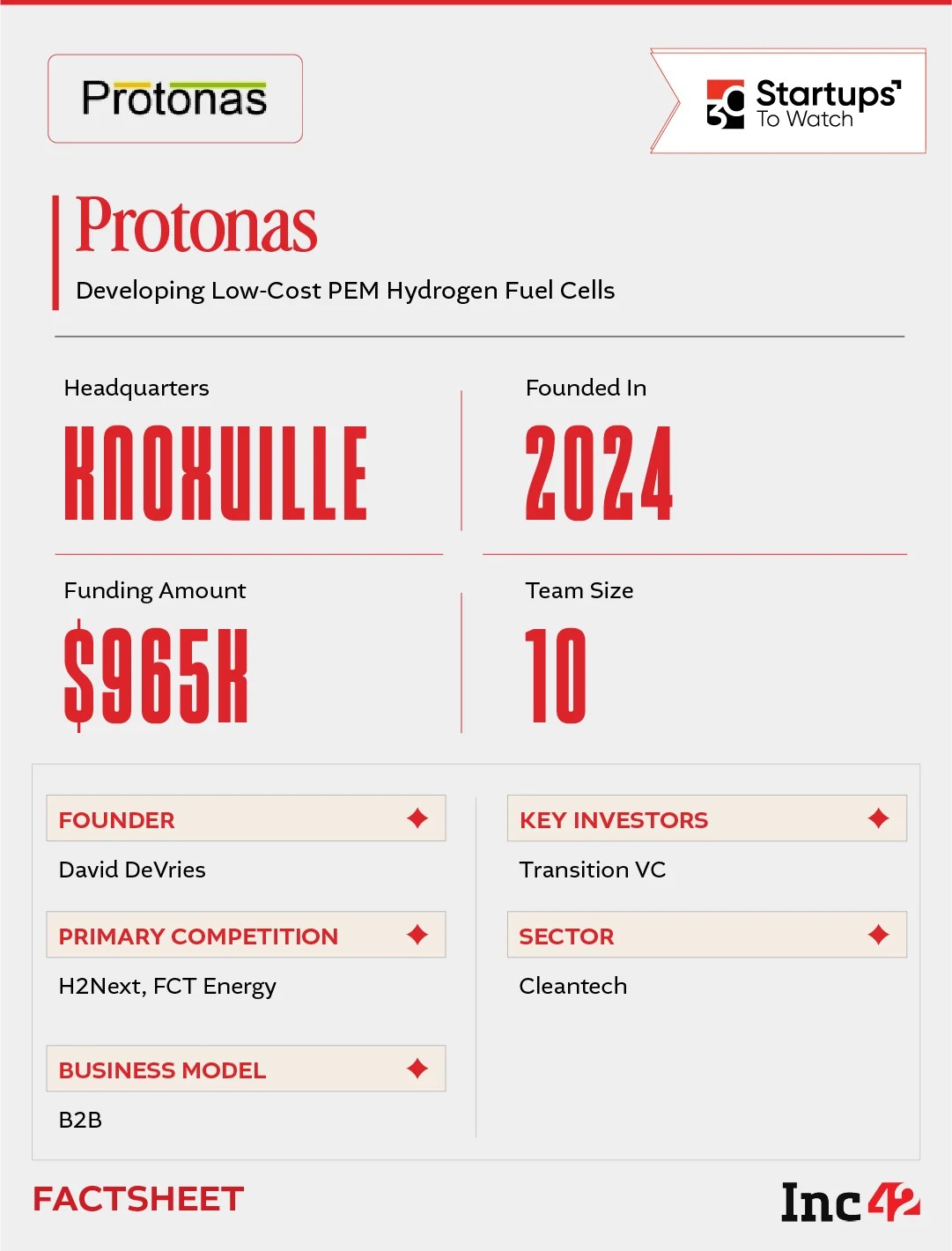
How Protonas Is Making Hydrogen Power More Affordable
Backup power in India often means diesel generators. But these are costly to run, pollute the environment and have high upfront costs. To solve this, Protonas is redesigning PEM fuel cells to make hydrogen power viable where traditional batteries fall short.
A Cost-First Design: Founded in 2024, Protonas is building air-cooled proton exchange membrane (PEM) fuel cells. This technology converts hydrogen and oxygen into electricity, with water as the only point-of-use byproduct. Its stack architecture uses fewer components and simpler cooling systems, which the startup claims can slash manufacturing and operating costs.
Lighting Up India: Protonas is building systems for backup power, mobility and UAVs. Its 500W–2kW systems for telecom networks and critical infrastructure are designed to provide eight to 72 hours of backup during outages. The startup is also developing fuel-cell engines for three-wheelers, alongside systems aimed at extending drone flight times.
Building In India: Backed by Transition VC, Protonas now plans to build its engineering and manufacturing operations in Bengaluru. Competing with the likes of Ballard Power Systems and Plug Power, it is now focused on developing affordable prototype systems for emerging markets. So, can Protonas make hydrogen fuel cells affordable and mainstream?
Infographic Of The Day
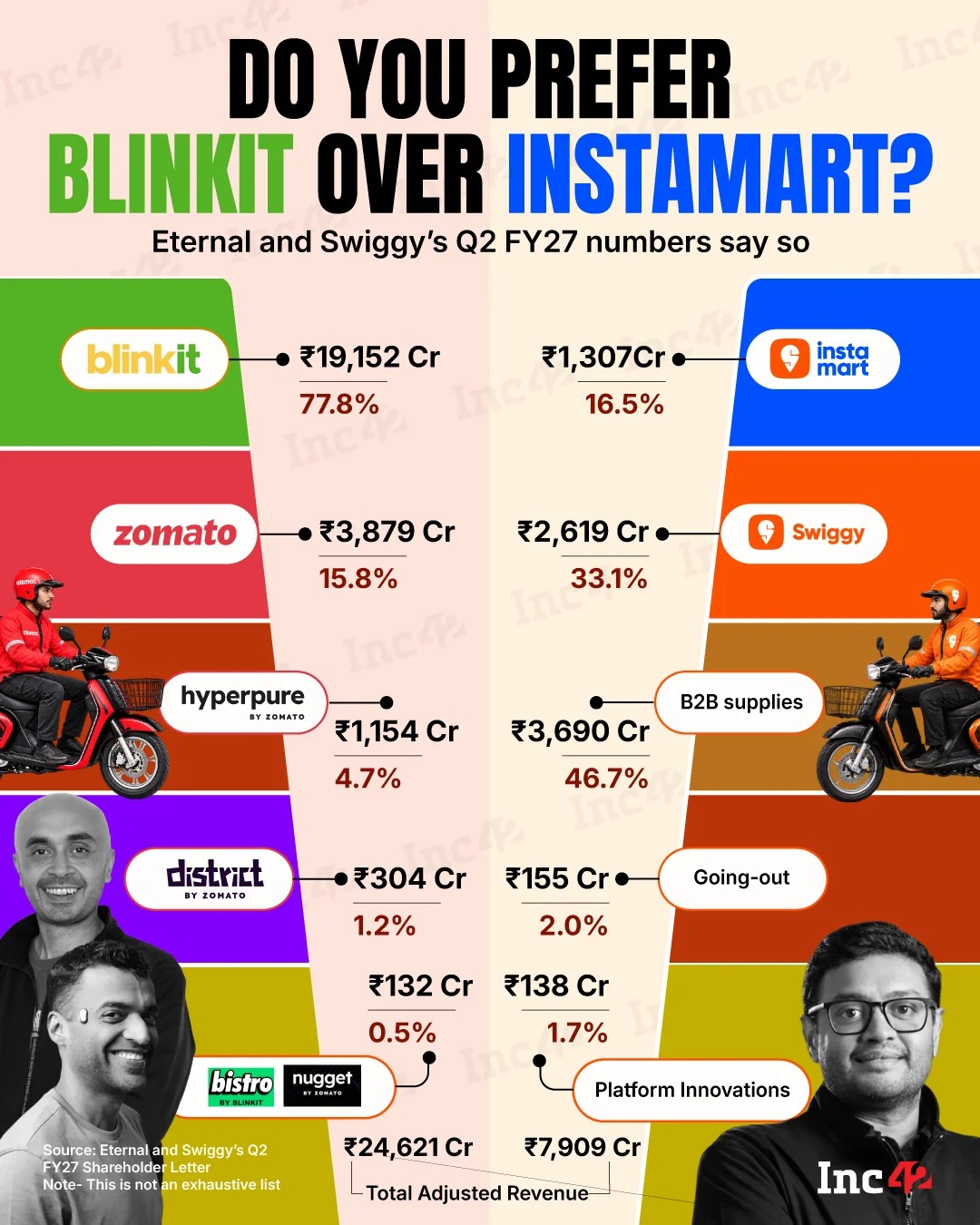
From quick commerce to food delivery, Eternal and Swiggy’s Q2 FY27 numbers tell two very different stories. Here’s how they stack up…