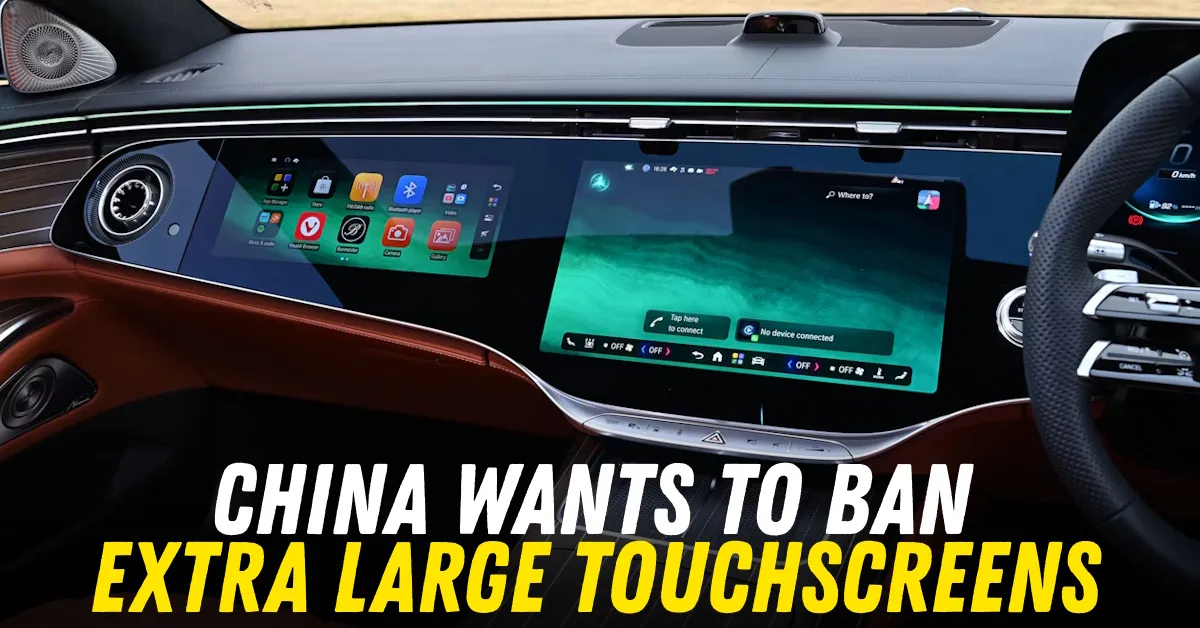
China is preparing to tighten safety rules for large screens, touch-operated controls and several other features that have become common in modern cars. The move follows its decision to restrict fully concealed door handles, which can be difficult to operate after a crash or a power failure.
The Ministry of Industry and Information Technology (MIIT), working with three other government departments, published the latest proposals on October 10. The draft is open for public comments until November 10, 2026. It is not yet a final regulation, and it does not propose a blanket ban on all large infotainment screens.
Under the proposed rules, carmakers would have to assess large infotainment displays, other dashboard screens and complex head-up displays (HUDs) for their effect on driver attention. They would also need to show that these systems remain reliable in extreme temperatures and do not create additional risks in a collision.
There is an important difference between this requirement and an outright ban. A large fixed touchscreen could still be permitted if the manufacturer demonstrates that its design meets the relevant safety requirements. However, the draft proposes prohibiting foldable and flexible displays. These are screens designed to bend, fold or change shape, rather than the conventional fixed displays fitted to most cars today.
Car manufacturers have increasingly used one large touchscreen to replace rows of buttons. Some vehicles now have a separate screen for the front passenger, while others stretch displays across much of the dashboard. This arrangement can look modern and allows manufacturers to add features through software. But it can also make basic operations more difficult if a driver has to search through several menus to find a frequently used function.
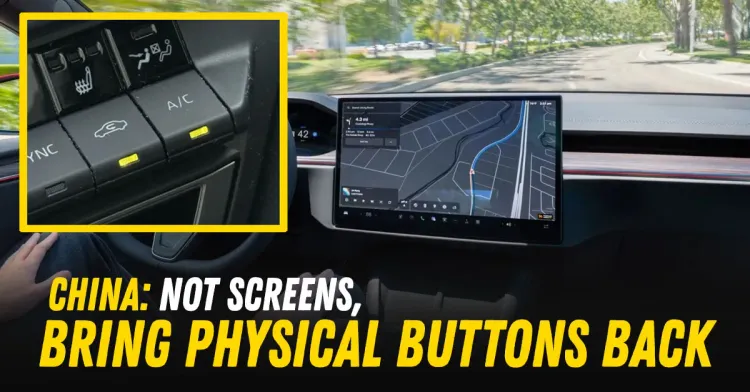
China also wants key safety-related controls to remain available through physical switches or buttons, even when a car offers touchscreen operation. The draft specifically covers functions such as headlights, windscreen wipers, defogging and defrosting. Emergency escape and braking controls would need physical operation and clear markings.
That addresses a familiar problem with some touchscreen-heavy cabins. Adjusting a fan speed or changing a music track is one thing. Finding the windscreen demister in an unfamiliar menu when visibility suddenly drops is another. A dedicated switch can generally be located without taking as much attention away from the road.
The proposals also examine voice and gesture commands. They would restrict passengers from using such systems to operate certain critical functions, including doors and lights, while the vehicle is moving. The concern is not with voice assistants as a whole but with the possibility of an unintended command affecting a safety-critical system.
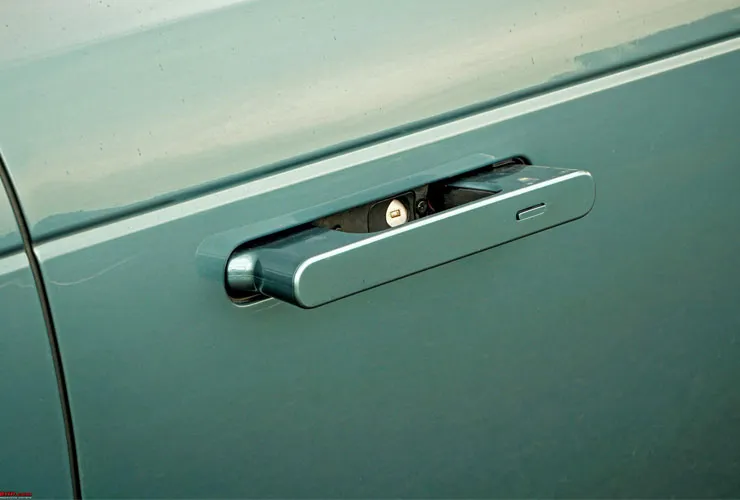
China has already published a separate mandatory standard governing car door handles. It takes effect on January 1, 2027, with additional time for some previously approved vehicles to comply. The rules address fully concealed handles and require dependable mechanical operation so that doors can still be opened if electrical systems fail.
This does not mean every handle that sits flush with the body is automatically outlawed. The central requirement concerns emergency access, mechanical release and adequate space to operate the handle. The October draft goes further by making the safety testing of unusual door designs part of the approval process. Electrically assisted soft-close doors would also need protection against trapping fingers and a way to open them manually during a fault.
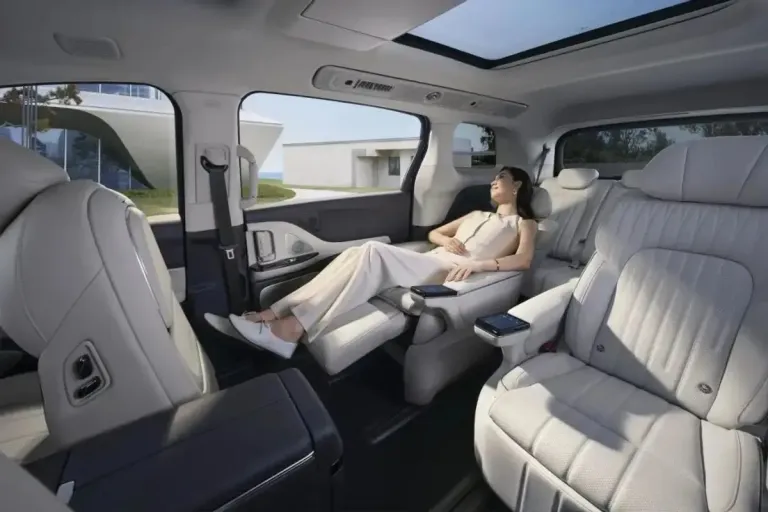
The proposed restrictions are not limited to screens and door handles. China also wants to prevent the use of so-called zero-gravity seats, rotating seats and seat-to-bed functions while a car is moving. Such seats can improve comfort when a car is parked, but a deeply reclined seating position can interfere with seat belts and airbags during a collision.
Customisable exterior lighting, including displays that show user-created messages, is also being examined. Separately, new vehicle approvals would require stronger proof of testing. The draft specifies at least 30,000 km of reliability testing for passenger vehicles and environmental testing covering at least one year, including severe cold and hot weather conditions.
If the draft is finalised in its current form, new-model approval requirements would start on January 1, 2027. Manufacturers of already approved models would have to submit additional information by July 1, 2027. That second date is a documentation and safety-compliance deadline under the proposal, not an announcement that every existing car with a large screen must be recalled.
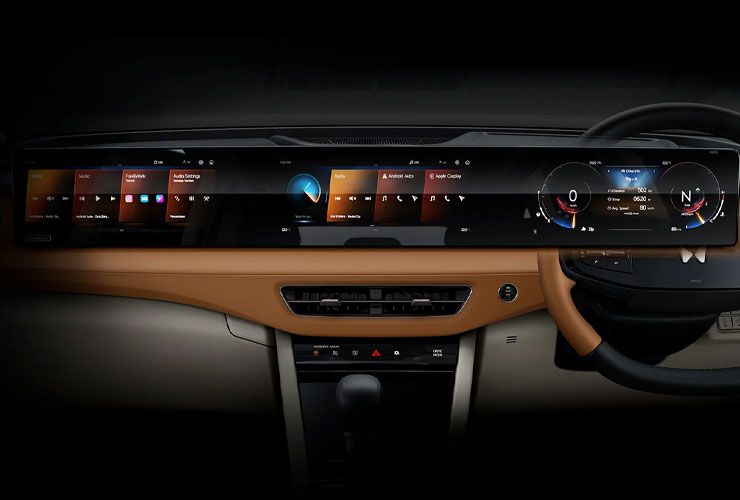
Several models sold here demonstrate how quickly the screen trend has grown. The Mahindra XEV 9e offers three 12.3-inch displays across the dashboard, and the Tata Sierra also uses a three-screen layout. These examples do not establish that either model is unsafe or that either would fail China’s proposed tests. Screen size and screen count alone are not enough to judge a cabin’s safety.
There is no corresponding announcement requiring cars sold here to remove large screens. However, China is one of the world’s largest vehicle markets and a major centre for EV development. Manufacturers that sell the same designs in several countries may choose to revise controls and displays globally rather than make different dashboards for every market.
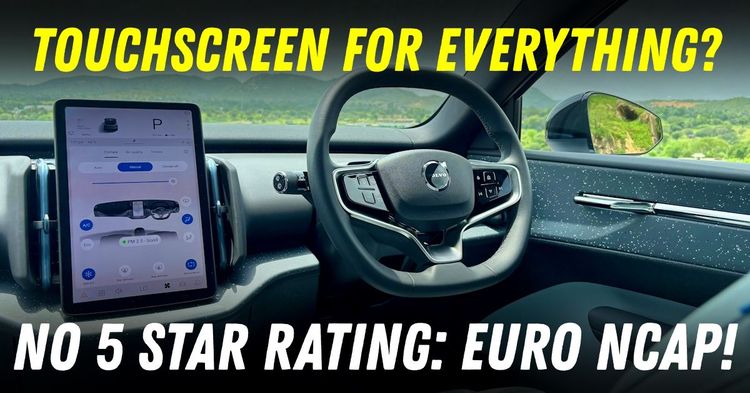
Safety testing organisations elsewhere have raised similar concerns. Euro NCAP’s 2026 assessments favour direct physical operation for essential functions such as indicators, windscreen wipers, hazard lights and the horn. That is a safety-rating criterion, not the same thing as a government prohibition on touchscreens. But if China goes ahead and bans large screens, it’s only a matter of time before other larger markets such as Europe and India follow.