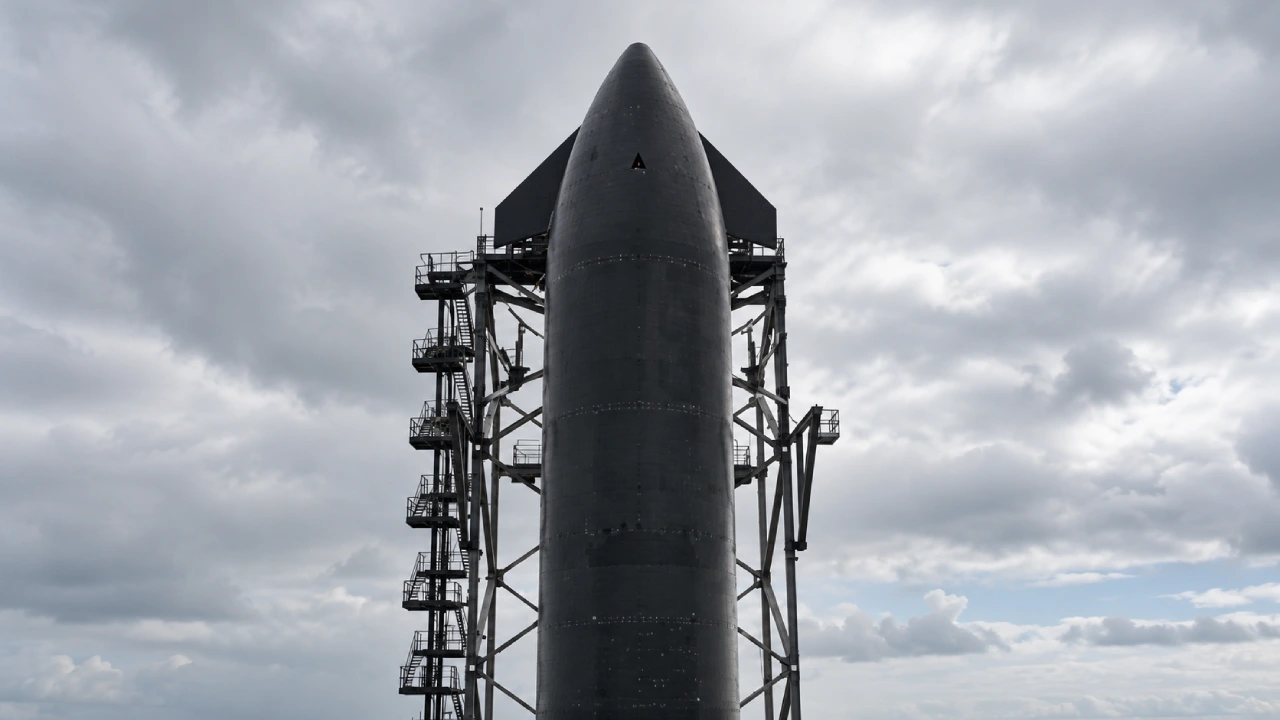
Starship Flight: SpaceX has completed a major engine test milestone for its next Starship mission. On October 28, 2026, the company announced that Ship 42, the upper stage assigned to Flight 15, performed a full-duration static fire involving all six of its Raptor engines. A separate single-engine firing was also conducted to simulate a deorbit burn, the maneuver intended to guide the spacecraft out of orbit for its return to Earth.
The announcement came via SpaceX’s official X account, which described the tests as complete, and the post did not specify the exact duration of either firing, though company statements and independent reporting have characterized similar static fires as full-duration events.
What the Six-Engine Test Actually Demonstrated
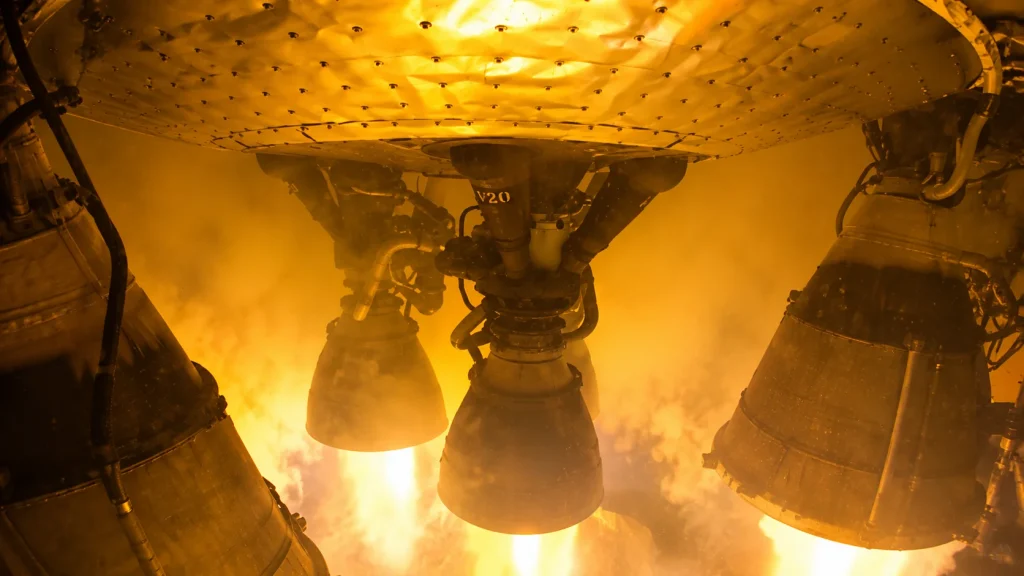
During a static fire, a rocket remains secured to a test stand while its engines ignite and burn for a planned duration. Engineers use the data to verify propulsion performance, propellant flow, and vehicle systems before committing to flight.
For Ship 42, the six-engine firing represents the most comprehensive propulsion check the upper stage can undergo before launch. All six Raptors burning together produce the thrust profile the spacecraft would need during its ascent phase after separating from the Super Heavy booster.
A single Raptor firing in space would slow the spacecraft enough to bring its trajectory back into the atmosphere. SpaceX has not previously attempted a controlled return of a Starship upper stage to the launch site. Flight 15 is expected to change that.
The Booster Side of the Equation
Ship 42’s counterpart is Super Heavy Booster 22, which completed its own full-duration static fire on October 25, 2026, as well. All 33 Raptor engines on the booster ignited during that test, which SpaceX also confirmed publicly.
Booster 22 provides the initial thrust to lift the stack off the pad, and Ship 42 carries the payload and performs the orbital portion of the mission.
Booster 22’s test cleared the first stage for final flight preparations. Ship 42’s tests, now complete, clear the upper stage’s engine systems.
Why the Deorbit Simulation Matters
Flight 15 is not a repeat of earlier missions. SpaceX intends to attempt something it has never done: catching the Starship upper stage with the launch tower’s mechanical arms, often called “chopsticks.” The company has successfully recovered Super Heavy boosters this way three times, beginning with Flight 5 in October 2024. The upper stage has always ended its flights with an ocean splashdown.
A tower catch requires the spacecraft to return to the launch site under controlled conditions. The deorbit burn is the first step in that sequence. By firing a single Raptor in a simulated deorbit burn, SpaceX is testing the engine’s ability to perform a precision maneuver after hours in space.
Whether the actual deorbit burn during Flight 15 will use one engine remains unconfirmed. The simulation suggests that configuration is under consideration.
The Regulatory Hurdle That Has Not Been Cleared
Hardware readiness is not the same as launch readiness. A static fire passing does not mean the vehicle will fly on schedule. SpaceX still needs a modified FAA license that authorizes both the booster and the ship to return to the launch site over land.
SpaceX President Gwynne Shotwell said in October that the company expects “the license for our Flight 15 to include return to launch site and tower catch for both stages,” and that expectation has not yet been confirmed as an issued license. The FAA has not published an updated launch license for Flight 15 as of this writing.
People could not verify whether the license application is pending, under review, or near approval, and the company has not responded to requests for comment on the regulatory timeline.
What Flight 15 Would Mean If It Succeeds
A successful dual catch would mark the first full recovery of an orbital-class launch vehicle. Both stages would return to the launch site rather than being expended in the ocean, and that is the foundational claim of Starship’s reusability pitch: rapid turnaround, lower cost per flight, and a system that operates more like an aircraft than a conventional rocket.
It proves recoverability. The next milestone would be re-flying a recovered vehicle, which Musk has identified as the objective for Flight 16.
Whether Flight 15’s hardware returns in a condition that permits re-flight remains unknown until it happens.
The Honest Assessment
Static fires are necessary, but they are not sufficient. The engines have proven they can burn on the ground. The vehicle has not yet proven it can fly, return, and be caught. The FAA has not yet proven it will authorize the attempt. And November is a target, not a commitment.
Whether Flight 15 launches on time, slips into December, or encounters a hardware issue during integration depends on factors that are not visible from outside. What is visible is that SpaceX has completed the propulsion tests it needed to complete. The next steps are integration, regulation, and weather.
(Source)