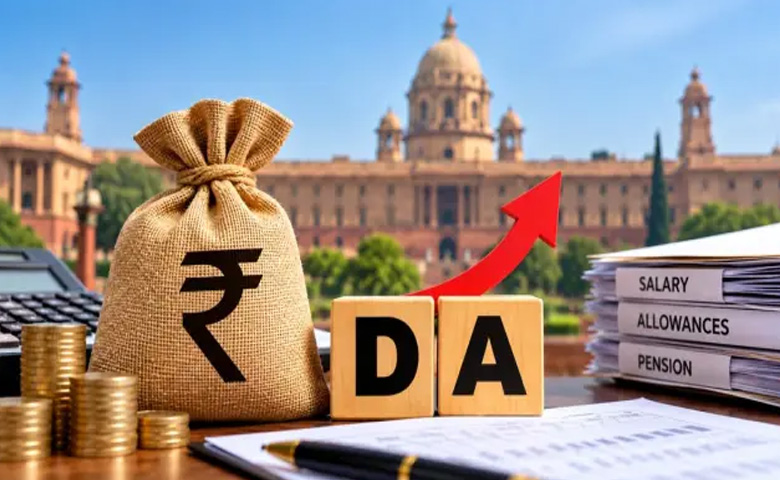
Dearness Allowance Hike: In the time of ever-increasing inflation and inflation in the country, the news of a big relief for Central Government employees and pensioners has come to the fore. Rising prices of daily necessities adversely affect the purchasing power of employees, keeping in view the rates of Dearness Allowance (DA) revised by the Central Government from time to time. The announcement of this financial relief entails a financial burden on the government exchequer, but the move proves essential for the welfare of the employees.
An additional burden of ₹ 6,791.24 crore annually on the government exchequer
The central government has made a significant increase in the rate of dearness allowance and dearness relief by 2 per cent from January 2026, due to which the level of DA has gone up to 60 per cent from earlier 58 per cent. This 2 percent increase has resulted in an additional financial burden of around ₹ 6,791.24 crore on the central government’s annual exchequer. This additional amount of allowance is directly transferred online to the bank account of the eligible employees, thereby providing them with a great support against inflation.
Directly benefiting millions of families across the country
This increase in Dearness Allowance has directly and massively benefited millions of families across the country. According to official figures, this decision of the government has directly benefited more than 50.46 lakh active employees of the central government. Apart from this, around 68.27 lakh pensioners spread across the country have also got ample benefit of this inflation relief, which has given a big boost to their monthly household budget.
Where does the money come from to pay the government?
The big question is, where does the government pay such a huge amount? In fact, the government pays this dearness allowance to its employees from the Consolidated Fund of India. The main source of this government treasury is direct and indirect taxes paid by citizens and various businesses. Income tax paid by the general public, corporate tax and goods and services tax (GST) are the main sources of revenue that fund this allowance.
The amount is determined based on the basic salary
During the annual budget session, governments allocate funds in advance in their revenue budgets for salaries and allowances of employees. This calculation of dearness allowance is not an arbitrary decision, but is based on the official data of All India Consumer Price Index (AICPI). For example, if an employee’s basic salary is ₹30,000 and the current DA rate is 60 percent, he will get ₹18,000 per month as allowance, so the total amount without other allowances will be ₹48,000. Generally the government reviews this allowance twice a year with effect from January and July.