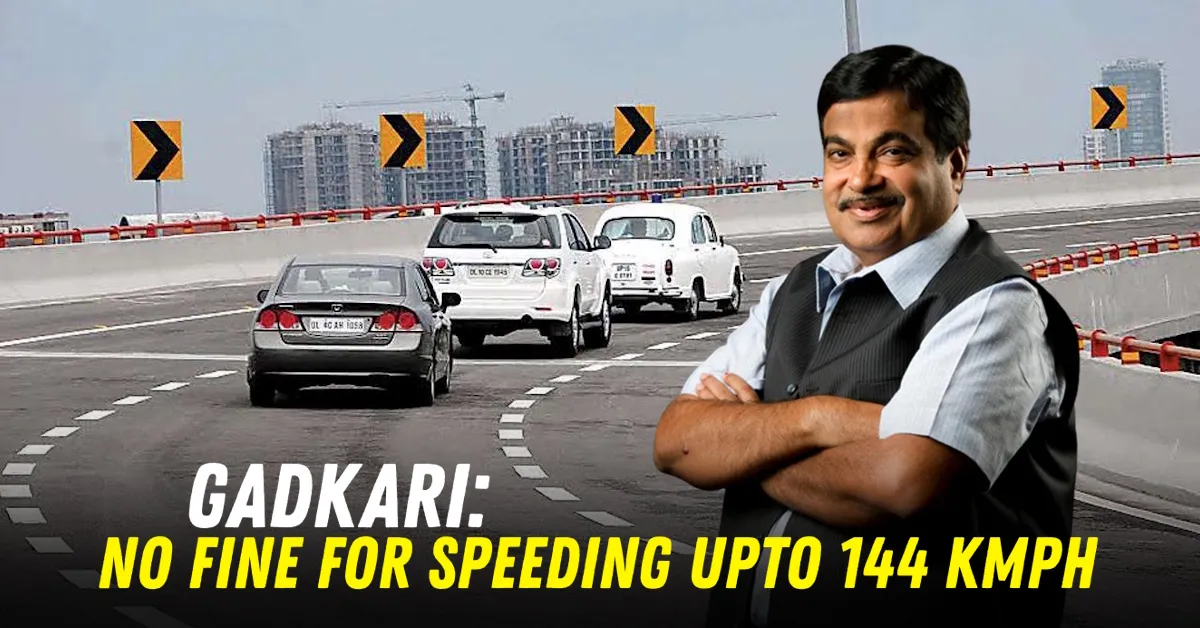
Recently, during the Confederation of Indian Industry’s (CII) National Conference on Highways, Union Minister of Road Transport and Highways Nitin Gadkari stated that they are going to implement a new and advanced Traffic Management System (ATMS) on national highways. This new system will use AI cameras and systems to monitor lane discipline. He added that if bus, truck and car drivers maintain lane discipline, the number of accidents will reduce.
Following this, he then made the big announcement regarding speed limits. Gadkari highlighted that a number of motorists are receiving speeding notices while travelling on expressways. He then continued that in order to address this issue, he has instructed the concerned authorities not to issue speeding challans to vehicles travelling at speeds of up to 120 kmph.
However, this was not the only thing he mentioned. Gadkari also stated that motorists who exceed the 120 kmph threshold by up to 20 percent should be allowed to continue without a challan. Meanwhile, those who exceed this additional margin will face penalties.
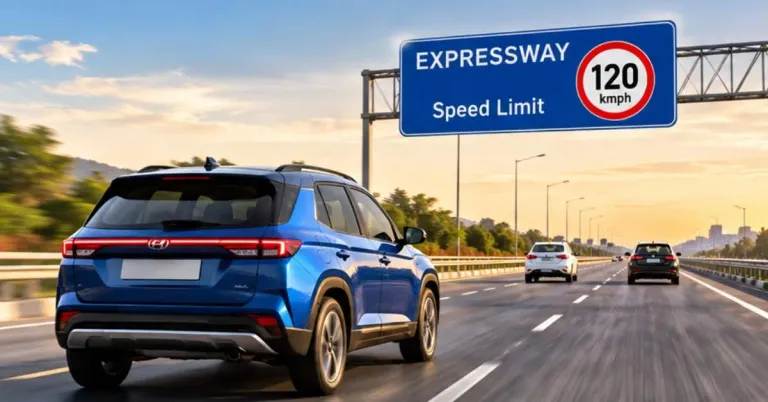
Now, if you are wondering how the figure of 144 kmph comes into the picture, the calculation is actually quite simple. Currently, the maximum notified speed limit for private passenger cars on access-controlled expressways is 120 kmph, although individual stretches can have lower limits.
According to Gadkari’s suggested approach, motorists could receive an additional 20 percent margin over this speed before a challan is issued. So, 20 percent of 120 kmph comes to 24 kmph. So, when we add this additional 24 kmph to the existing 120 kmph limit, the figure then becomes 144 kmph.
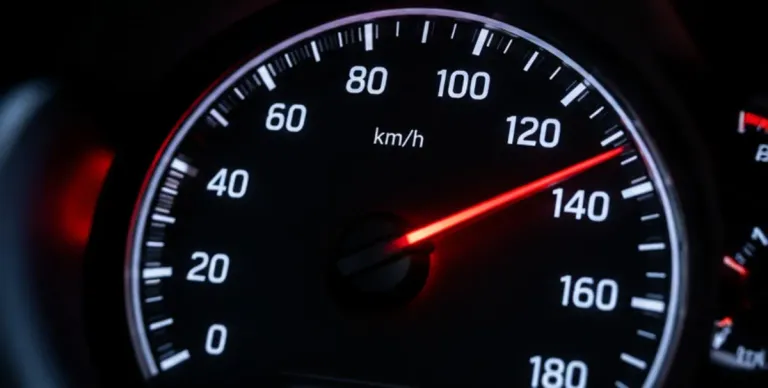
Now, before you get too happy, it has to be mentioned that the answer to the above-mentioned question is no. As of now, the maximum notified speed limit for private passenger cars on access-controlled expressways is still 120 kmph, and it is subject to any lower limits prescribed for particular stretches.
Presently, Nitin Gadkari’s statement does not mean that the government has officially increased the speed limit to 144 kmph. Instead, he has spoken about allowing a higher margin before issuing speeding penalties. This means that the legal speed limit and the speed at which enforcement authorities might issue a challan are two different things.
It also has to be mentioned that there has been no confirmation of a new nationwide notification introducing the proposed 20 percent margin. In addition, the current government speed-limit notice allows for a lower tolerance on measured speeds. However, this should not be confused with the new 20 percent margin discussed by Gadkari.
As of now, it is also unclear when the authorities will implement the minister’s instructions and whether existing automated enforcement systems will be updated.
Another important thing to understand is that the proposed relaxation is specifically for expressways. This does not mean that drivers can drive at 144 kmph on every national highway or expressway in India. Different roads have different speed limits, and they depend on their design, location and traffic conditions. Apart from this, different categories of vehicles are also subject to different speed restrictions.
For example, an expressway stretch with a posted speed limit of 100 kmph does not automatically become a 144 kmph road because of Gadkari’s statement. It is also unclear whether the suggested 20 percent margin will apply uniformly to all expressway speed limits and vehicle categories. So, until the government gives clarification, motorists should continue following the speed limits displayed on road signs.