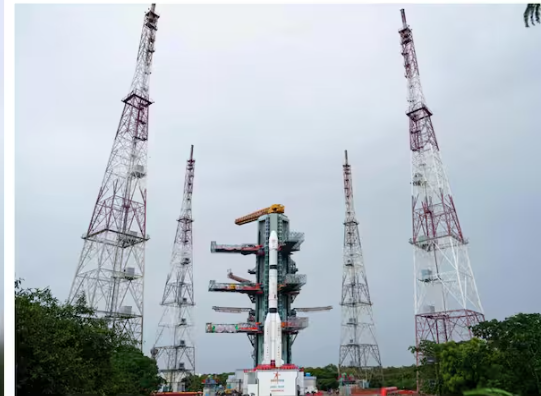
ISRO Navigation Satellite NVS-03 : Indian Space Research Organization (ISRO) is going to launch its next generation navigation satellite, NVS-03 on October 30. The mission can help enable India's indigenous satellite navigation system, 'NavIC', to provide independent positioning services. It will be launched from the Satish Dhawan Space Center in Sriharikota, Andhra Pradesh through the GSLV-F18 rocket. The objective of this mission is to strengthen the services of NavIC, India's indigenous navigation system.
Read :- Uma Bharti's emotional post on Shahnawaz Hussain's son's marriage, 'will remain a regret throughout my life' My image was created as if we are enemies of Muslim society…
ISRO Chairman Dr. V. Narayanan gave information about the mission today i.e. Thursday, October 29 after visiting the Sri Venkateswara Swamy Temple in Tirumala. He informed that this will be ISRO's fifth mission this year, which also includes a private launch. Through NVS-03, work will be done to improve India's positioning, navigation and timing services.
NVS-03 is intended to replace and enhance the existing NavIC constellation as older satellites approach or exceed their intended functional lifespan.
It uses imported clocks as well as an indigenously developed atomic clock, and adds an L1 signal to the existing L5 and S-band signals. L1 signals will allow NavIC to be used with more user devices.
The atomic clocks of the first generation IRNSS-1A satellite failed in 2016, and later the rubidium clocks of some other satellites were also found to have hardware problems. NVS-01, launched in May 2023, was the first satellite to have an indigenous atomic clock.
Read:- CBSE made a big change in the syllabus of class 9th-10th, three subjects including environmental education were removed, know what was included?
NavIC aims to reduce India's dependence on foreign satellite navigation systems, such as the US's Global Positioning System (GPS). Its uses include navigation, transportation, timing services, infrastructure, and strategic operations for civilians.