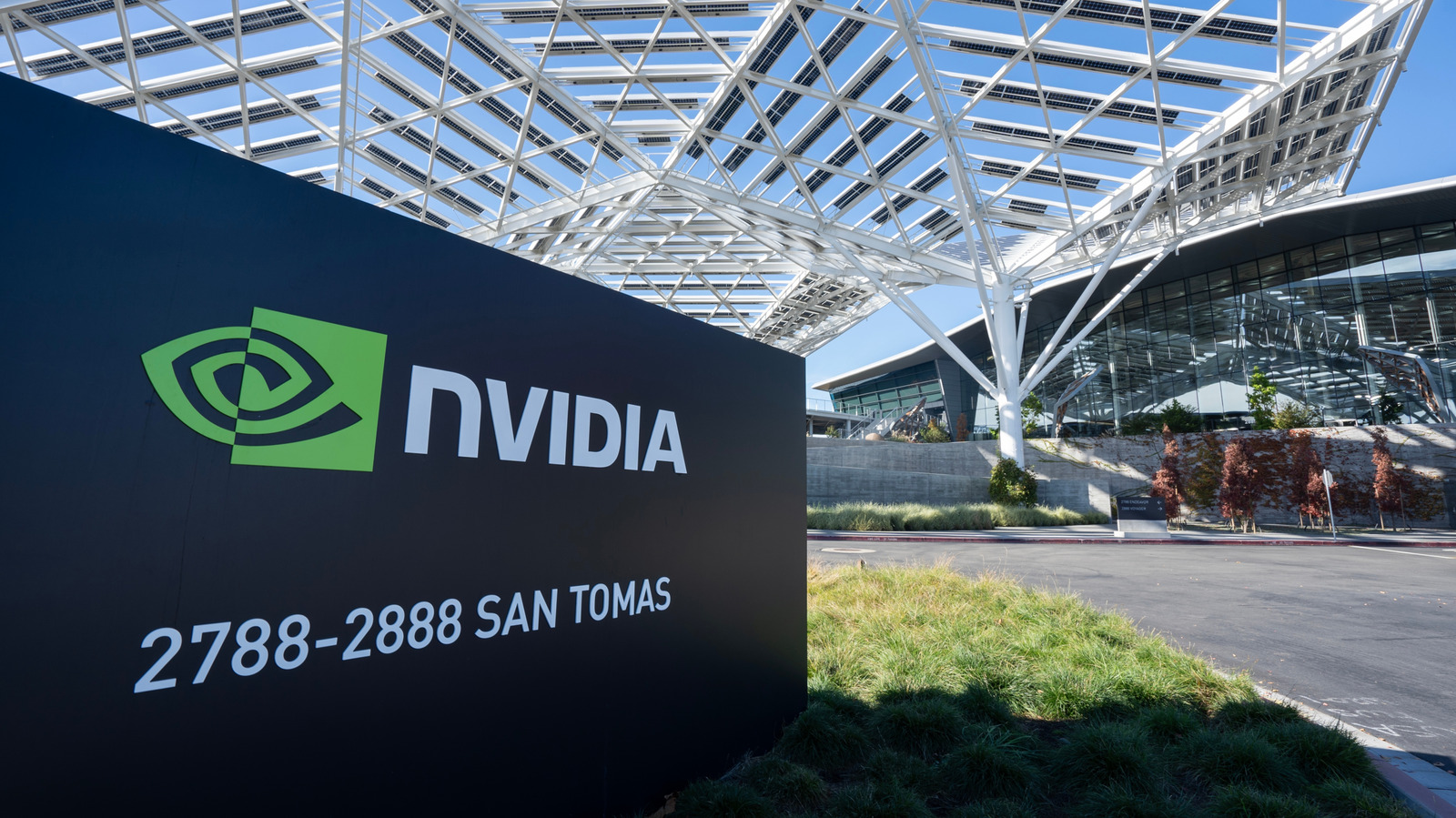
When people think of Nvidia, they probably think of a gaming-first company with a track record of making some of the best graphics cards on the market. Today, however, Nvidia is overwhelmingly an AI data-center company — its fiscal year 2026 data shows its gaming segment accounted for only about 7% of its $215.9 billion revenue — and one of the world’s biggest tech companies outright. As of October 2026, NVIDIA is also the world’s most valuable publicly traded company, with its value hovering anywhere between $5.1 and $5.4 trillion. This makes NVIDIA bigger than traditional Big Tech giants like Alphabet (Google), Apple, Microsoft, Amazon, and Meta.
Over the years, Nvidia has acquired several smaller companies. However, unlike many of its peers, which have bought major companies and allowed them to continue operating as distinct entities — see, for example, the Meta-owned Instagram and WhatsApp — Nvidia tends to absorb its acquisitions outright. Thus, the company’s acquisitions may not be as well known as other Big Tech purchases over the years. To that end, let’s look at some of the major companies Nvidia has acquired, and how the remnants of those acquisitions exist within its corporate structure.
Mellanox Technologies
Nvidia acquired Mellanox in early 2020, and it was the acquisition that helped the company go from one that mainly sold fast graphics cards to an end-to-end data center titan. But what business did Nvidia — a graphics card company — have with a high-end networking company like Mellanox?
As it turns out, quite a lot: Nvidia executives understood the role GPUs would eventually play in training and running AI-based applications, and the importance of transferring all the data its GPUs could process between servers. Basically, while Nvidia had products capable of processing complex AI tasks, it lacked the infrastructure to move that data. Mellanox, as it turns out, specialized in this specific area. The company had developed InfiniBand, a high-bandwidth, low-latency network protocol used across servers, data centers, and various high-performance computing applications. It was a niche segment, but one that made Mellanox make some serious money.
Nvidia saw the potential of Mellanox’s advanced network protocols in a future where data centers would process complex AI requests, and acquired Mellanox for $6.9 billion in 2020. Shortly before the acquisition, Mellanox posted revenues of around $1.3 billion. Fast forward to 2026, and NVIDIA’s networking division (largely built on Mellanox’s foundations) alone surpassed $31 billion in revenues. $11 billion of that came in a single quarter, making Nvidia bigger than traditional networking giants like Cisco and Arista Networks.
Run: you have
Run:ai was a fairly new startup when NVIDIA acquired it in 2024. It was founded in 2018 by two advanced engineering students, Omri Geller and Ronen Dar, at Tel Aviv University. The startup’s claim to fame is its enterprise-grade software and virtualization platform tailored for GPU-powered AI-focused tasks, helping companies allocate their available GPU resources efficiently.
Companies training AI models (and running other AI tasks) invariably need a lot of GPU power. However, not all AI tasks are equally resource-intensive. A simple debugging request, for example, will use only a tiny percentage of available GPU resources compared to, say, a comprehensive AI training task. This is where Run.ai’s platform comes into play. Its tool ensures smaller tasks don’t hog valuable GPU power. It does this by assigning only the necessary GPU resources to each task, thereby freeing up valuable compute power for more demanding processes.
In simpler words, by acquiring Run:ai, Nvidia gained technology that helps its enterprise customers manage large GPU fleets more easily, potentially getting more AI work done with the hardware they already have. After the acquisition, Run:ai was effectively rebranded as an Nvidia product, as seen on the dedicated Run:ai portal on Nvidia’s website.
Excelero
Run:ai was the second Israeli startup Nvidia acquired in just as many years. In 2022, Nvidia purchased Excelero, and its acquisition story is similar to that of Run:ai. Excelero was known for its NVMesh software, which allowed multiple computers to share pools of extremely fast NVMe storage drives. It helped companies combine their available storage resources and make data accessible wherever necessary.
This functionality was particularly useful for demanding applications such as AI and high-performance computing (HPC), where huge amounts of data need to be accessed very quickly. Nvidia had already noticed Excelero well before the acquisition, working closely with the company in the years leading up to 2022. Once Nvidia purchased Excelero, it brought its engineering team and technology in-house.
Nvidia now had access to Excelero’s storage technology and a team of engineers specializing in high-performance storage and networking. Nvidia planned to incorporate expertise gained from this acquisition into its own enterprise, AI, and HPC software, including software designed for its data-center processors. Like most of its other acquisitions, Excelero no longer exists independently, with the team and its products now deeply integrated into Nvidia’s product offerings.
DeepMap
In 2021, Nvidia acquired DeepMap, which at first glance looked like just another mapping company. However, instead of maps for humans, DeepMap’s efforts were focused on autonomous vehicles. Self-driving cars need considerably more information than conventional maps provide. This may include the exact position of individual lanes and road boundaries, traffic lights, signs, and other objects, with accuracy measured in centimeters. These maps also need to be up to date and reflect changes to roads and lanes.
DeepMap developed technology that allowed it to create extremely detailed maps using sensor-equipped vehicles. After acquiring DeepMap, Nvidia incorporated the technology into its broader autonomous driving platform, introducing it as Nvidia Drive Map in 2022.
Nvidia’s DeepMap acquisition was undoubtedly motivated by an understanding that powerful AI chips alone aren’t enough to make autonomous vehicles a reality. These machines also need an extremely accurate, always up-to-date picture of the world they drive through, and DeepMap was an important piece of that puzzle. As with the company’s other acquisitions, DeepMap’s team and technologies no longer operate independently and are now part of Nvidia’s larger corporate structure.
Hugging Face
As of October 2026, Hugging Face is the most recent company to join Nvidia’s ranks. The tech giant spent a staggering $12.3 billion to acquire the platform, making it one of Nvidia’s biggest acquisitions ever. Hugging Face is allows developers and researchers to find, share, modify, and deploy AI models instead of building everything from scratch. The platform hosts millions of AI models and datasets and is used by a huge number of developers and companies alike.
Hugging Face is a valuable addition to Nvidia’s portfolio and a business model that now stretches way beyond graphics cards. In 2026, Nvidia not only makes the GPUs that power many AI systems, but also develops networking hardware, AI software, and tools that help companies build and run AI. With Hugging Face under its ownership, Nvidia has direct access to one of the world’s largest communities of AI developers, ensuring that it effectively owns the hardware needed for AI and the workshops where AI models are made. Hugging Face appears to be operating as usual after the acquisition, and it remains to be seen how Nvidia eventually integrates the platform into its AI and technology ecosystem.