All of India is watching the Andhra Pradesh local body polls, which have been marked by political drama, house arrests of key leaders, and bouts of violence. A quieter, but no less fraught, drama is playing out on the Andhra-Odisha border, where a handful of villages that Odisha considers its own may end up voting in Andhra’s elections too.
At the centre are 21 of the 28 villages of Kotia Gram Panchayat, tucked into the remote, forested hills of the Eastern Ghats. Andhra’s move to notify polls in three of them has Odisha in the Supreme Court, tightening security on the ground and fending off the Opposition. For Odisha, this is a matter of prestige.
The villages are 21 of the 28 in the Kotia Gram Panchayat that both states have claimed for decades. With Andhra’s notification covering three of them, Odisha has gone to the Supreme Court, tightened security in six border villages and is weighing prohibitory orders, while the Opposition accuses the government of going soft on its ally, the TDP.
A British-era oversight
Odisha says the villages belong to Kotia panchayat in Pottangi block, Koraput district. Andhra says they fall under Salur block in Parvathipuram Manyam district. The mess goes back to April 1, 1936, when the Province of Orissa was carved out of Madras Presidency. The order transferring the Jeypore Estate and the rest of Pottangi Taluk didn’t name individual hamlets, so the line stayed blurry.
AI-generated image shows the rough location of the disputed Kotia region.
In 1942, surveyor HS Gilby was sent to draw it. He recorded only seven villages as Odisha’s (Turia, Barabandha, Talakanti, Gumelpadara, Mathalamba, Suliamari and Katraguda) and left the other 21 unsurveyed.
Also read: Kotia village polls dispute: Odisha moves Supreme Court against Andhra Pradesh
No joint survey has settled their status since, not after Andhra State was formed in 1953, nor after Andhra Pradesh in 1956.
Courts, clashes and minerals
Both states put the villages on their maps, revenue records and voter rolls. Trouble began in 1955, when Andhra officials tried to collect rent and Odisha objected. Talks between the chief ministers in 1968, in the presence of then Union minister YB Chavan, went nowhere. The discovery of bauxite, graphite and manganese only raised the stakes.
Odisha moved the Supreme Court in December 1968. On March 30, 2006, the court disposed of the suit, saying Article 131 bars it from settling inter-state boundary disputes, which is Parliament’s job. It told both states to maintain the status quo.
Also read: A community on edge: Politics and peril of Dara Singh’s possible release
That order is the yardstick for every squabble since. After Andhra held panchayat polls in the villages in 2021, Odisha filed a contempt plea in 2022, which is still pending.
Two states, two stories
Andhra cites British-era notifications of 1920, 1923 and 1927 that moved the villages from Pottangi Taluk to Salur Agency. It also points to the Gilby report, which it says gave only seven villages to Odisha.
Odisha leans on the 1936 order, which transferred the Jeypore Estate and the residual Pottangi Taluk wholesale. It calls the Gilby survey incomplete and unilateral, since no Odisha official was present. It also cites the constitutional rule that areas administered as part of a province before 1950 stayed with it.
Digital maps add to the muddle. Odisha says Google Maps wrongly places many villages on Andhra’s side, and is working to get the boundary corrected. A local group, the Dandakaranya Vikas Mahamancha, has written to Google and the Surveyor General of India.
Also read: ITBP Arunachal row: Face-offs on unmarked border not unusual, says China expert
Earlier, the Dandakaranya Vikas Mahamancha had approached Google India and Google LLC and written to the Surveyor General of India, seeking correction of the boundary shown on digital platforms.
5,000 tribals caught in the conflict
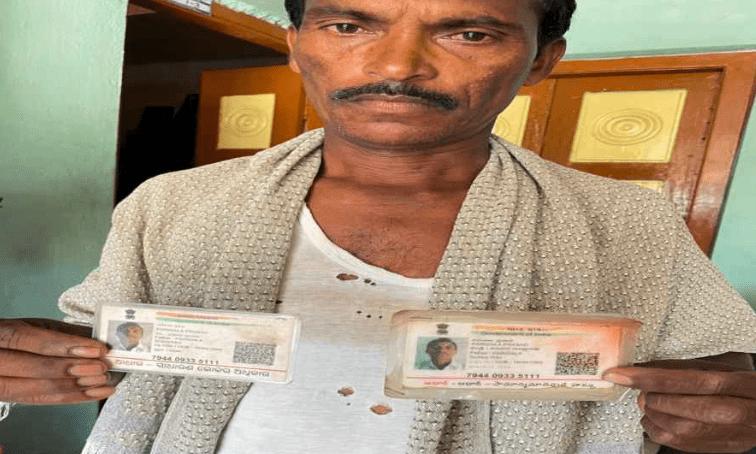
More than 5,000 tribal residents are caught in the middle. Many hold voter and Aadhaar cards from both states, children attend schools run by both, and there are two gram panchayats.
Odisha has built roads, schools, hospitals and houses. Andhra has distributed forest rights pattas, laid foundation stones and enrolled residents in welfare schemes.
Clashes flare during elections, censuses and benefit distribution. In 2021, Odisha police reportedly tried to keep Andhra officials and voters from polling stations, citing Covid rules, yet 223 villagers in Nereduvalasa still voted.
Also read: India-Nepal border row: Why Kalapani, Limpiyadhura, Lipulekh are key for both nations
In 2023, a political clash broke out when then Union minister and Odisha resident, Dharmendra Pradhan, visited the Kotia villages to celebrate Utkal Divas (Odisha formation day). Pradhan’s questions on the presence of Andhra Pradesh police personnel in Kotia and raising of ‘Go back Andhra’ didn’t sit well with then Andhra deputy chief minister and Salur MLA P Rajanna Dora, who demanded the former’s apology for his remarks.
Latest flashpoint
The latest trigger to the dispute has been Andhra’s poll notification on October 10 announcing Zilla Parishad and Panchayat Samiti elections in three – Phagunasineri, Ganjeipadar and Phatusineri – of the disputed villages.
According to the Andhra election schedule, November 5 has been announced as the date for Mandal Parishad and Zilla Parishad elections with the counting scheduled for November 7. The poll was earlier slated for November 3, but was later rescheduled.
While Gram Panchayat/Sarpanch elections are scheduled to be held on November 26 and 29, and December 2, there is no clarity on the date on which polling will be held in the disputed Kotia villages.
Although Andhra officials have reportedly stated that elections will also be conducted in these villages, it needs to be verified whether the State Election Commission has issued any specific official announcement in this regard.
Odisha digs in
Odisha has filed a contempt petition, accusing Andhra of violating the 2006 order. Revenue minister Suresh Pujari says the state won’t let Andhra run its election process in what it considers its territory. After a meeting with the advocate general, the revenue divisional commissioner and the Koraput collector, he ordered close monitoring of the area. “I have asked the RDC and collector to keep a close watch on the Kotia area and keep the state government updated,” the minister said.
Police have set up checkpoints and tents in six sensitive villages: Neradivalsa, Tadivalsa, Aruzubalsa, Upar Sambi, Fagunsuneri and Fatusuneri. Prohibitory orders are planned across the panchayat.
Watch: Explained: Assam & Mizoram’s 100-yr-old border spat
The 16-member Kotia Committee, formed in May 2025, has backed extending the Surya Ghar solar scheme to local households and creating a residents’ committee. An all-party meeting on October 29 agreed to present a united front.
Politics heats up
The BJD says the Mohan Charan Majhi government is going soft because the BJP is allied with Chandrababu Naidu’s TDP. The BJP says Naveen Patnaik let the issue fester for years.
Patnaik wrote to Majhi, who replied by urging “constructive and legally sustainable” solutions. Pujari dismissed Patnaik’s letter as “eyewash”.
Congress leader Rama Chandra Kadam accuses the government of double standards. State party chief Bhakta Charan Das wants a separate board for the region and notes the gap in welfare: Odisha pays elderly beneficiaries Rs 1,000 a month, Andhra up to Rs 4,000.
No end in sight
For all the noise, the real answer to Kotia may lie far from Koraput or Amaravati. The Supreme Court said back in 2006 that only Parliament can settle an inter-state boundary row, and nothing has come of it since.
So the status quo order remains the only rule, and each election, census and welfare drive tests it. Odisha’s contempt plea is still pending, and the November 5 polls are the next test.
Meanwhile, more than 5,000 residents hold two sets of cards, send their children to two sets of schools and wait for a line on a map to be drawn. Until it is, Kotia will keep resurfacing every election season.