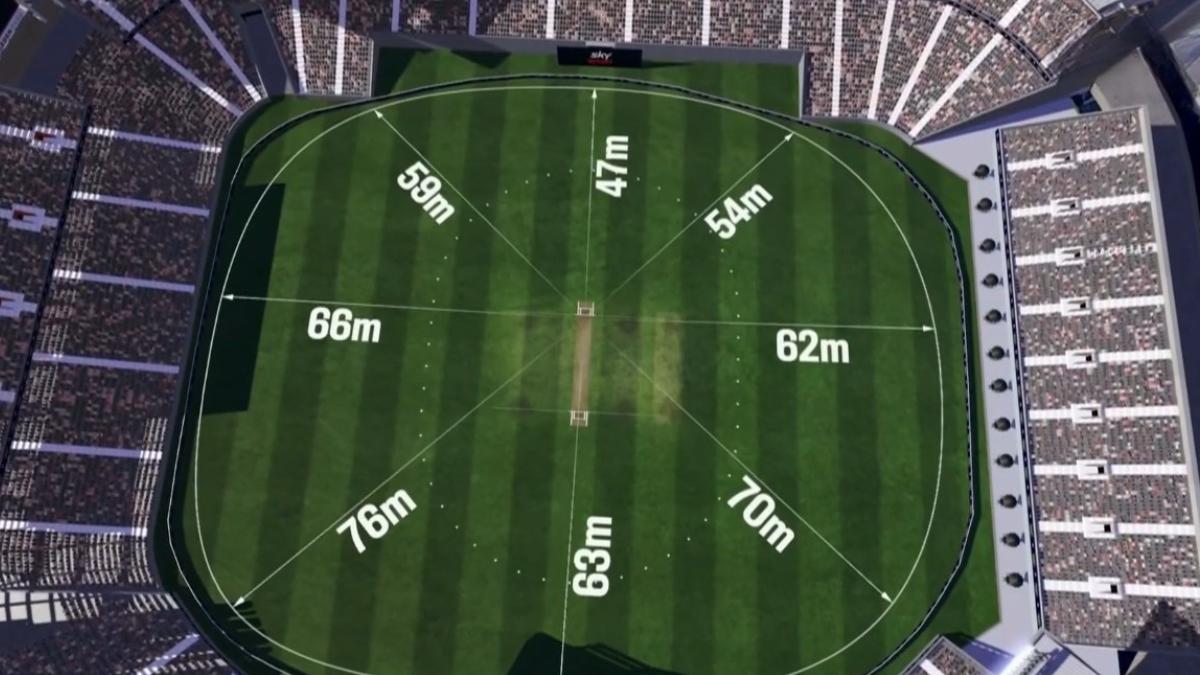
Originally a cricket ground, its distinctive rectangular layout resulted from sharing the space with rugby since 1913, combined with historical swampland origins and urban expansion that blocked outward growth.
AAuckland’s iconic Eden Park stands out as one of international cricket’s most geometrically unusual venues. Featuring extremely short straight boundaries alongside deep, sweeping square boundaries, the stadium’s distinctive, elongated shape routinely forces visiting teams to alter their tactical approaches. Unlike traditional oval-shaped cricket grounds like the Melbourne Cricket Ground or Lord’s, Eden Park resembles a modified rectangle with rounded corners.
This unconventional architecture is a direct result of the venue’s dual identity. Founded in 1900 as a cricket ground, Eden Park was leased by the Auckland Rugby Union in 1913 and rapidly evolved into New Zealand’s primary national rugby stadium. Over the decades, grandstands were constructed in close proximity to accommodate rugby’s rectangular pitch dimensions, permanently compressing the available playing area for summer cricket.
Historical Swampland Origins and Urban Constraints
The geographical restrictions that define Eden Park date back to its inception in the suburb of Kingsland. The land was originally boggy swampland beneath Mount Eden, purchased at the turn of the 20th century. Early efforts to construct a standard oval were continuously hampered by natural drainage issues and stone outcrops from ancient lava caverns.
As Auckland expanded, suburban residential streets and railway lines hemmed in the stadium perimeter, preventing any outward expansion of the ground’s footprint. Major stadium redevelopments, including the multi-million-dollar upgrades completed for the 2011 Rugby World Cup, prioritized high-capacity grandstands along the touchlines. Consequently, the pitch layout remains permanently locked into a narrow corridor, creating straight boundaries that measure as short as 45 to 55 meters from the pitch center.
Tactical Implications for Modern Limited-Overs Cricket
The extreme variation in boundary lengths creates a unique challenge for international captaincy and bowling strategies. With straight hits requiring little more than a mis-hit aerial shot to clear the ropes, visiting teams must carefully adapt their bowling lengths and fielding placements.
Captains often rely heavily on cross-pitch spin and wide yorker strategies to force batters towards the longer square boundaries. While ICC regulations introduced in 2007 specify a minimum boundary radius of 59.43 meters (65 yards) for international venues, Eden Park operates under a grandfather clause, preserving its historical configuration as one of the most distinctive venues in world sport.