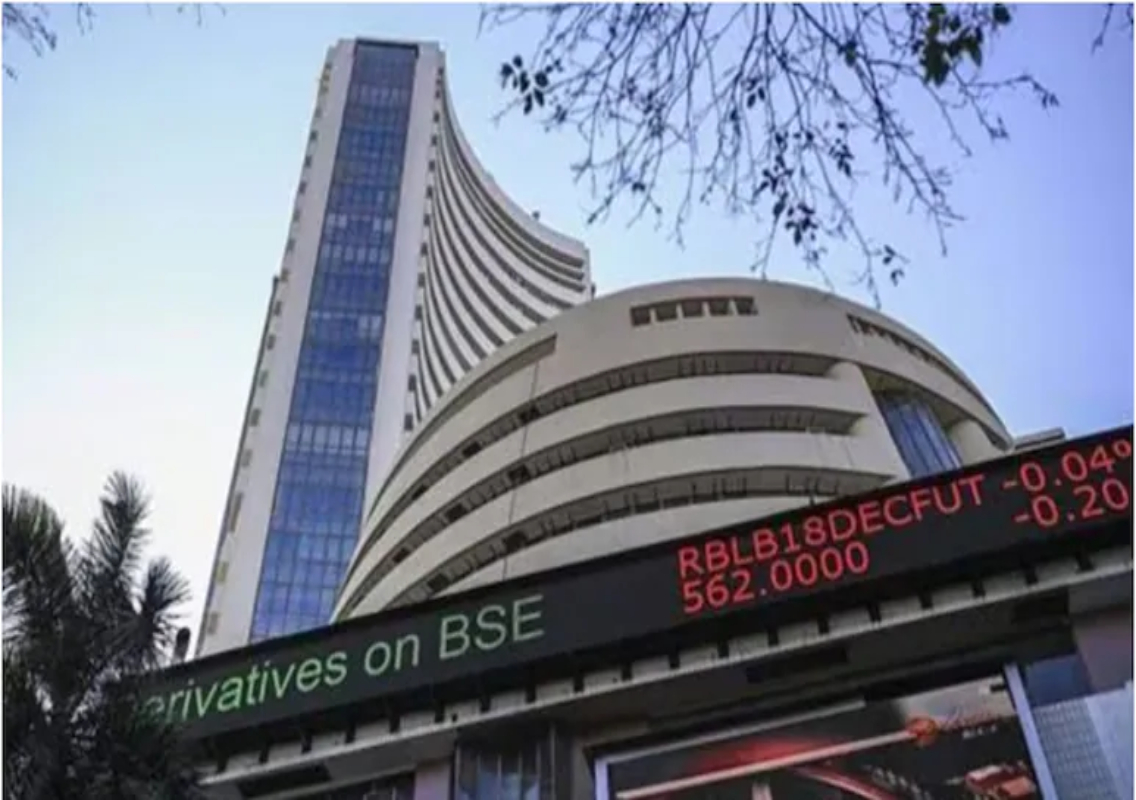
Mumbai: Indian equity markets were expected to open lower on Wednesday, November 4, following a four-session rally, as investors assessed mixed global cues, movements in crude oil and gold prices, and the outcome of the US midterm elections.
Trends on Gift Nifty indicated a weak start for domestic benchmark indices. Gift Nifty was trading around 23,734, at a discount of nearly 46 points to the previous close of Nifty futures
The cautious opening signal came after the Sensex and Nifty 50 extended their gains for a fourth consecutive session on Tuesday. The Nifty 50 had closed above the 23,800 mark, reflecting the recent recovery in domestic equities.
However, analysts cautioned that the market could encounter resistance at higher levels, while global developments and political uncertainty could influence trading during the session.
Ajit Mishra, Senior Vice President – Research at Religare Broking, said the ongoing recovery was encouraging but identified the 23,800–23,900 zone as a potential resistance area for the Nifty. He also highlighted the importance of focusing on stocks showing relative strength and managing overnight risks amid global event-related uncertainty.
Here are five key factors that investors were expected to monitor during Wednesday’s trading session.
1. Asian markets send mixed signals
Asian equity markets traded mixed on Wednesday, following a recovery in major US technology stocks. The uneven performance across regional markets offered no clear positive direction for Indian equities ahead of the opening bell.
Japan’s Nikkei 225 declined 1.38%, while the broader Topix index fell 0.49%. In contrast, South Korea’s Kospi gained 1.40%. The Kosdaq, however, moved in the opposite direction, declining 1.46%.
Hong Kong’s Hang Seng index futures also indicated a lower opening, adding to the cautious mood across parts of the region.
The mixed performance reflected differences in investor sentiment across markets. While the recovery in US technology stocks supported some Asian benchmarks, losses in other markets suggested that investors remained selective.
For Indian investors, movements in Asian markets provide an important indication of regional risk appetite. A weak trend in major markets can influence sentiment towards emerging-market equities, particularly when domestic investors are also assessing international political and economic developments.
2. Wall Street ends mixed as technology stocks recover
US equities finished Tuesday’s session on a mixed note, with gains in major technology and artificial intelligence-related stocks supporting the S&P 500 and Nasdaq.
The Dow Jones Industrial Average declined 0.38% to close at 51,787.04. The S&P 500 advanced 0.36% to finish at 7,568.92, while the Nasdaq Composite rose 0.83% to 25,372.01.
The rebound in technology heavyweights helped the Nasdaq and S&P 500 end higher, although the Dow’s decline reflected the uneven nature of the broader market performance.
The movement in US technology shares is relevant for Indian markets because global technology-sector sentiment can influence investor positioning in domestic information technology and other growth-oriented stocks.
However, the mixed performance of Wall Street meant that overseas cues were unlikely to provide a uniform direction for Indian equities.
3. US midterm election results in focus
The US midterm elections were another major event being watched by global investors. As results began to emerge, market participants were expected to assess which political party would control Congress and how the outcome could influence the remaining years of President Donald Trump’s administration.
The balance of power in Congress can affect the administration’s ability to advance its legislative and economic agenda. Investors therefore monitor election outcomes for possible implications for taxation, regulation, government spending and trade policy.
JPMorgan had estimated a 66% probability of a Democratic ‘blue wave’. However, its market projections suggested that the S&P 500 could see only a limited reaction or even a slight decline, indicating that the election outcome might not necessarily trigger a major market movement.
For Indian equities, the immediate impact would depend on how global investors interpret the result and whether it changes expectations about US economic policy and international relations.
4. Crude oil rises amid uncertainty over US-Iran talks
Crude oil prices recovered after declining for two consecutive sessions, as uncertainty surrounding US-Iran peace negotiations kept energy markets on edge.
Brent crude futures rose 0.91% to $104.54 per barrel, while US West Texas Intermediate crude gained 0.78% to trade at $96.84 per barrel, according to the pre-market report.
The movement in crude prices is important for India because the country imports a substantial portion of its oil requirements. Higher international prices can increase the cost of imports and put pressure on the country’s trade balance and inflation outlook.
Oil price movements can also influence sectors such as aviation, paints, chemicals, logistics and oil marketing, although the impact varies depending on individual companies’ cost structures and ability to pass on higher expenses.
The uncertainty over negotiations between Washington and Tehran adds another variable for energy markets. Any escalation or disruption to regional supply routes could affect crude prices, while progress towards a diplomatic settlement could ease some supply concerns.
5. Gold and silver prices show divergent movement
Precious metals also remained on investors’ radar as markets awaited developments from the US elections and assessed changing inflation expectations.
Spot gold prices rose 0.2% to $3,934.75 per ounce. US gold futures for December delivery gained 0.1% to $3,943.20 per ounce.
Silver, however, moved lower, with spot prices declining 0.2% to $49.67 per ounce.
Gold is often monitored as a store of value during periods of geopolitical and financial uncertainty. Its movement can reflect changing expectations around inflation, interest rates, currency movements and demand for safe-haven assets.
The rise in gold came even as easing oil prices had reduced some inflation concerns in the market. Investors were also awaiting the US midterm election results, which could influence sentiment towards financial assets.
Silver’s decline, meanwhile, showed that the two precious metals were not moving in tandem during the session.
Market outlook: Resistance and global events remain important
The November 4 session began with several international developments competing for investors’ attention. Gift Nifty pointed towards a lower opening, Asian markets were mixed, and Wall Street had ended with gains in the S&P 500 and Nasdaq but a decline in the Dow.
The US midterm election results, crude oil movements and precious-metal prices were expected to remain important influences on sentiment.
At the domestic level, traders were also watching whether the Nifty 50 could sustain its recent recovery after four consecutive sessions of gains. The 23,800–23,900 range identified by Religare Broking’s Ajit Mishra was a key area to monitor for potential resistance.
With global political and economic developments adding uncertainty, investors were advised to remain attentive to risk management and individual stock performance rather than relying only on the broader market’s recent upward movement.