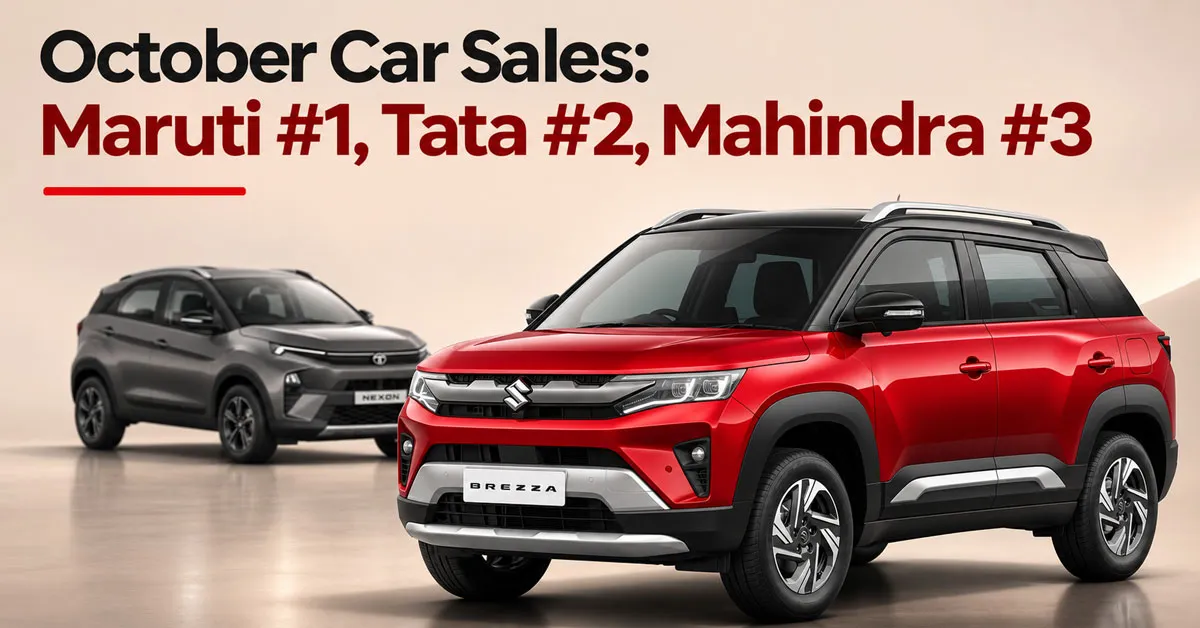
Maruti Suzuki was once again the country’s largest passenger vehicle manufacturer in October 2026, with 2,12,453 registrations and a 42.5% share. Tata Motors finished second at 72,307, ahead of Mahindra’s 65,055 and Hyundai’s 57,980. Kia completed the top five, while Toyota took sixth place. The figures are from Vahan registrations compiled by AutoPunditz as of November 2.
The industry recorded 5,00,001 passenger vehicle registrations during the month, 15.1% more than September but 14.6% below October 2025. That contrast needs context. The comparison month last year benefited from purchases following GST changes, while the 2026 Dhanteras and Diwali shopping period falls in November rather than October.
Table: India’s top carmakers in October 2026, based on VAHAN data
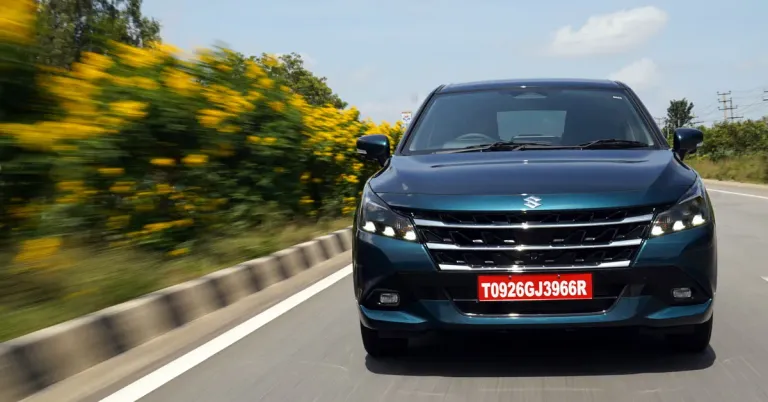
Maruti’s 2.12 lakh registrations were almost three times Tata’s total. Its market share of 42.5% reflects the breadth of its line-up, from hatchbacks and sedans to compact SUVs and MPVs, backed by one of the largest sales networks in the country. Yet its registrations were 15% below the year-ago month, showing that even the market leader faced a tough comparison.
The company also reported strong factory dispatches in October, but those should not be substituted for registrations in this table. Wholesale numbers measure vehicles sent to dealerships, while Vahan records vehicles registered for use. Stock-building, delivery timing and reporting cut-offs can create differences between the two.
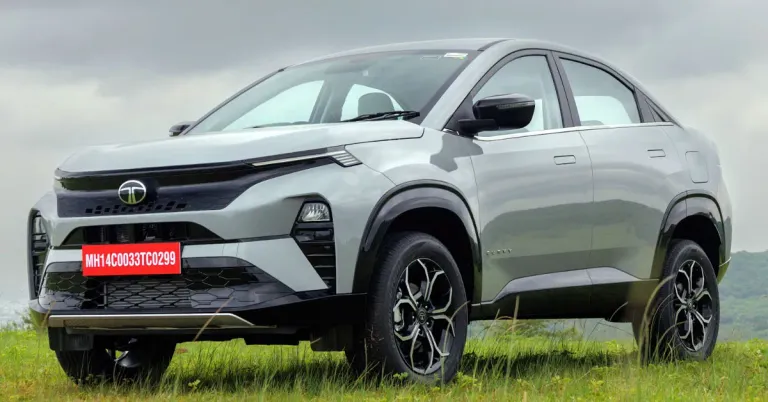
Tata finished 7,252 registrations ahead of Mahindra. Its October total was 25.2% higher than September’s, the largest month-on-month increase among the top six. Tata’s market share rose to 14.5%, while Mahindra held around 13.0%. The gap is meaningful in retail registrations even though separate wholesale dispatch reports showed a much closer contest.
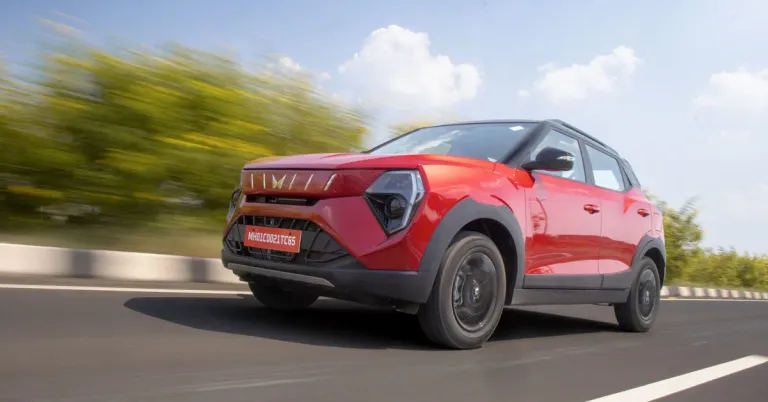
Mahindra remains heavily concentrated in SUVs and benefits from strong demand for models across its utility vehicle range, including newer electric SUVs. Tata competes with a broader mix of hatchbacks, SUVs and electric vehicles. Comparing the two companies therefore says as much about product mix as it does about sales momentum.

Hyundai ranked fourth at 57,980 registrations and Kia fifth at 30,726. Both recorded lower year-on-year registrations but sequential increases over September. Toyota was sixth with 28,715 and experienced the steepest annual fall among the top six. These results do not necessarily mean dealer demand is weaker than in September, because most leading brands improved month-on-month.
October manufacturer dispatch reports place Maruti at 2,12,384 domestic passenger vehicles, Tata at 73,894, Mahindra at 73,338 and Hyundai at 62,799. Those figures put Tata only 556 vehicles ahead of Mahindra on a wholesale basis, compared with 7,252 in Vahan registrations. Both rankings have their uses, but their figures must not be mixed inside one market-share calculation.