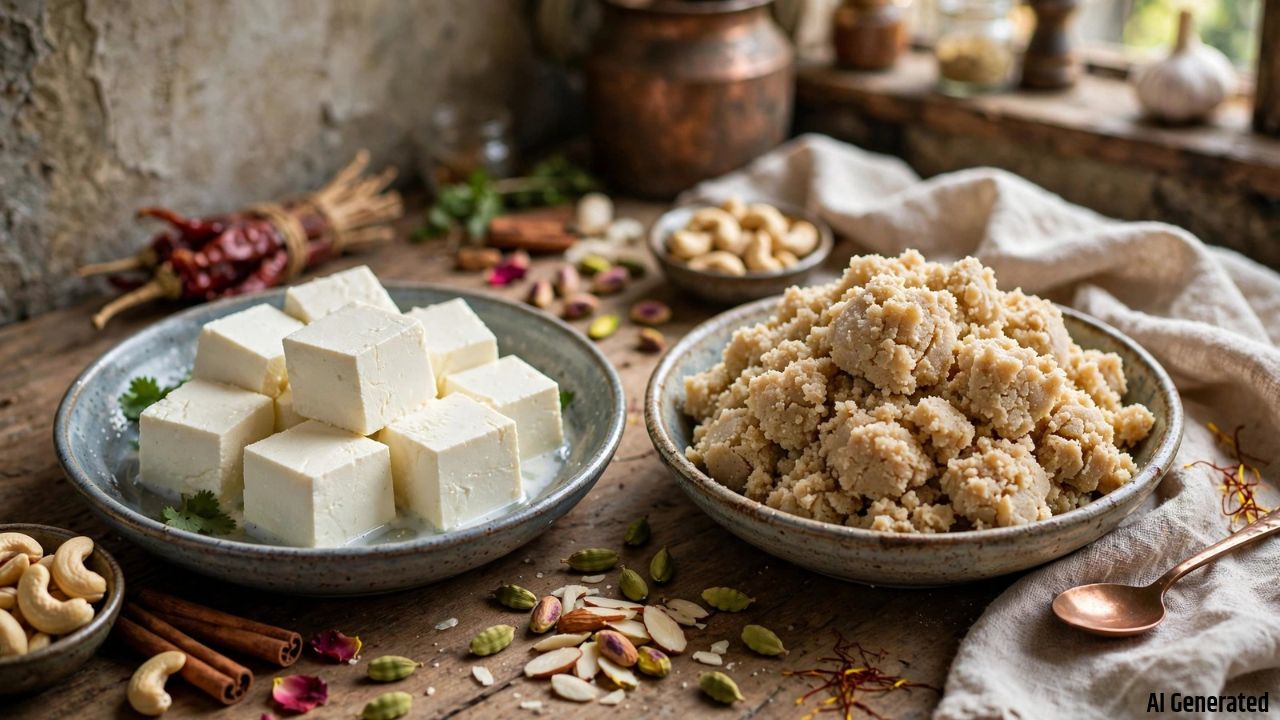
How can it be possible that there is a festival of Diwali and there are no sweets in the house? These days, there is a lot of purchase of things made from sweets to cheese and mawa in the market. Some buy khoya to make gulab jamun at home, while others prepare a special dish of paneer for the guests. But the risk of adulteration also increases during this festive season. In order to earn more profit, some shopkeepers add cheap powder, starch and other substances to the products made from milk.
In such a situation, the paneer or khoya that looks white and fresh may actually be adulterated. Now the question is how to find out whether the cheese and khoya bought from the market is real or fake. You can identify adulteration through iodine test and smell of paneer-khoya.
How to identify fake cheese?
While buying cheese, first pay attention to its texture. Take a little cheese and mash it gently between your fingers. Pure cheese is usually soft and slightly pliable. When crushed, it may clump together like flour. At the same time, some adulterated cheese can be very hard, rubbery or easily breakable. However, the authenticity of the cheese cannot be confirmed by this method alone.
How to do iodine test?
Iodine test is done to detect adulteration of starch in cheese. For this, boil a small piece of cheese in hot water and then let it cool. After this, put a few drops of iodine solution on it. If the color of the cheese starts turning blue or black, it may indicate the presence of starch in it. Pure cheese does not get this color due to the absence of starch. Keep in mind that do not eat cheese containing iodine.
How to identify fake khoya?
- Now let’s talk about khoya, which is used in making many types of sweets on Diwali. To test this, take a little khoya on your palm and make a small tablet of it. If it easily takes the form of a smooth tablet, it is an indication of its good texture. But frequent cracks or breakage while making the pill can create a possibility of adulteration. However, the moisture and freshness of the khoya can also change its texture.
- Take a little khoya and rub it between thumb and finger. Real khoya should have a natural aroma like that made from milk. If it smells strange like soap or any chemical, then avoid buying it. Similarly, if the taste of khoya seems too sour, bitter or unusual, then avoid eating it.
- Flour, rice flour or starch can also be added to khoya. For initial testing, mix some khoya in hot water and cool it. Now add a few drops of iodine in it. If the mixture turns blue or black, it indicates the presence of starch. Do not use edible iodine for this test also.
What things should be kept in mind while buying
- In the rush of festivals, do not buy paneer or khoya just by looking at the low price.
- Always buy goods from a clean and reliable shop.
- If you are buying a packaged product, then definitely check its expiry date, packing and FSSAI license information. If the smell, color or taste of anything seems unusual, avoid eating it.