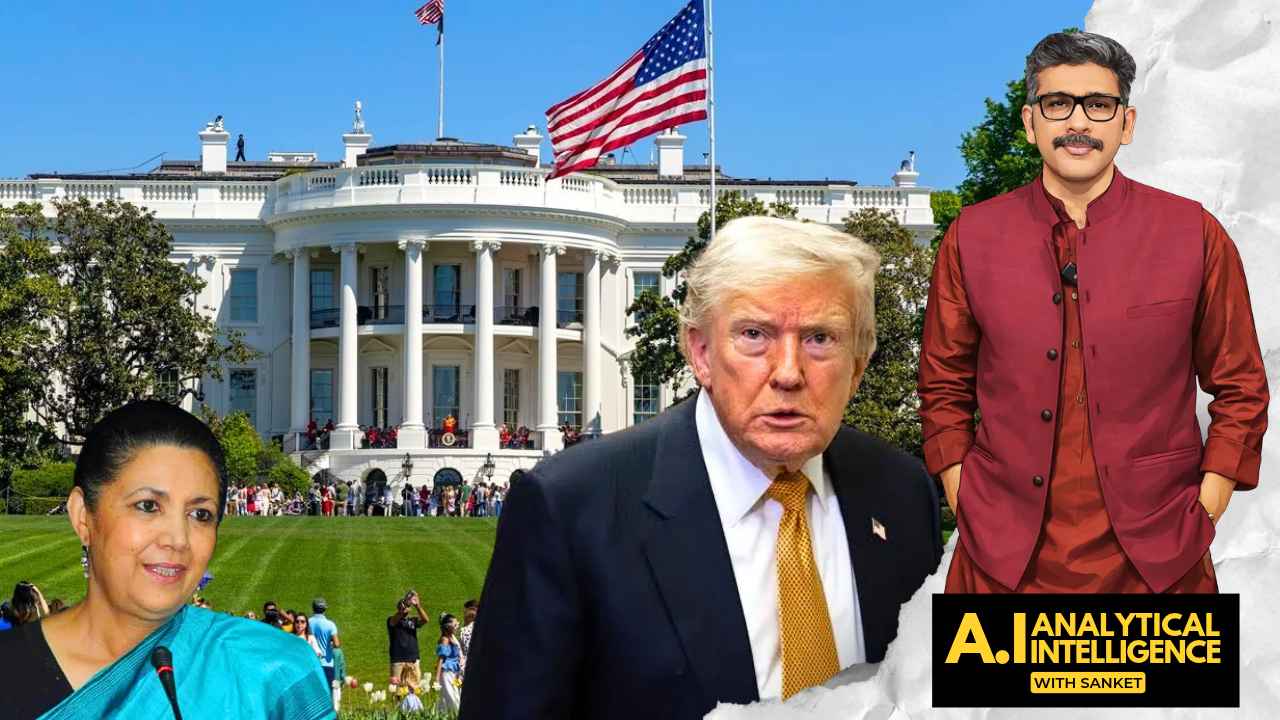
Democrats on Wednesday (November 4) won control of the US House in addition to the US Senate, ushering in a new era of congressional resistance to US President Donald Trump amid the Iran war, rising prices, and concerns over government corruption. The Republicans were routed from Texas to Iowa to New Hampshire, including the states Trump won by double digits two years ago.
In an interview with The Federal’s Sanket Upadhyay on AI With Sanket, former Indian Ambassador to the US, Meera Shankar, discusses the reasons behind Trump’s electoral setback, the concerns of Indian Americans, the future of US foreign policy and what the political developments could mean for India’s proposed trade deal with Washington.
Edited excerpts:
Why have traditionally Republican states shifted towards the Democrats? What does this electoral setback mean for Donald Trump and his policies?
The American people have spoken. They have indicated that they do not approve of the excesses of Trump’s policies, particularly their impact on the cost of living in the United States.
The interesting thing is that people see, for instance, the rise in the cost of fuel, both petrol and diesel, and the consequent impact on the prices of other commodities as transportation becomes more expensive, as a direct result of Trump’s war in Iran.
Also read: Blue wave, Red face: Social media roasts Trump after Democrats sweep midterms
They actually link the rise in fuel prices to decisions made by Trump, rather than viewing it as something caused by circumstances beyond his control. They are holding him directly responsible. This was the biggest issue on the ballot in this election.
Other issues included the state of democracy in the US and healthcare, because funding had been reduced for Medicare and Obamacare, affecting a large number of people. Education was another concern, with the federal government reducing funding in that area as well.
All these issues were on the agenda. But the core issue was the cost of living, about which people wanted to send a strong message.
Trump was not even contesting these elections. Apart from his own appeal to voters to treat the elections as a referendum on his presidency, how did local issues such as the cost of living become a referendum on Trump?
He campaigned furiously and, in fact, made the elections about himself. But people also felt that the circumstances of their lives, with which they were struggling, were the result of Trump’s policies and erratic decisions. These decisions were also contrary to what he had promised during his presidential election campaign.
He had said he would bring down inflation and the cost of groceries within a week. He had also promised that he would not get involved in foreign military entanglements because these had drained the US of blood and treasure and had actually contributed to the economic problems the country was facing.
In a sense, much of what he did was entirely contradictory to what he had promised the American electorate. These were the issues that were really on the agenda. This made the elections about Trump because he made them about himself.
Also read: Blue wave, red flags: How Iran War, rising prices cost Trump the midterms
People also felt that the difficulties they were facing were, in many cases, the direct result of decisions taken by Trump.
Apart from the cost of living, how much of a role did discrimination and immigration enforcement play in the election? ICE agents have been accused of selectively targeting people of colour, including American citizens. Did this contribute to minority communities, including Hispanics and Indian Americans, voting overwhelmingly for the Democrats?
When polls listed the important issues for American voters, this was the order of priority in which they ranked them. First was the cost of living, followed by the state of democracy, education, healthcare, and other issues.
Immigration enforcement was also an issue over which people were concerned. The harsh enforcement methods adopted by ICE have, in fact, led to the killing of some American citizens. This raised considerable controversy within the US about the use of such harsh methods, which have affected not only immigrants but also American citizens.
In a sense, much of what Trump did was entirely contradictory to what he had promised the American electorate. These were the issues that were really on the agenda. This made the elections about Trump because he made them about himself.
Then you had the MAGA movement, which formed the core of Trump’s constituency. It had a protectionist and nationalist approach to issues in America, as well as a racist dimension.
When they said, “Take America back again”, the question was: Take it back for whom? Essentially, for white Americans. They tapped into white anxieties about a possible demographic decline in the future and concerns about who would eventually control the American polity, economy and culture.
Like Brexit, which essentially played on anxieties about immigration and changing demographics, the MAGA movement made this one of the planks of its platform, and Trump embraced it.
Indian Americans, in particular, were being targeted ferociously, whether over the H-1B visa issue or the increasing difficulties surrounding student visas.
In August this year, there were more than 30 per cent fewer arrivals of Indian students to study in the US.
On H-1B visas, a $100,000 fee was being imposed upfront on US companies to obtain an H-1B visa. The threshold for minimum income or minimum wages for H-1B visa holders was also proposed to be raised by over 30 per cent.
Permission for spouses of H-1B visa holders to work was being denied. The presumption of automatic renewal, if someone had already received an H-1B visa once, was also rescinded.
Several companies were also debarred from recommending H-1B visa holders for permanent residency in the United States.
Also read: US midterm polls: Meet Indian-Americans who won
Taken together, these measures have gutted the H-1B visa programme. At the same time, student visas and family visas have become more difficult to obtain, significantly affecting people-to-people ties between India and the United States.
There have also been violent incidents involving attacks against people of Indian origin in this atmosphere, in which they have been made a conscious target. Sometimes, this can spill over into violence.
I am sure other communities faced similar concerns. Hispanics, for instance, were affected because so much emphasis was placed on illegal immigration from Latin America. You also saw Hispanic voters shift towards the Democrats during this election.
Indian Americans have traditionally voted for the Democrats. Even in the last election, more of them voted Democratic. However, the Republicans had increased their share of the Indian American vote.
This time, a significant portion of that vote has swung back to the Democrats. Again, the Democratic share is over 60 per cent.
But Indian Americans do not vote as a single bloc. Those in professions such as academia and journalism tend to vote Democratic. Those who are wealthier, such as affluent doctors, entrepreneurs, CEOs, bankers and finance professionals, tend to vote Republican because they are looking for lower taxes.
So, their voting preferences largely depend on where they are situated economically and professionally.
What should the world expect from Donald Trump following this electoral setback? Will he become a lame-duck president, double down on his policies or seek cooperation with the new Congress?
We do not know whether he is going to dig his heels in and double down on his platform, using executive orders and vetoes with gay abandon, or whether he will try to work out some deals with the new Congress.
He has sent both messages. He has said that he will use his veto power if Congress makes far-reaching suggestions or takes certain initiatives. He has also indicated that he can use executive orders to govern.
But he has also accepted the election results, given the strength of the mandate that the Democrats have secured.
Congress can seek to constrain his ability to wage war in Iran, although he has already ignored the last war powers resolution passed by Congress. That resolution essentially said that he could not go to war with Iran again or resume military operations there without congressional approval. But he ignored it and went ahead. He said it was not a war but a military operation.
He has not resorted to legal challenges or attempts to delay the election results, because the courts have also turned down such attempts. He has said that there are many issues on which both sides can work together.
So, he is sending both messages simultaneously. We do not know which approach he will prefer after the new Congress takes over.
Clearly, Congress can constrain some of his executive authority because all appropriations, the budget and financial proposals have to be approved by Congress. It can withhold budgetary support for some of his initiatives.
Congress can also seek to constrain his ability to wage war in Iran, although he has already ignored the last war powers resolution passed by Congress. That resolution essentially said that he could not go to war with Iran again or resume military operations there without congressional approval.
Also read: Trump admits Iran war cost Republicans midterm votes, says he would do it again
But he ignored it and went ahead. He said it was not a war but a military operation.
So, we do not know which way he will go.
However, Congress will clearly try to constrain him because Democrats see the rise in fuel prices as directly linked to the war in Iran and the closure of the Strait of Hormuz.
On Ukraine, you might find that a Democratic-controlled Congress becomes more sympathetic to Ukraine. It may be more willing to provide budgetary resources or respond positively to requests for funding from Ukraine, because this was a war that the Democrats actually started and which Trump has been seeking to bring to a close through negotiations, without much success.
As far as tariffs are concerned, many progressive Democrats are nationalists in their economic policies and also have a tendency towards protectionism.
But whether they will balance this with concerns about the increase in the cost of living caused by tariffs remains to be seen.
Take the farmers, for instance. Rural America, which was traditionally a Republican constituency, turned against Trump. This was because the price of diesel went up. Diesel powers their tractors, their pumps and the trucks they use.
Rural America, which was traditionally a Republican constituency, turned against Trump because the price of diesel went up. Diesel powers their tractors, their pumps and the trucks they use. Also, because of his tariff wars, countries such as China, which had been purchasing large quantities of American agricultural commodities, clamped down on these purchases. American farmers consequently lost their markets.
Also, because of his tariff wars, countries such as China, which had been purchasing large quantities of American agricultural commodities, actually clamped down on these purchases. American farmers consequently lost their markets.
Fuel became more expensive. The cost of fertiliser also increased because of the tariffs imposed on fertiliser imports.
So, we do not know which way things will go. Clearly, Congress will seek to restrain the use of executive authority for setting tariffs, although Trump has authority under Section 301 and Special 301.
Also read: Who is Jon Ossoff, being touted as ‘next Obama’ and future US president?
Congress may assert its authority, just as Trump had earlier used executive provisions such as the International Emergency Economic Powers Act, which was struck down by the Supreme Court.
I think Congress will assert its authority and its power over taxation and tariffs.
What happens to the proposed trade deal between India and the US, which has been stuck for a long time? With Trump imposing tariffs at his own discretion, could the change in the political balance in Washington give India some room for manoeuvre, or will the deal remain on the back burner?
As far as Congress is concerned, I think its focus will be more on fulfilling the promises made to voters about bringing down the cost of living, reducing healthcare costs and improving education.
It will also look at corruption, because that was another major issue.
However, there could be pressure from Trump to speed up the trade deal. That is what I foresee because he would need to demonstrate an early win.
But, for India, I think we cannot conclude the deal until we have clarity about whether we will receive preferential tariffs compared with other countries.
Also read: Midterms make Trump admin ‘lame duck’: How it impacts India-US trade, immigration
When we agreed to 18 per cent tariffs, it was a highly unequal agreement. The US would impose 18 per cent tariffs on India, while we were expected to reduce tariffs on US industrial imports, preferably to zero per cent.
It was a highly unequal deal because the US would be increasing its tariffs from the 3 per cent MFN tariff under the WTO to 18 per cent.
Nevertheless, we were willing to live with it because we had a preference over our peer competitors such as Pakistan, Bangladesh, Sri Lanka and Vietnam, even if that preference was marginal, at around 1 to 2 per cent.
That degree of preference still existed.
After the US Supreme Court struck down those tariffs, the situation changed. At the moment, India faces the MFN tariff plus 10 per cent. This is the tariff that applies to us, as it does to most other US trading partners.
But there is another Section 301 investigation underway. We do not know what tariffs will be imposed under that investigation.
Nor do we know what the tariff structure will look like in relation to other countries once the process is complete.
Without this clarity, entering into an unequal agreement would be unwise. We would have to bide our time and play for time until there is greater clarity.