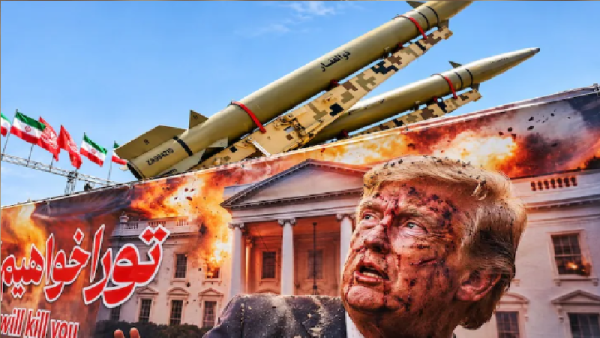
New Delhi. The increasing military tension between America and Iran is becoming a matter of concern for the whole world. The fierce conflict between the two countries that started in February 2026 had seriously affected the security arrangements of West Asia. During that time, Iran's missile bases and drone centers were targeted in American and Israeli attacks. In response, Iran also retaliated with missiles and drones. Not only this, but an attempt was also made to influence the movement of ships in the strategically important Strait of Hormuz. Now, if a large-scale war breaks out between the two countries again, Iran's strategy will not be limited to missile attacks only. He can try to put pressure on America through various types of weapons and regional allies.
The biggest pillar of Iran's military power is its ballistic missile program. It has many types of short and medium range missiles. Missile families such as the Fateh Shahab and Sejjil are an important part of its military capability. The estimated range of some missiles is said to be around 2000 kilometers. Many American military bases in Israel and West Asia may fall within this scope. The specialty of Fateh series solid fuel missiles is that they do not require a long process of refueling before launching. This increases the possibility of using them in less time. However, the modern air defense systems of America and Israel have the ability to stop these attacks by Iran. Therefore, it cannot be assumed that every missile will reach its target.
Iran's second major strength is its underground missile bases. These are commonly called missile cities. Along with missiles, military equipment is also kept in long underground tunnels and secure complexes. Their objective is to protect their military capability despite enemy air attacks. In early November 2026, Iran's Revolutionary Guards demonstrated their strength by releasing videos of underground missile bases. However, these places are not completely safe. America's bunker buster bombs and continuous air strikes can harm them.
Apart from missiles, Shahed drones can prove to be an important weapon for Iran. Drones like Shahed-136 and Shahed-238 are relatively low-cost unmanned weapons. These are used for one-sided attacks. In comparison to their low cost, the interceptors used to stop them can be quite expensive. This is the reason why economic pressure can also be created on the defense system of the opposing country through drone attacks. Iran may try to pose a challenge to the American air defense system by using missiles and drones together.
The sea will also be an important front of this possible war. The Strait of Hormuz is one of the most important oil transportation routes in the world. Increasing tension here may affect international oil supply and global markets. Iran can make the movement of ships difficult through sea mines and other maritime weapons. Apart from this, Yemen's Houthi and Iran-backed organizations active in Iraq and Lebanon can also increase the scope of the conflict. However his role will depend on the circumstances.
Overall, Iran's strategy may be to embroil America in a long and costly conflict. Missiles, drones, underground bases and maritime pressure are its possible counter options. America, on the other hand, has modern air power and strong defense systems. In such a situation, the outcome of the war cannot be decided in advance. But if there is another military conflict between the two countries, then its impact can extend beyond West Asia to the economy and energy security of the entire world.