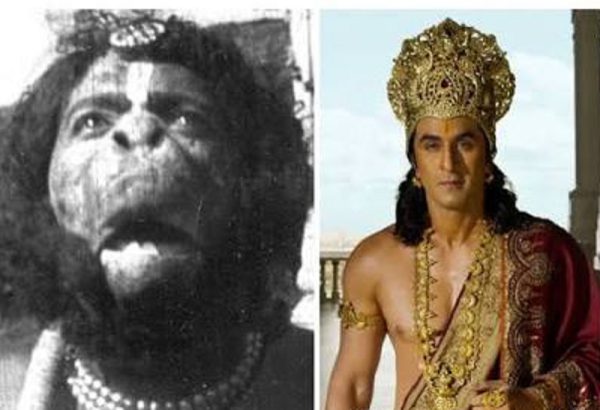
New Delhi .There is no history of presenting the story of Ramayana on the big screen in Indian cinema. Almost a century before films with modern technology, grand sets and big stars, efforts had been made to bring Ram Katha to the audience through cinema. The silent film 'Lanka Dahan', made in the year 1916, is considered to be the first Ramayana film of Indian cinema. Many things related to the production of this film still hold a special place in the history of cinema.
'Lanka Dahan' was directed by Dadasaheb Phalke, an early producer and filmmaker of Indian cinema. This film was made at a time when the facility of voice and dialogue was not available in Indian films. During silent films, actors had to convey the story to the audience through their gestures, facial expressions and physical movements. In such a situation, showing religious and mythological stories on screen was a big creative challenge for the filmmakers.
The story of the film was based on famous episodes of Ramayana. In this, the story of Lanka Dahan was presented on screen with characters related to Lord Ram and Mother Sita. At that time, dialogues were not heard in films like today. Therefore, visuals and actors' expressions were used to explain the story to the audience. 'Lanka Dahan' played an important role in presenting the mythological story through cinema.
The most interesting thing related to the making of this film was its artist Anna Salunke. He played the role of both Lord Ram and Mata Sita in the same film. In today's time, where actors are selected for different roles, in that era, male actors were also taken for female roles.
In fact, in the early years of the 20th century, women working in films was not easily accepted socially. Due to this, filmmakers found it difficult to find suitable actors for female characters. In many early Indian films, male actors played female roles. Anna Salunkhe playing the roles of both Ram and Sita in 'Lanka Dahan' reflects the film production conditions of this period.
The budget of the film was also a topic of discussion at that time. 'Lanka Dahan' was prepared at a cost of approximately Rs 15 thousand. In today's film industry, where crores and sometimes thousands of crores of rupees are spent on making a big film, at that time it was important in itself to bring such a big mythological story on screen with limited resources.
This film also performed remarkably in terms of earnings. The film had earned around Rs 30 thousand in the first week at Naaz Talkies in Mumbai. According to the available records, its collection in the first 10 days had reached between Rs 32 thousand to Rs 35 thousand. Due to this performance, 'Lanka Dahan' is counted among the early major box office successes of Indian cinema. It is considered to be one of the first box office hits of Indian cinema.
Today, modern technology, special effects and big budgets are being used in films based on Ramayana. Recently Ranbir Kapoor's Ramayana has also reached the theatres, in which Ranbir is seen in the role of Lord Ram and Yash is seen in the role of Ravana. There is a lot of buzz among the audience about the film and it is being touted to be among the big opening films of 2026.
However, the tradition of bringing Ramayana on screen in Indian cinema had started much earlier. 'Lanka Dahan' of 1916 is an example of the fact that despite limited technology and resources, filmmakers tried to make Indian religious and cultural stories a part of cinema. With a budget of around Rs 15,000 and the same actor playing the double role of Ram-Sita, this film is an important chapter in Indian film history.