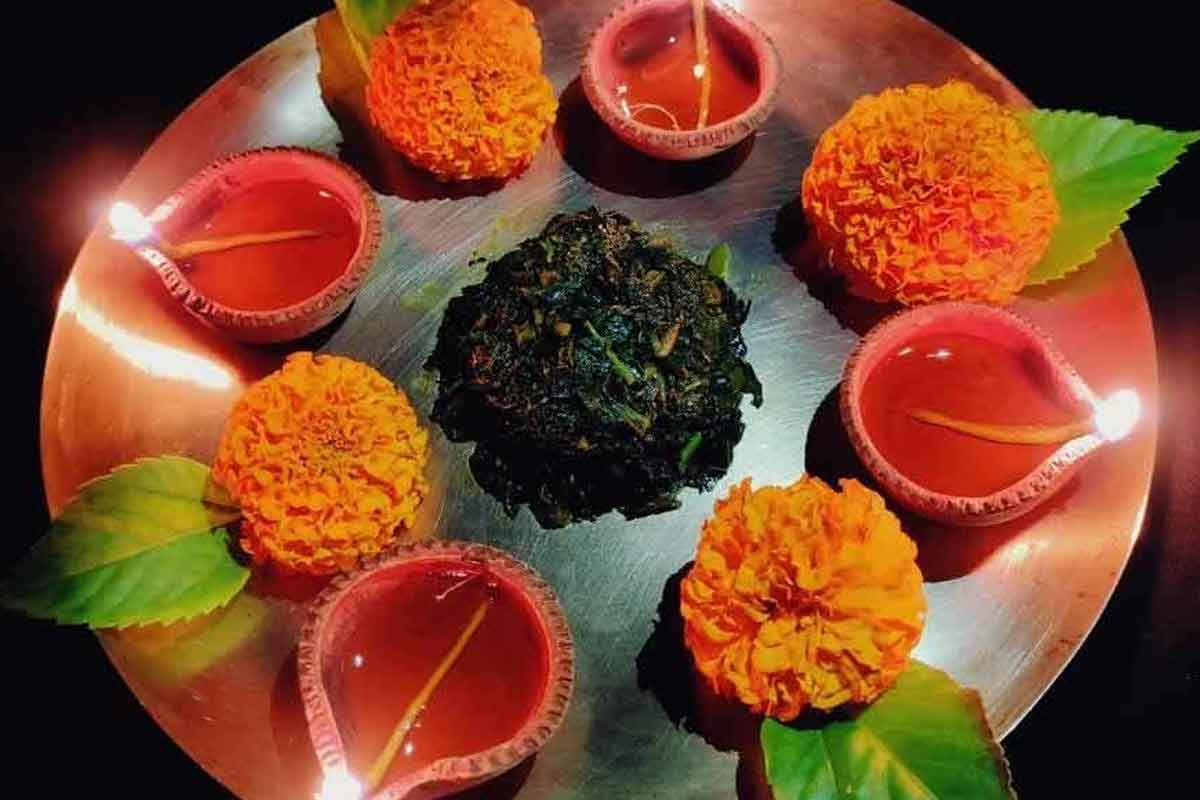
It is customary to eat fourteen vegetables and light fourteen lamps on Bhoot Chaturdashi before Diwali. Charaka Samhita, Susruta Samhita, Ashtanga Hriday, Bhavaprakash, etc., have specific descriptions of fourteen herbs in various books of Ayurveda. Raghunandan, in his 16th century book 'Krityatattva', one of his eighty-eighth theories, mentions these 14 types of herbs, following the opinion of the ancient Smriti 'Nirnayamrta'. This practice is also healthy. Let's know what are the qualities of 14 vegetables.
Ol: The tuber of ole is widely used in the treatment of hemorrhoids, jaundice and blood dysentery.
Who: The juice of the leaves is digestive and appetizing. Used in fever, dysentery, diarrhoea, phlegm, cuts, wounds, skin diseases, arthritis, constipation, leprosy, worms, itching, etc.
Beto or Bethua: These greens are rich in vitamin A, vitamin C, iron, calcium, magnesium, potassium, phosphorus and zinc and eight essential amino acids. Bethua herb is very useful in preventing constipation, anemia, heartburn, worms, mouth sores, skin diseases, rheumatism and hemorrhoids.
Tomorrow: Kalkasunda leaf juice is used to treat allergies, constipation, fever, and wounds.
Mustard: This vegetable is a rich source of vitamin K, C and E and calcium, potassium, magnesium and iron.
Neem: Nimpata or leaf juice is one of the medicines for leprosy, skin diseases, polyuria.
Jubilee: It works in the treatment of polyuria, Shweti, deworming, etc.
Shalinche or Shinche: This vegetable is also called Sanchishak. Shalincha Shaak is very beneficial for eyes, hair and skin. Eating this vegetable is beneficial in treating diarrhea and indigestion. Eating this vegetable increases the amount of breast milk of the mother.
Powder: Gulanch is used in Ayurvedic treatment of diabetes, tuberculosis, constipation, rheumatism, rheumatoid arthritis, hepatitis, peptic ulcer, gonorrhea, syphilis, fever etc. Eating gulanch greens increases immunity.
Patla Patla: Patla leaves are very effective as a blood enhancer and blood purifier and to cure liver and skin diseases. Used to lower blood sugar levels in people with diabetes. Cures constipation, increases appetite and digestion. If you apply the juice of Patla leaves on the wound, it heals quickly.
Shelluka: The raw plant and seeds are used in cooking as a spice. And the tip with leaves is used as a vegetable. Sulfa is very useful in increasing the amount of mother's milk and curing stomach ailments in children. One of the ingredients in children's gripe water comes from the sheluka herb. Sheluka is very effective in treating eye diseases, eye sores, old wounds, fever, etc.
Helencha or Hinche: Helencha is used as blood purifier, choleretic, appetite suppressant. Eating regularly increases the amount of hemoglobin in the blood. Helencha leaves are rich in anti-oxidants and therefore have an anti-inflammatory role. Applying this herb on the head for headache reduces the pain. Regular consumption reduces blood sugar.
Bell/Bell: Its leaves are rich in flavonoids. Neem leaves are very effective in preventing hair loss, asthma, phlegm, rheumatism, fever, skin diseases, liver diseases, etc. Ghetu leaves are pounded and applied to sores or swellings to heal them quickly.
Suction: The scientific name is Marsili quadrifolia or Marsili minuta. Fenugreek is well known as a vegetable and herb in South West Asia including India, China, Central and Southern Europe. Edible part leaves, regular consumption of Shushani greens by those who suffer from insomnia relieves headaches, intense stress, high blood pressure, asthma, breathing problems, body pain, uncontrolled contraction of leg muscles, rheumatism, tongue and mouth wounds, skin diseases, etc.