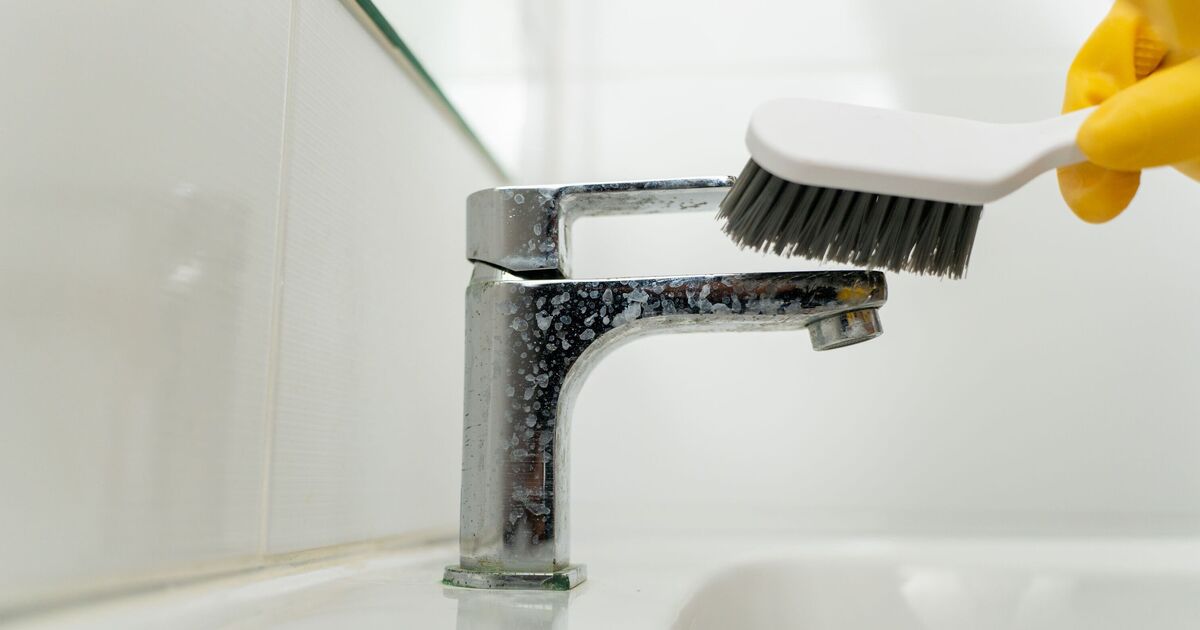
Limescale is one of those common household issues that can develop in even the cleanest of bathrooms and, if left untreated, can end up causing costly problems further down the line. Luckily, there are some quick and easy ways people can remove stubborn limescale and prevent future build-up.
Brian Toward, home improvement specialist and CEO of Wholesale Domestic, explained: “Limescale is especially common in bathrooms because of the high water usage. Any lingering droplets left to air dry can leave behind mineral deposits that form limescale over time. While it might start as a cosmetic issue, too much limescale can build up in pipes and restrict water flow, leading to decreased water pressure and plumbing issues, which can be costly if left untreated.
“While limescale itself isn’t directly harmful to health, it can also cause the growth of bacteria, compromising water quality.”
Around 60% of people in the UK live in a hard water area causing them to be exposed to higher levels of dissolved minerals such as calcium and magnesium, making regular bathroom cleaning even more important in these regions.
To help prevent these risks and potential expenses, Brian shared three inexpensive ways of creating a limescale-free bathroom using just a couple of common household items.
Lemon juice and salt
“To help remove limescale, cut a lemon in half and dip it in salt to create a natural scrubbing solution,” he said. “The citric acid in lemon juice breaks down limescale, while the salt helps lift it off surfaces.”
Vinegar and baking soda
“Similar to lemon juice and salt, equal parts of white vinegar and baking soda can be mixed together to create a powerful paste that can remove limescale. Apply the paste to limescale-affected areas such as taps, showerheads, and tiles and let it sit for a few hours before scrubbing with a brush and rinsing thoroughly.”
Coca-Cola
“Most people are shocked that Coca-Cola can help dissolve limescale but it can as it contains phosphoric acid which reacts with calcium carbonate. Pour Coca-Cola onto the affected areas and let it sit for several hours or overnight. Then, scrub the area with a brush and rinse.”