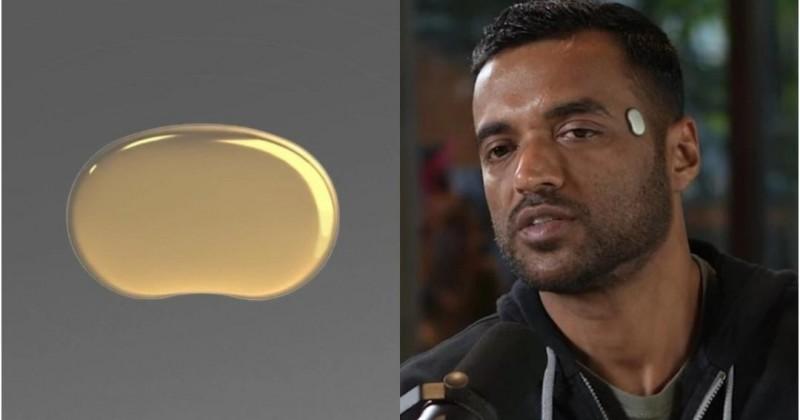
Zomato founder Deepinder Goyal’s latest venture, Temple, has sparked a heated debate among medical experts over its scientific credibility and claims of monitoring brain health, blood flow and ageing. The wearable device, which is worn on the side of the forehead, promises to offer insights into cerebral blood flow and physiological ageing. However, several doctors have questioned whether sensors placed on the temple can accurately measure what is happening inside the brain.
The controversy has gained momentum after Goyal revealed that $30 million has already been spent on developing Temple, including $20 million from his personal funds. The device is priced at Rs 85,000 in India, with pre-orders now open.
What Is Deepinder Goyal’s Temple Wearable?
Temple is a forehead-worn wearable developed to track various physiological parameters using light-based optical sensors. The device uses photoplethysmography (PPG) technology to monitor changes in blood flow and other signals.
Among its key features is BrainFlow, which is designed to provide insights into cerebral blood flow and oxygenation. It also measures a metric called Entropy, which Goyal has described as a potential indicator of physiological strain and ageing.
The device is being positioned as a fitness and wellness tracker rather than a medical diagnostic tool. However, its claims about brain circulation and longevity have prompted questions about the scientific evidence supporting the technology.
Why Are Doctors Questioning Temple’s Scientific Claims?
Several medical professionals have raised concerns about whether a sensor placed near the superficial temporal artery can accurately measure blood circulation inside the brain.
The superficial temporal artery is a branch of the external carotid artery, which primarily supplies blood to the scalp and face. The brain, meanwhile, receives its blood supply mainly through the internal carotid and vertebral arteries.
Doctors argue that changes in blood flow around the scalp and forehead do not necessarily reflect changes in cerebral blood flow. They have also questioned whether the company’s proposed Entropy metric has sufficient biological evidence and independent validation to be considered a reliable indicator of ageing.
Apologies where they are due: last night, I should not have bucketed all Indian doctors into one single box. We work with so many of them. Even my elder brother is one of them.
All my emotion last night was directed at a few influencer doctors, who are more influencers than doctors. They did not read our research in detail, and spread twisted facts to call something new a scam. They get views by piling on us. They wouldn’t do that to a startup doing the same thing from some other first-time founder, because it would not get them views.
That’s actually more a reflection of their petty mindset, than other doctors, our country, or our team.
Happy Diwali everyone! Have a good one. Keep building. We have a long way to go.
— Deepinder Goyal (@deepigoyal) November 6, 2026
Neurologist Dr Sudhir Kumar has previously said that the concept is intriguing but requires stronger scientific evidence. He has stressed the need to establish whether the metric reliably measures what it claims to measure and whether it offers meaningful information beyond existing health-tracking parameters.
Doctors have also called for transparent research methodology, larger studies and independent clinical validation before such claims are accepted.
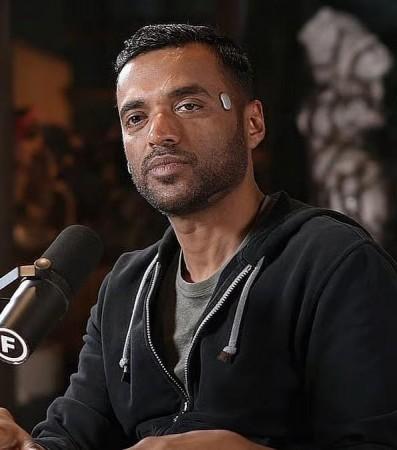
Deepinder Goyal Responds To Doctors Questioning Temple
Amid the growing criticism, Goyal took to X on November 5 to address doctors questioning the wearable’s scientific foundation.
In an open letter addressed to concerned Indian doctors, the entrepreneur defended the project, stating that the company had already invested $30 million in developing Temple, of which $20 million came from his personal funds.
He argued that the company was not attempting to make quick money and pointed to its 14-day, no-questions-asked return policy. According to Goyal, if the product fails to deliver what it promises, customers will be able to identify the shortcomings quickly.
Goyal also said that he had stepped away from his leadership role at Eternal to pursue Temple because the project was driven by purpose rather than financial incentives.
Addressing concerns over scientific validation, he said that the company had conducted internal studies and was preparing preprints ahead of peer-reviewed publications. He added that independent studies would emerge once the device became available to a wider audience.
Goyal maintained that the company’s claims were verifiable and expressed confidence in its research and technology. He also hinted that some of Temple’s most significant features were yet to be publicly revealed.
Concluding his response, he wrote, “Hope this addresses some or all of your concerns. If not, keep raging.”
What Is The Price Of Temple Wearable In India?
Temple is currently available for pre-orders in India at Rs 85,000. The company has indicated that deliveries are expected within approximately three months.
Despite Goyal’s defence, the debate surrounding Temple highlights a larger question about the growing health-tech industry: how much scientific evidence should consumers expect before investing in expensive wearable technology?
While wearable devices are increasingly offering insights into fitness, sleep and other health parameters, experts maintain that claims involving brain health, biological ageing and cerebral blood flow require robust scientific validation.
For now, Temple remains positioned as a wellness and research device, and its ability to deliver the brain-health insights it promises remains a subject of scientific scrutiny.