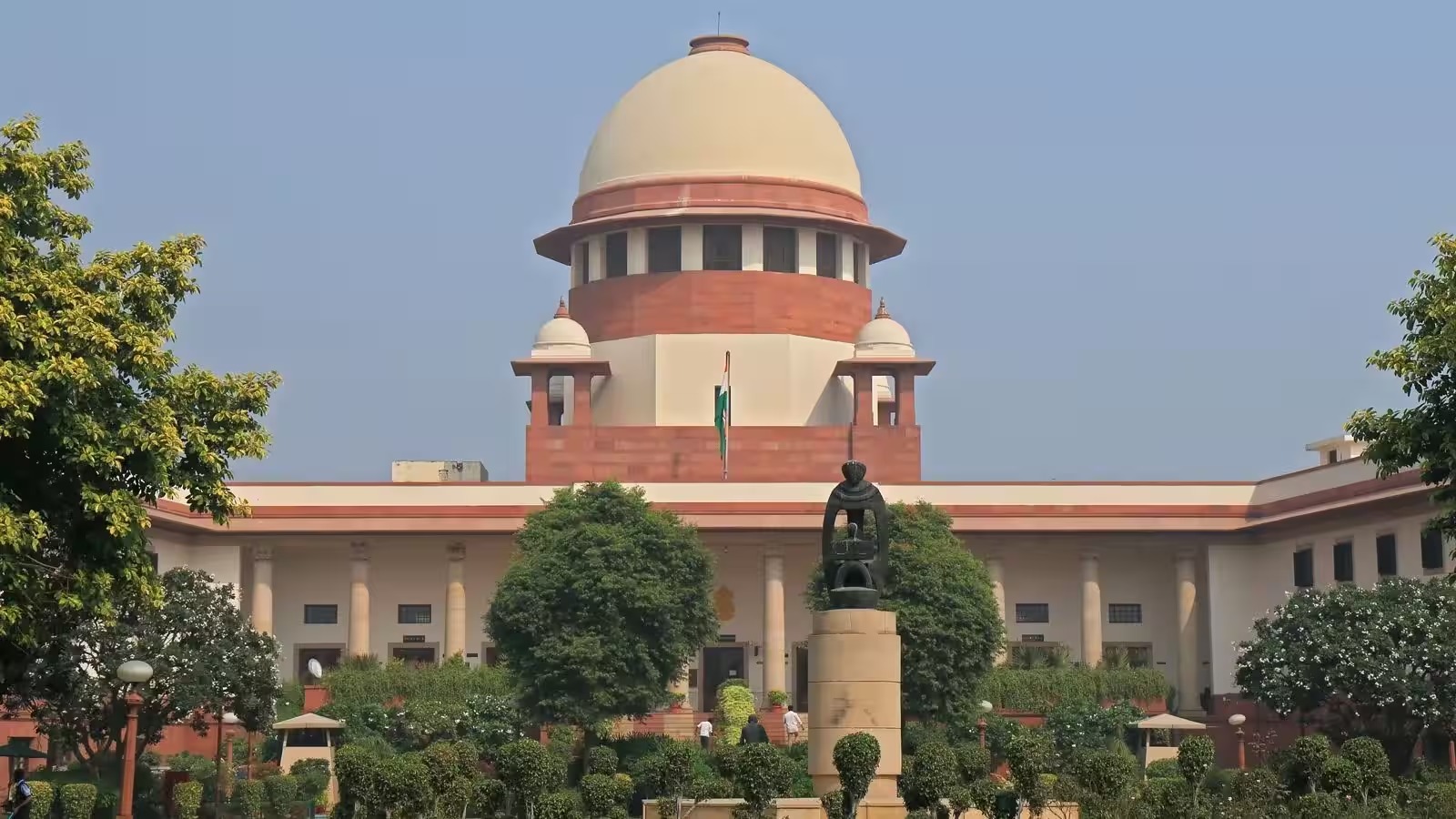
The Supreme Court of India has given a historic verdict in a very important and big case related to Indian politics, judiciary and democratic system. The Supreme Court has completely rejected the Public Interest Litigation (PIL), which had demanded that strict rules should be made to prevent the leaders against whom serious criminal cases are registered or charges have been framed in the court, from being appointed to the post of ministers in the Center and the States. While hearing this petition, the bench headed by the Chief Justice made it clear that the court cannot violate the principle of separation of powers fixed by the Constitution. After this big decision of the Supreme Court, a new debate has once again erupted among political circles and legal experts regarding the criminalization of politics and constitutional limits. Supreme Court gave a big reason: 'Can't interfere with the limits of the Constitution and the jurisdiction of the legislature' During the hearing of the case, the Supreme Court put forward very logical and constitutional reasons in its decision. The Supreme Court said that under Article 75 and Article 164 of the Indian Constitution, the Prime Minister and Chief Ministers have the absolute prerogative to select ministers in their cabinet. The court remarked that whether a public representative is to be administered the oath of office as a minister or not is entirely the decision of the executive and the top leadership elected by the public. The judiciary, on its part, cannot impose rules or guidelines that directly affect the scope of the Representation of the People Act and constitutional provisions. The court believes that unless the Parliament itself makes any changes in this direction by making a law, the Supreme Court cannot act as a new law making body. Concern over criminalization of politics, but said electoral mandate and morality are the responsibility of the public. However, during the hearing, the court expressed concern over the increasing criminal elements in politics, but also made it clear that the main responsibility for reforms in this direction depends on the legislature (Parliament) and the aware public of the country. The bench said that stringent rules of disqualification for contesting elections already exist in the law, in which the membership of leaders who have been sentenced to two years or more is terminated. Unless a person is proven guilty by a court, he is considered innocent by law and it is legally challenging to bar him from holding a constitutional office merely on the basis of an FIR or framing of charges. It is clear from the stand of the Supreme Court that the final decision on who should get a place in electoral politics and cabinet formation and who should not is left only to the public vote and the political discretion of the Prime Minister and Chief Ministers.