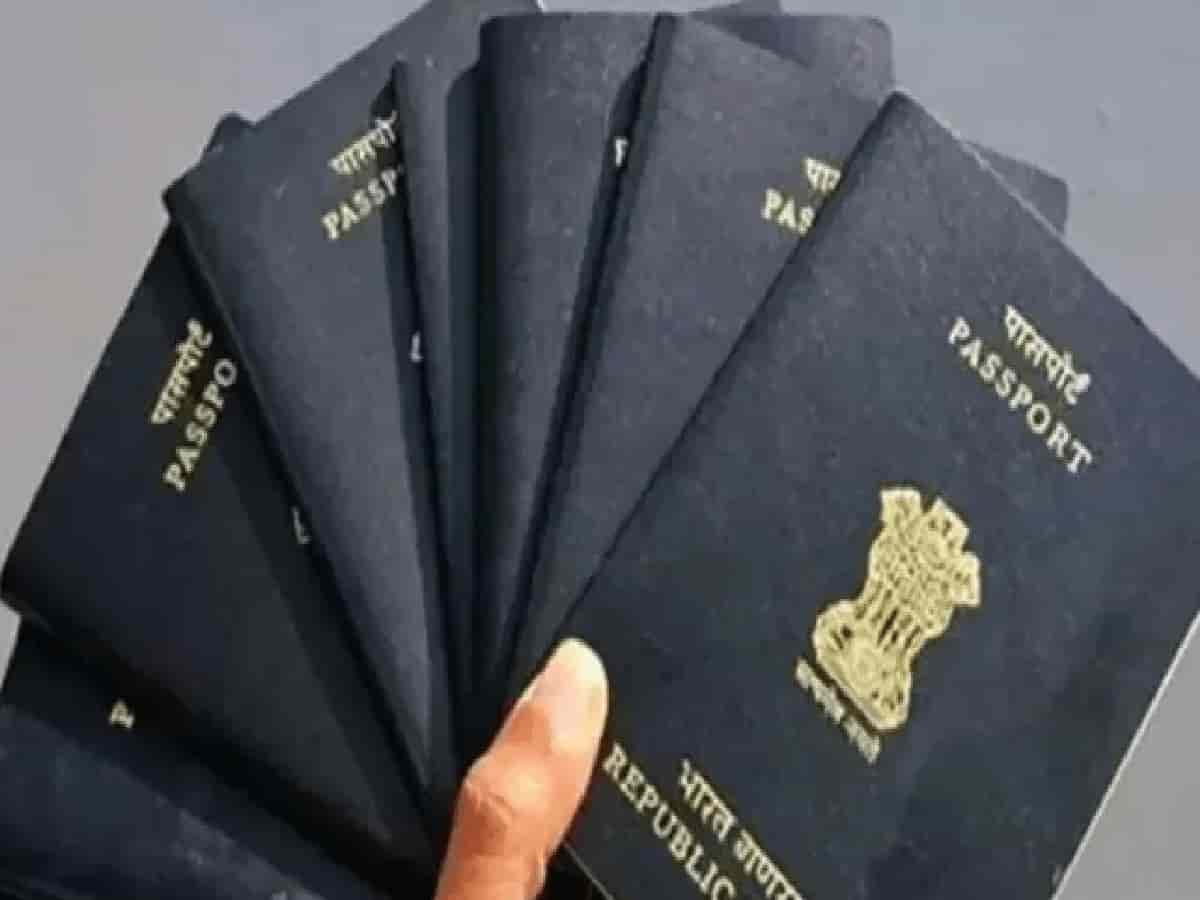
In a decisive enforcement action with significant national security implications, the Regional Passport Office has officially revoked 31 out of 70 Indian passports fraudulently secured by Bangladeshi nationals in Madhya Pradesh. Acting on an exhaustive investigative dossier submitted by the Madhya Pradesh Police’s Special Task Force (STF), authorities initiated the cancellations after forensic audits revealed that foreign infiltrators had fabricated localized identity credentials to falsely establish Indian citizenship. Out of the 31 travel documents revoked in this initial tranche, 17 were obtained using fabricated residential addresses situated in Simaria village, located in the Dabra subdivision of Gwalior district. With 66 accused individuals currently absconding—most suspected to have already exited Indian territory on forged paperwork—security and immigration agencies have activated inter-state surveillance and international border alerts to trace the syndicate’s wider apparatus.
How the Syndicate Exploited Monasteries to Procure Indian Identity Papers
The fraudulent network functioned through an elaborate multi-tiered strategy designed to bypass standard address verification and documentary scrutiny. Rather than using standard residential rental accommodations that could draw administrative suspicion, the syndicate systematically used the physical premises of Buddhist monasteries and religious welfare centers across Madhya Pradesh to house and register infiltrators. Investigation records indicate that the prime suspect, identified as Riyal Chowdhury (who adopted the religious moniker Mityananda Bhikshu or Bhante Metanand), used spiritual gatherings and monastic settings as cover for his human-smuggling and document-forgery racket.
Chowdhury, who originally infiltrated into India from Bangladesh before moving through Assam and arriving in Madhya Pradesh in 2021, used religious identity to gain local trust. By portraying Bangladeshi nationals as religious disciples or monks traveling abroad for spiritual propagation and global monastic exchange, the cartel systematically generated fraudulent birth certificates, forged Class 10 marksheets, and fabricated village verification certificates. These counterfeit documents were subsequently leveraged to obtain authentic Indian administrative IDs, including Aadhaar cards, Permanent Account Number (PAN) cards, and voter identity credentials. With these fundamental proofs of identity in hand, the operatives successfully applied for standard Indian passports under false local identities.
The Dabra and Simaria Village Epicenter: Local Accomplices and Agent Arrests
The tactical epicenter of the document fraud was traced to the rural belt of Gwalior district, particularly Simaria village near Dabra. A deeper audit into the documentation trails revealed that local facilitators played an active role in providing fake residential guarantees. Investigators arrested key local aides, identified as Gaya Prasad Gautam (a former sarpanch) and Gulabrai Gautam, who acted as recurring official witnesses on dozens of passport verification dockets despite possessing no legitimate familial or social connection to the foreign applicants.
The investigation extended into the institutional machinery processing the documents. The STF uncovered the complicity of an authorized agent identified as Naseem Akhtar, who operated at the Bhopal Passport Seva Kendra (PSK). Akhtar allegedly facilitated the fast-tracking of clearance files, ensuring that irregularities in identity documentation went unflagged during technical screening. Alongside Riyal Chowdhury, three Bangladeshi accomplices directly embedded within the logistics network were formally placed under arrest.
International Escape Routes: Suspects Traced to Southeast Asia and China
While several key local facilitators and kingpins are in judicial custody, the STF faces a major challenge in tracing the beneficiaries of these fraudulent documents. At least 66 Bangladeshi citizens who acquired Indian passports through this network remain absconding. Custodial interrogations of the arrested operatives revealed that as soon as the STF initiated discreet ground verifications, word leaked across the network, prompting the majority of the beneficiaries to flee India.
Intelligence inputs confirm that these absconding individuals used their fraudulently acquired Indian passports to clear international immigration counters, dispersing into Southeast Asian and East Asian jurisdictions including Malaysia, Indonesia, Myanmar, Singapore, and China. To restrict further travel, the Ministry of External Affairs and immigration authorities have flagged all revoked passport numbers across the national automated Immigration Bureau database. This technical red-flagging ensures that should any of the absconding individuals attempt to transit through international airports, maritime ports, or land border checkposts, border control systems will identify and detain them.
Uncovering the Interstate Nexus: Examining Connections to the Nagpur Model
Investigators are looking beyond the borders of Madhya Pradesh to establish the full geographic scope of the syndicate. A strikingly similar fake passport racket recently surfaced in Nagpur, Maharashtra, where undocumented foreign nationals secured genuine travel documents using manipulated local documents and institutional facilitators. The modus operandi—ranging from the selection of rural institutional addresses to the use of professional passport center agents—shows close structural parallels.
According to STF Deputy Inspector General (DIG) Rahul Lodha, Madhya Pradesh investigators have officially requisitioned the case diaries, forensic dossiers, and interrogation records of the Nagpur accused from the Maharashtra Police. The STF is actively examining whether an overarching interstate syndicate orchestrated operations across both states, rotating logistical coordinators and agents between Central India and western hubs to evade detection. The investigation is also reviewing potential financial trails across more than ten separate bank accounts used to route processing fees and kickbacks.
Tightening Police Verification Procedures Across Madhya Pradesh
The exposure of this racket has prompted a comprehensive overhaul of passport verification protocols throughout Madhya Pradesh. The state police headquarters has directed district intelligence branches, special branches, and local police stations in Gwalior, Betul, Chhindwara, Pandhurna, and Bhopal to re-verify pending and recently cleared passport applications that list collective or institutional addresses. Field officers must now conduct mandatory, in-person residential checks and cross-verify birth and school records directly with issuing municipal and educational bodies.
The formal revocation of the first 31 passports marks the start of a wider cleanup. Departmental teams are preparing revocation paperwork for the remaining 39 suspect passports identified in the initial STF audit. By coordinating with federal intelligence units, the Ministry of Home Affairs, and Interpol, security agencies are working to dismantle the human-smuggling corridor, close administrative verification loopholes, and hold facilitators across the bureaucratic pipeline accountable.