
Agriculture still draws roughly 70% of the world’s freshwater. The share has barely shifted even as populations rise and dry seasons stretch longer. Fixed-timer systems only deepen the strain. They open valves on schedule whether the soil is dry or already soaked. Runoff follows, and nutrients wash deeper than roots can reach. Plants swing between stress and excess, and most of that loss stays hidden until the meter turns or the well level falls.
Smart irrigation steps into that gap by swapping the calendar for live data. Sensors, local weather feeds, and automated controllers decide both timing and volume. The working premise is straightforward: supply only what the plants require.
How consistently the premise holds across every climate and soil type remains an open question, yet the early field numbers are difficult to dismiss.
IoT Sensors: The Ground-Level Data Layer
Soil moisture sensors form the practical core of most current installations.
Time-domain reflectometry and frequency-domain devices measure volumetric water content directly in the root zone. Once the reading sits above a chosen threshold, the cycle is simply skipped. Guesswork drops away and overwatering drops with it.
Temperature and humidity sensors help estimate how much water plants lose through transpiration. Together with soil readings, the combined picture grows sharper than any fixed schedule can manage and placement still decides the outcome.
A probe set in the wrong texture or under heavy shade can return misleading numbers. Installation care continues to separate systems that deliver from those that merely collect data.
Weather Data and Evapotranspiration Modeling
Evapotranspiration, or ET, combines soil evaporation with plant transpiration. Controllers pull fresh local forecasts through Wi-Fi or cellular links and recalculate the daily value; rain in the outlook often triggers an automatic pause. Certain models also stretch or shorten runtimes according to wind, solar radiation, and recent rainfall totals.
Weather-based controllers lean more on regional or hyper-local forecasts. Soil-based units respond to moisture already present in the ground, and hybrid arrangements that merge the two are appearing more often because each method alone carries blind spots. Distant weather stations still miss microclimates.
A well-placed sensor network can register what those stations overlook.
Smart Irrigation Controllers and Actuators: The Decision Layer
Controllers gather sensor and weather inputs, apply the logic, and issue commands to valves and pumps. Smart valves open or close according to those signals and zone-level customization, thereby becoming common, allowing different soil types, plant requirements, and sun exposure to coexist on a single property.
Residential units such as Rachio and Orbit B-hyve bring the same capability to homeowners. Both adjust schedules from weather data and connect with the usual smart-home platforms. Larger professional systems for farms and golf courses extend the approach across hundreds or thousands of zones, typically managed through central software dashboards.
Measured Benefits and Trade-offs
Field studies and utility reports place outdoor water reductions somewhere between 15% and 50%, the exact figure depending on prior inefficiency and local climate. EPA WaterSense weather-based controllers commonly return 15-30% for average users.
Soil-moisture and hybrid systems often reach higher figures where earlier overwatering was pronounced.
Plant condition tends to improve alongside the savings. Avoiding both drought stress and waterlogged roots cuts fungal pressure and nutrient loss.
Farmers note more even yields. Landscape managers report fewer dead patches and reduced fertilizer demand.
Cost reductions appear next. Homeowners watch water bills fall and larger operations reduce the labor once spent walking fields and checking valves by hand; payback periods differ. Residential controllers frequently recover their cost in one or two seasons where rates are high. Agricultural installations take longer yet scale with acreage.
However, not every site reaches the upper savings range. Incomplete sensor coverage, poor initial setup, or aggressive default schedules can blunt the gains.
Forum discussions among users sometimes note that the automated features still need occasional manual overrides in microclimates or extreme heat.
Hardware reliability is solid for many; the decision algorithms still benefit from periodic human judgment.
Where the Technology Already Works
Precision agriculture pairs soil sensors with satellite imagery and, in some cases, drones to build variable-rate maps. Separate zones within the same field then receive different volumes matched to crop type and soil variation.
Water waste falls and growth becomes more uniform.
Commercial landscaping and golf courses oversee thousands of sprinklers from central platforms. Real-time weather and moisture data allow managers to maintain turf quality while staying inside municipal limits. Multi-million-gallon annual savings are routinely recorded at the larger properties.
Residential uptake has risen through consumer controllers. Rachio and Orbit B-hyve units link with Apple Home, Google Home, and Alexa. Owners schedule or monitor from a phone and receive rain-skip alerts. Forum feedback tends to be mixed yet leans favorable on convenience and moderate water reduction once the system is properly tuned.
Barriers That Still Slow Wider Adoption
Cost remains the first hurdle for many smaller operators. A full sensor network plus controller can require several thousand dollars upfront, and payback is slower on modest acreage or in regions with low water rates.
Connectivity gaps in rural areas still leave some systems offline for days at a time. Training is another quiet obstacle; the technology works best when someone on site understands how to interpret the data and override defaults when conditions turn unusual.
Interoperability between brands is improving yet remains incomplete, causing operational friction when mixing legacy valves with new controllers.
These practical limits do not erase the water savings already documented, but they help explain why the shift has been steadier on large commercial sites than on family farms.
Current Trends Shaping the Next Phase
Artificial intelligence is shifting systems from purely reactive responses toward predictive ones. Controllers begin to learn drainage patterns and plant reactions over successive seasons rather than relying solely on static ET formulas.
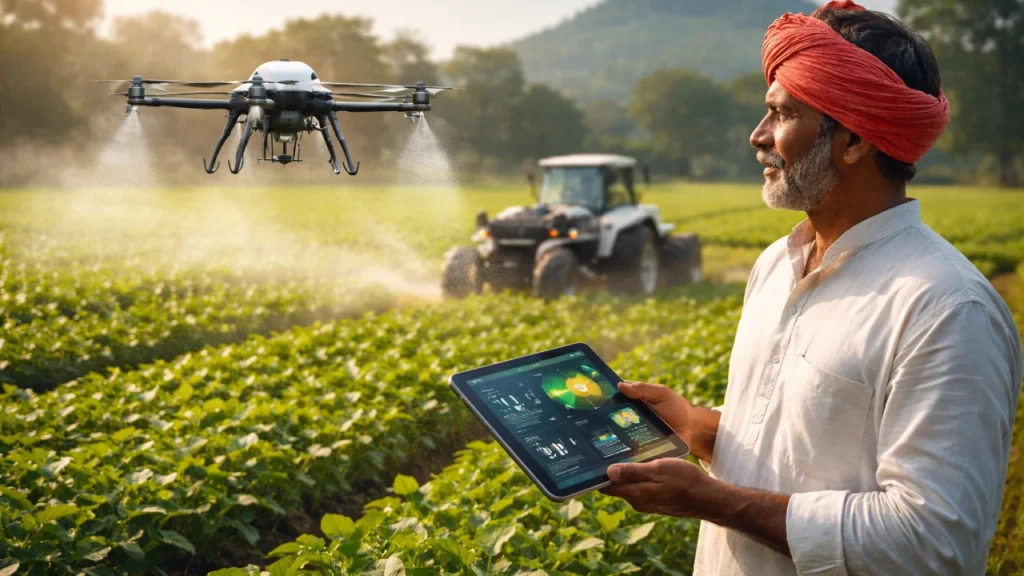
Solar-powered sensor nodes and low-power networks such as LoRaWAN extend coverage into remote fields without extensive wiring. Mobile applications have become the main interface for both agronomists and homeowners.
Market projections continue to show double-digit growth through the early 2030s, supported by tightening water regulations and falling sensor and connectivity costs. Whether adoption remains concentrated among larger operators or spreads more evenly is still unsettled.
Looking Ahead
Stricter water rules and lengthening droughts are already moving smart irrigation from optional upgrade toward expected practice in many regions. The technology alone does not erase scarcity, and it does make each applied drop more deliberate.
How quickly the remaining gaps in reliability, cost, and ease of use close is the question still open.
Present data show clear progress wherever systems are installed and maintained with care, and users will judge for themselves whether that progress meets the needs of their own fields, courses, or yards.
(Source)