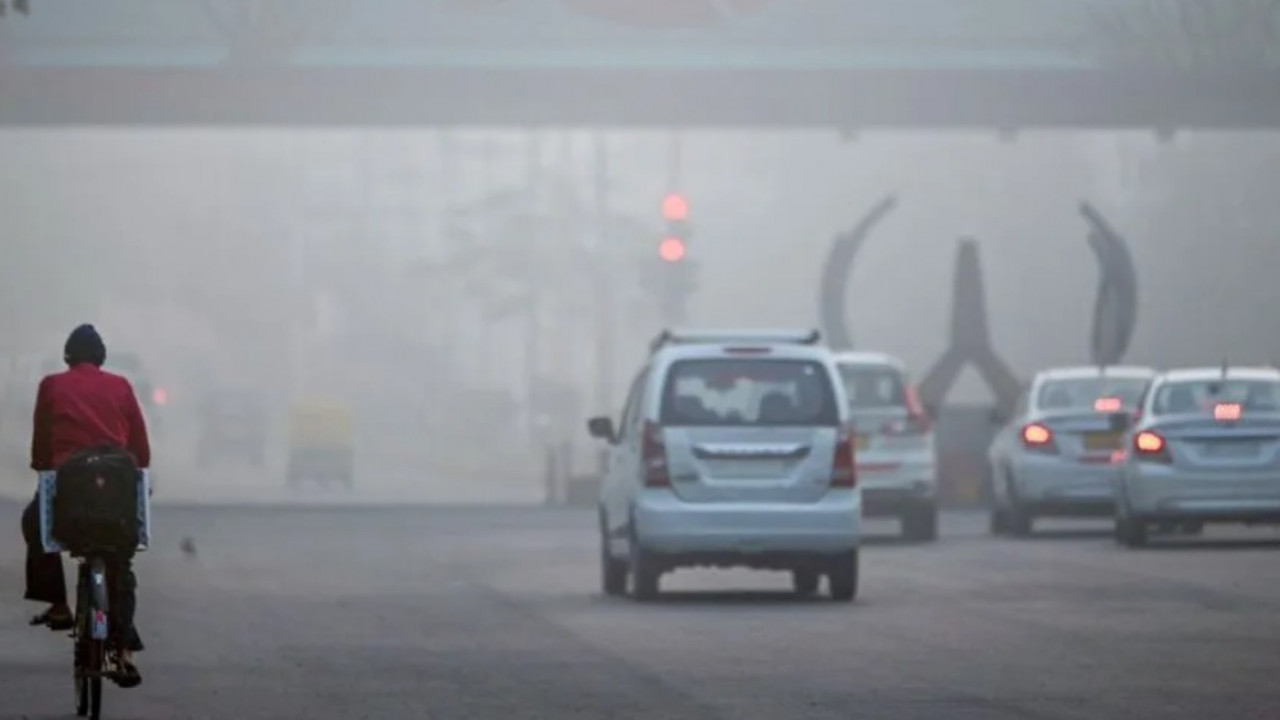
New Delhi. On the morning of 8 November 2026, the day of Diwali, the national capital Delhi once again came under the grip of poisonous air and dense smog. In many areas of the city, the level of pollution has reached severe category, due to which people are facing trouble in breathing. According to Central Pollution Control Board (CPCB) data, Delhi's average air quality index (AQI) was recorded at 382 at 5 am on Sunday, which falls in the very poor category. At the same time, AQI crossed 400 in many areas. Pollution levels are expected to increase further due to fireworks and adverse weather conditions on Diwali.
Highest pollution in Rohini and Punjabi Bagh, many areas in serious category
According to monitoring data released at 5 am, air quality in many areas of Delhi reached very poor condition. AQI was recorded at 444 in Rohini, while it reached 450 in Punjabi Bagh. Apart from this, 449 AQI was recorded in RK Puram, 446 in IIT Delhi, 444 in Dwarka, 431 in Jawaharlal Nehru Stadium, 418 in Alipore, 413 in Chandni Chowk and 414 in Vivek Vihar. Of the 59 monitoring centers in Delhi, air quality remained in the severe category at about 16 to 22 centres, while pollution levels were recorded at very poor levels at most other centres. Visibility was also affected in many areas due to toxic smog.
Children, elderly and respiratory patients advised to stay at home
In view of the increasing levels of pollution, doctors and health experts have advised people to take special precautions. Children, elderly and people suffering from respiratory diseases have been asked not to leave their homes unnecessarily. According to experts, prolonged exposure to toxic air can increase the risk of respiratory diseases. Heart patients also need to be extra cautious.
The administration has appealed to citizens to avoid going out during morning and evening hours, when pollution levels are high. If it is necessary to go out, wear an N95 or better quality mask. Use air purifiers at home and keep windows closed.
Third phase of GRAP implemented, ban on construction works
To control increasing air pollution, the third phase of Graded Response Action Plan (GRAP) has been implemented in Delhi-NCR from November 6. Under this, non-essential construction and demolition works have been completely banned.
Apart from this, a ban has been imposed on the operation of BS-III petrol and BS-IV diesel category four-wheelers in Delhi. Government and private offices have been allowed to function with the presence of 50 percent employees. At the same time, the Education Department has instructed primary schools in some areas to conduct classes in hybrid mode.
Only green firecrackers allowed on Diwali, time limit also fixed
Strict rules have also been implemented regarding fireworks on Diwali. As per Supreme Court order, only CSIR-NEERI certified green crackers are allowed to be burst on November 7 and 8 in Delhi-NCR. For this, time has been fixed from 6 to 7 in the morning and 8 to 10 in the night.
A ban has been imposed on bursting of firecrackers within 300 meters of hospitals, schools, old age homes and other sensitive places. At the same time, the complete ban on firecrackers will be implemented again from November 9.
However, according to media reports, illegal sale of normal firecrackers is still going on in the markets. In such a situation, it remains a challenge for the administration to follow the prescribed rules. Due to the possibility of further worsening of pollution levels due to fireworks during Diwali, people have been appealed to take precautions keeping the environment and health in mind.