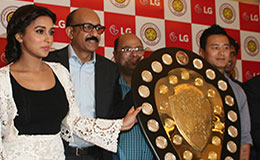
Bhaichung Bhutia was the first Indian footballer of the modern era to sign for a European club, and for more than a decade the striker the national team was built around. He led the line for India in more than 80 matches, scored 27 goals and captained the side that won the 2008 AFC Challenge Cup and reached the 2011 Asian Cup.
Name: Bhaichung Bhutia | Born: 15 December 1976, Tinkitam, Sikkim Sport: Football | Position: Striker
From Tinkitam to Gangtok
Bhutia grew up in Tinkitam in south Sikkim and went to St. Xavier’s School in Pakyong. A Sports Authority of India scholarship took him to Tashi Namgyal Academy in Gangtok, and from there his performances in school and youth football brought him to the attention of the big Calcutta clubs.
He joined East Bengal in 1993 as a teenager. It was the start of a long relationship: he would play for the club in several spells across the next two decades.
JCT and the India debut
In 1995 he moved to JCT Mills in Phagwara and helped them win the National Football League in 1996-97, finishing as the league’s top scorer. In the same period he broke into the national team. He made his debut at the 1995 Nehru Cup against Thailand and scored, becoming at 19 the youngest scorer for India at the time. He was AIFF Player of the Year in 1995.
Bury and the move to England
In 1999 Bhutia signed for Bury, then in the English third tier. He was the first Indian to sign for a European club and the second Indian to play professional football in Europe after Mohammed Salim, who played for Celtic in the 1930s. He spent three years at Gigg Lane, leaving in 2002. Before he left for England he received the Arjuna Award in 1999.
Back in India
On his return he played for Mohun Bagan from 2002 to 2003, spent a loan spell with Perak in Malaysia in 2003 and had a season with Selangor MK Land in 2005. He went back to East Bengal and then returned to Mohun Bagan between 2006 and 2009, before finishing his top-level career with East Bengal.
Captain of India
For much of the 2000s Bhutia was India’s captain and main goal threat. India won the SAFF Championship in 1997, 1999 and 2005 with him in the side, and the Nehru Cup in 2007 and 2009. In 2007 the young Sunil Chhetri was breaking through alongside him, and the pair carried the attack together for several years.
The biggest prize came in 2008. India won the AFC Challenge Cup in Hyderabad, and Bhutia was named the most valuable player of the tournament. The title gave India a place at the 2011 AFC Asian Cup in Qatar, their first appearance at the finals since 1984. He was AIFF Player of the Year again in 2008, and received the Padma Shri the same year.
Retirement and the Bayern farewell
On 24 August 2011 he announced his retirement from international football. On 10 January 2012 Bayern Munich came to New Delhi for a farewell match in his honour. He later had a season as player-coach of United Sikkim, the club from his home state, in 2012-13.
Off the field
Bhutia has stayed in the public eye. He won the dance reality show Jhalak Dikhhla Jaa in 2009. In 2008 he declined to carry the Olympic torch in India, citing his support for the Tibetan cause. In October 2010 he set up the Bhaichung Bhutia Football Schools in Delhi with Carlos Queiroz. He has also contested several elections, first for the Trinamool Congress and later for his own Hamro Sikkim Party, without winning a seat.
In 2014 he was inducted into the Asian Football Confederation’s Hall of Fame.
Career record and honours
- India: more than 80 caps and 27 goals, 1995-2011; long-serving captain
- AFC Challenge Cup: winner 2008, most valuable player
- SAFF Championship: winner 1997, 1999 and 2005
- Nehru Cup: winner 2007 and 2009
- AFC Asian Cup: Qatar 2011
- Clubs: East Bengal, JCT Mills, Bury, Mohun Bagan, Perak, Selangor MK Land, United Sikkim
- National Football League: winner with JCT Mills 1996-97, top scorer
- AIFF Player of the Year (1995, 2008)
- Arjuna Award (1999)
- Padma Shri (2008)
- AFC Hall of Fame (2014)