TECHNOLOGY
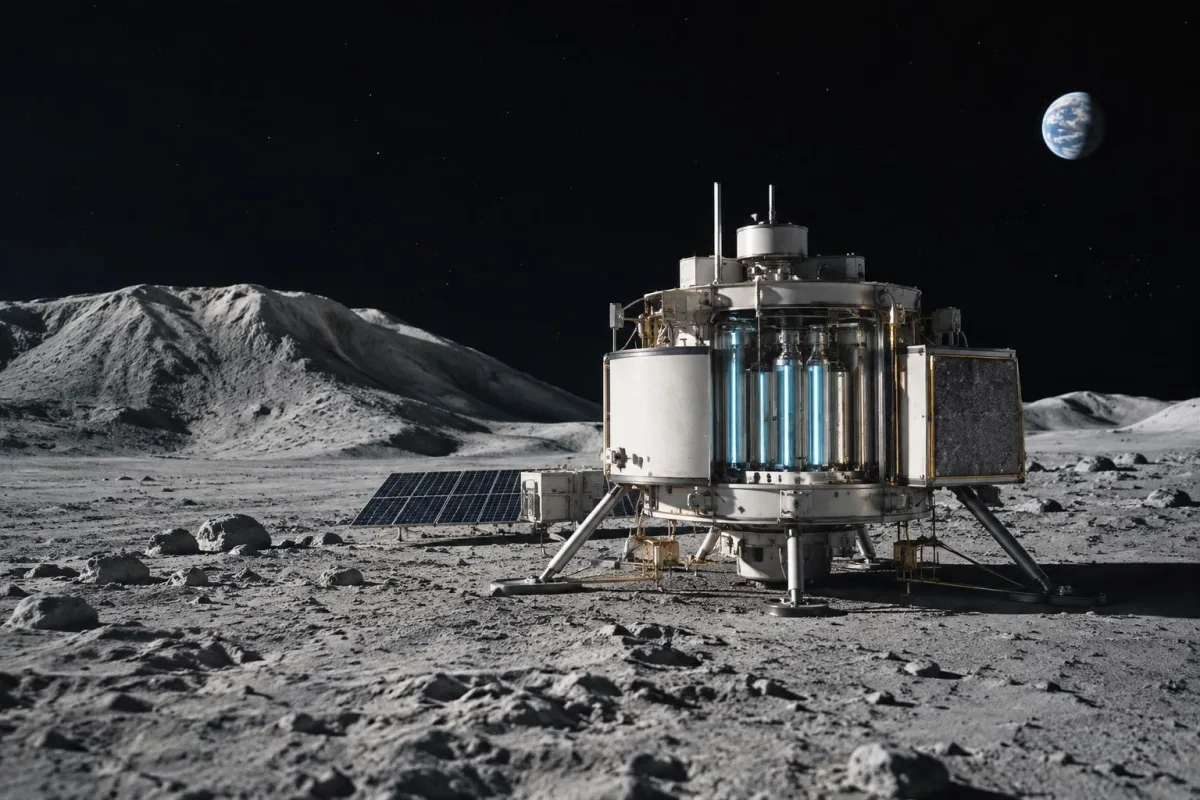
The Canadian Space Agency is assessing domestic technologies for lunar microreactors, seeking input from industry and academia.
NEW DELHI, Nov 10: The Canadian Space Agency (CSA) has launched a request for information (RFI) to gather insights from Canadian industry and academia regarding lunar microreactor technologies. This initiative focuses on identifying Canada’s strengths in this emerging field.
The CSA considers fission power a valuable complement to solar energy and batteries for lunar missions, particularly in support of exploration and inhabited operations. The RFI specifies technologies that have reached a technology readiness level of at least 2, which may pertain to either a full reactor system or specific subsystems.
According to the RFI, there is no assumption that a single entity will be responsible for designing and implementing a complete lunar microreactor system. Instead, it outlines a conceptual reactor capable of producing between 20 kWe and 80 kWe of continuous output, with an operational lifespan of at least ten years. The reactor would need to operate largely autonomously and be deployable, usable, and decommissionable safely.
The RFI highlights 16 key areas of interest for the lunar microreactor supply chain, including fuel, heat transport, power conversion, and radiation shielding, as well as aspects related to deployment and autonomous instrumentation. Submissions are encouraged to argue for specific technologies or architectures, potentially setting the stage for future feasibility studies and demonstrations.
In addition to the RFI, the CSA has provided funding for two projects focusing on radioisotope technologies. One initiative aims to develop a tritium-fueled heating unit to enable spacecraft to endure the harsh lunar night. The other project revolves around a radioisotope power system intended to support spacecraft and rovers operating in extreme environments.
The newly established Canadian Centre for Space Isotopes aims to foster collaboration among experts from the nuclear sector, space industry, and broader research community to advance research and policy in this domain.
The importance of lunar power systems is gaining traction globally. Earlier in 2023, NASA prioritized the establishment of a lunar base and issued calls for proposals for radioisotope power systems. This initiative is part of a larger U.S. effort to advance space nuclear power technologies, including the upcoming Space Reactor-1 Freedom mission scheduled for 2028.
Sources

My name is Kuldeep Singh Chundawat. I am an experienced content writer with several years of expertise in the field. Currently, I contribute to Daily Kiran, creating engaging and informative content across a variety of categories including technology, health, travel, education, and automobiles. My goal is to deliver accurate, insightful, and captivating information through my words to help readers stay informed and empowered.