Born in 1983 in Nova Blahovishchenka, a village in Ukraine’s Kherson region, Malaya reportedly developed normally in her earliest years. But her family lived in poverty, and her parents drank heavily and failed to care adequately for their children.
“Mum had too many kids. We didn’t have enough beds,” she recalled in an interview with 60 Minutes Australia.
|
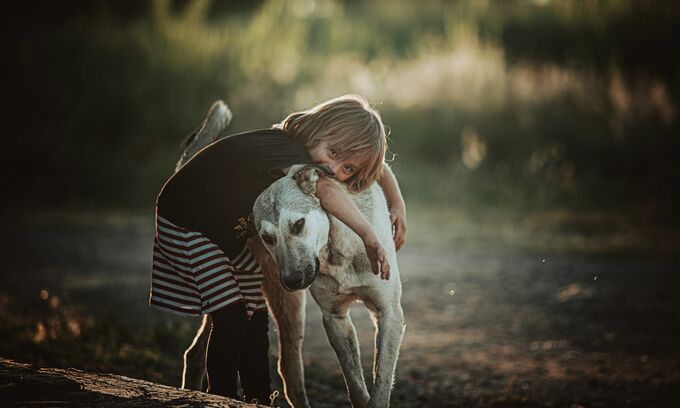
Illustrative photo from Pexels |
One cold night, when she was three, she was left outdoors and crawled into the family’s kennel for warmth beside a dog named Naida. It became her refuge, with dogs providing her closest companionship for roughly five years.
With little human contact, she began imitating their behavior. She walked on all fours, slept on the ground, ate scraps and barked to communicate. She recalled talking to the dogs and copying the sounds they made in response.
Authorities reportedly learned of her situation in 1991 after she barked at a neighbor. The dogs initially prevented officers from approaching her, and they had to lure the animals away with food to reach her, Bored Panda reported.
Malaya was placed in care and eventually moved to a facility for children with developmental disabilities in the Odesa region.
She had little ability to speak and would lap up water with her tongue, a care facility director told “60 Minutes Australia.”
Years of rehabilitation followed. Staff helped her learn to walk upright, speak, use household items, and interact with other people.
She gradually developed speech and learned to perform everyday tasks.
The effects of her childhood neglect persisted, however. Psychologists interviewed by the program described significant difficulties with her cognitive and social development and doubted that she would ever be able to live independently.
As an adult, Malaya lived in a specialized care facility and worked on a farm, tending animals and milking cows.
During a 2013 appearance on the Ukrainian television program “Hovoryt Ukraina,” she spoke about her life and asked people to stop calling her the “dog girl,” saying the label hurt her.
She said she felt no resentment toward her family, wanted her brothers to visit more often, and hoped to see her biological mother again.
She also said she had a boyfriend.
Malaya was still living in care in the Odesa region as of June 2026. Her earlier interviews revealed the loneliness that accompanied her progress. She said she sometimes returned to old habits sometimes. “When I feel lonely… I crawl on all fours.”