
Traditional software teams are accustomed to tracking code changes through version control. AI systems introduce more moving parts. A model can change because its architecture is modified, its training data is updated, its parameters are tuned, or a different prompt is introduced.
This creates a challenge when teams need to understand why an AI system behaves differently from an earlier release. Knowing the application code alone may not be enough to reproduce the result. AI model version control brings these different components into a traceable workflow, helping teams understand how models evolve from experimentation to production.
What Is AI Model Version Control?
AI model version control is the practice of tracking different versions of the models and related assets used in an AI system. These assets can include model files, training datasets, configuration settings, evaluation results, and prompts.
For example, a team might deploy Model 2.3 after testing it against Model 2.2. If users later report a change in output quality, the team can examine what changed between the two versions instead of investigating the entire development history from scratch.
Why Model Changes Need to Be Tracked
AI models are not static software components. Retraining the same model architecture with different data can produce different behavior. Suppose a recommendation model is retrained using a newly collected dataset. Its accuracy might improve for recent user behavior but change how it handles older patterns.
Recording the dataset and training configuration associated with that model allows the team to understand why the new version behaves differently. Without this information, reproducing an earlier result can become surprisingly difficult.
Dataset Versioning Matters Too
The model is only one part of the AI system. Training data can have an equally significant effect on the final output. Teams should track which dataset version was used, when it was created, what transformations were applied and, where appropriate, how the data was evaluated. If a dataset is cleaned, expanded or replaced, that change should be traceable.
For example, if an image-classification model suddenly performs differently after retraining, knowing exactly which images and preprocessing steps were included can help determine whether the change came from the model configuration or the data.
Prompts Are Part of the System
Generative AI applications introduce another versioning requirement: prompts. A change to a system prompt, instruction template, or retrieval configuration can alter the model’s output even when the underlying model has not changed. Imagine a customer-support assistant whose prompt is updated to make responses shorter.
If the quality of its answers changes afterward, the team needs to know which prompt version was active when the responses were generated. Tracking prompts alongside model and application versions gives teams a more complete picture of the system.
Connect Experiments to Production Releases
AI teams often run many experiments before selecting a model for production. Without proper tracking, useful information from these experiments can become difficult to recover. Teams can record experiment configurations, evaluation results, model versions, and deployment decisions so that successful experiments can be connected to the production release they eventually produced.
This creates a clearer path from experimentation to deployment and helps teams understand why a particular version was selected.
Reproducibility Helps With Troubleshooting
Reproducibility means being able to recreate or closely reproduce a previous model result using the recorded inputs, model version, and relevant configuration.
This can be important when an AI system produces an unexpected output. Developers may need to determine whether the issue came from the model, dataset, prompt, application code or another dependency. A well-documented version history gives the team a starting point for comparing the current system with earlier versions.
Version Control Supports Safer Releases
AI models can be released gradually rather than replacing the existing version for every user at once. Teams can test a new model with a limited group, compare results, and expand deployment when the results meet predefined requirements.
If the new version performs unexpectedly, having a clearly identified previous version makes rollback easier. This is particularly useful for production AI systems where model behavior can directly affect user experiences or business processes.
Evaluation Results Should Travel With the Model
A model version without evaluation information provides only part of the story. Teams should record relevant test results, datasets, evaluation criteria, and known limitations alongside the model. For example, a fraud-detection model might perform differently across various categories of transactions.
Recording these evaluation results can help teams understand where the model performs well and where additional monitoring may be required. Evaluation should also continue after deployment because real-world behavior can differ from controlled testing.
Governance Needs Clear Ownership
Version control can support AI governance by creating a record of what changed, who approved a release, and which version is currently in production. This can be especially important for organizations managing multiple AI applications.
Clear ownership helps teams identify who is responsible for maintaining a model, reviewing updates and responding when problems occur. Documentation should cover important decisions without creating unnecessary administrative work. The objective is traceability that teams can actually maintain.
Monitor Models After Deployment
Version control does not end when a model reaches production. Teams should monitor performance, errors, user feedback, and other relevant signals to identify changes in behavior.
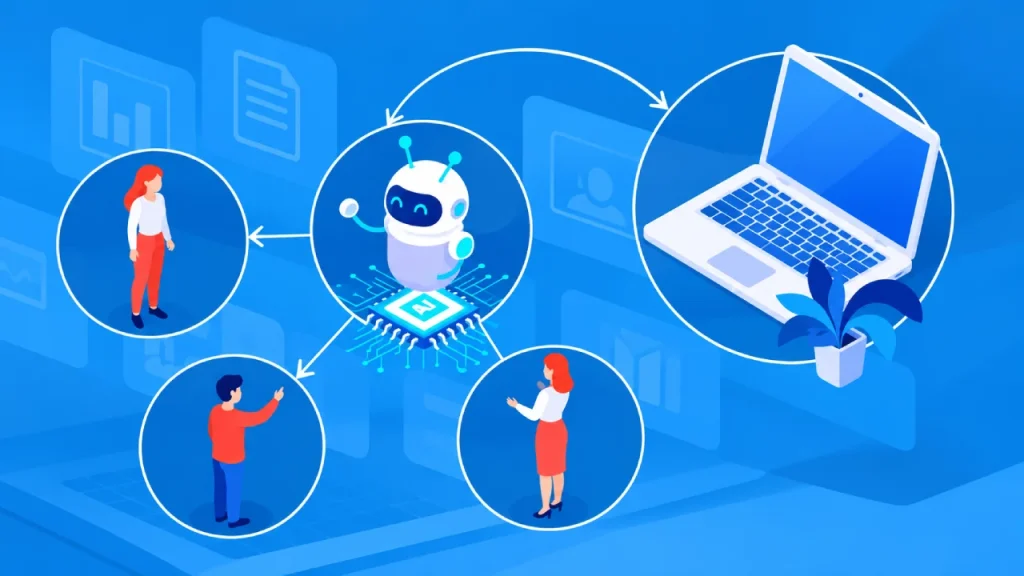
If a model’s performance begins to decline, the version history can help determine whether a recent model update, dataset change, prompt modification or application release coincided with the change. This connects version control with ongoing monitoring and maintenance.
AI Version Control Is More Than Model Files
A common mistake is to treat the model file as the only version that matters. In practice, AI behavior can depend on many interconnected components.
Model architecture, weights, datasets, prompts, preprocessing logic, evaluation settings, application code, and deployment configuration can all influence the final result. Tracking these relationships gives teams a more complete record of how an AI system was built and deployed.
Conclusion
AI model version control gives teams a structured way to manage systems that constantly evolve. By tracking models alongside datasets, prompts, configurations, and evaluation results, teams can better understand changes and reproduce earlier states.
It also supports safer deployment by making releases easier to compare, monitor, and roll back when necessary. For growing AI teams, version control is therefore not just a development practice. It can become an important part of reliable operations, accountability and AI governance.
(Source)