Nobody enjoys getting a flat tire, but it’s something that you should always be prepared for. There are a few different ways that you can handle the problem when it happens. Severe blowouts will leave you with no choice but to pop on a spare and take the car to the nearest tire center for a replacement. But minor punctures can often be patched, giving your tire a bit more life before you’re forced to spend hundreds of dollars on new rubber.
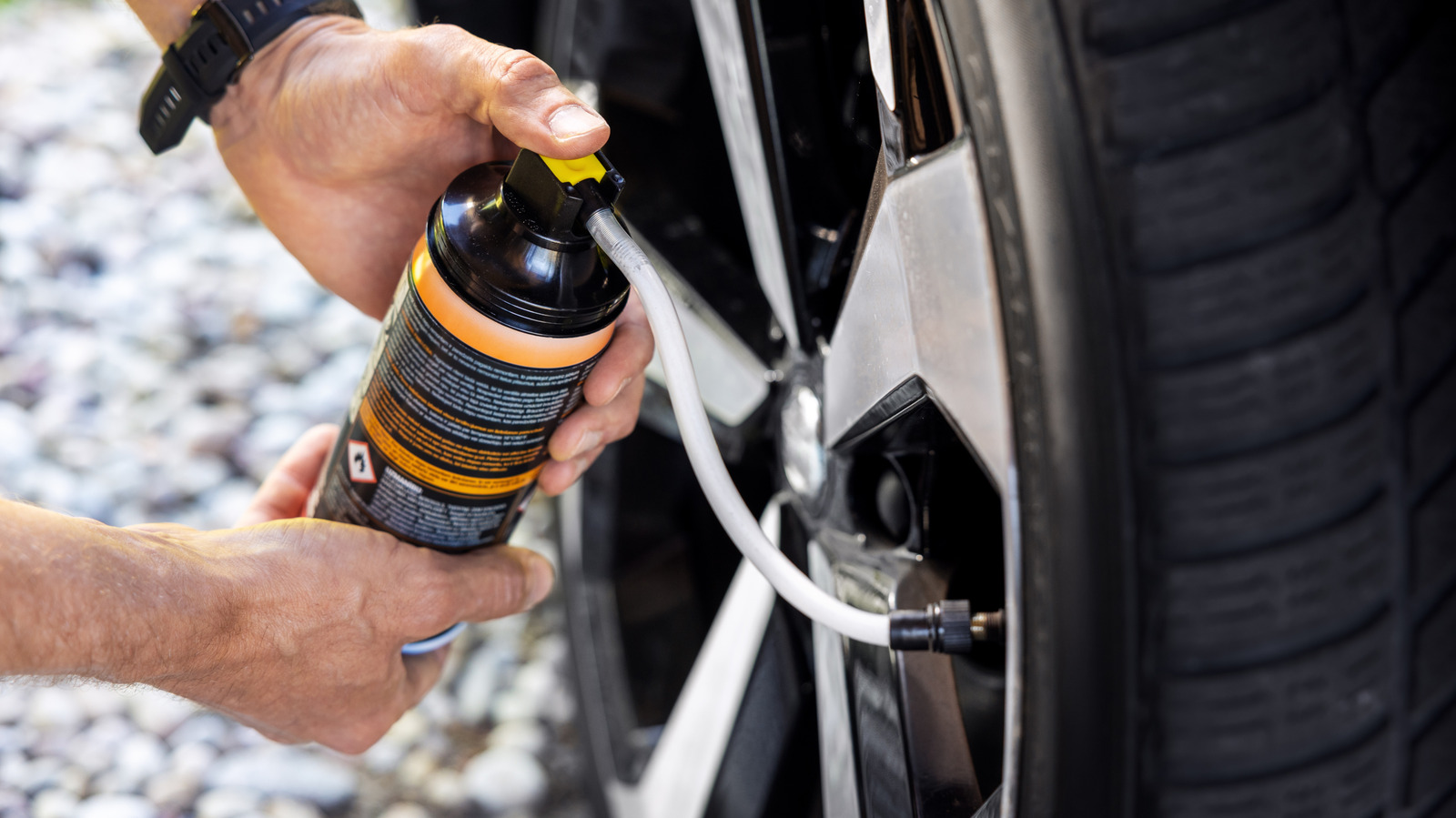
One of the more tempting solutions you may see in advertisements or on the shelves of hardware stores is tire sealant. This special liquid formulation contains polymers or fibers and may also include adhesives or latex. The solutions are designed to coagulate and form a plug to repair small punctures and minor air leaks within the tire, allowing you to reinflate it and get back on the road in no time.
There’s no denying that tire sealant is a useful product to have on hand in a pinch, but that convenience can come at a cost. We discuss five potential drawbacks of tire sealants you should consider before reaching for a bottle.
Most offer a temporary fix
One thing to keep in mind about most tire sealant formulas is that they are primarily meant to serve as a temporary solution. These products are made to get your car off the side of the road quickly and easily so you can take it to a local tire shop or mechanic for a proper long-term repair or a replacement. The vast majority of the products are not intended as a permanent fix. There are a handful of tire sealants out there, such as Liquitube Premium Tire Sealant, that promise to last the entire life of the tire, but these are typically a minority and often come with issues of their own.
Other products, such as Slime and Fix-A-Flat’s emergency roadside formulas, recommend getting a punctured tire professionally repaired or replaced within three days or 100 miles after applying the solution. That means the clock starts ticking as soon as you put the fluid in the tire. Continuing to drive on the tire after that period can cause wheel imbalance and the puncture to recur.
The marketing for these products can be a bit confusing, though. For instance, Slime’s 10193 Tire and Tube Sealant claims to last up to two years inside a tire, preventing and repairing small punctures and tears. But while it doesn’t explicitly say so on the front of the bottle, this formula is specifically designed for non-highway vehicles such as bicycles, wheelbarrows, tractors, and lawnmowers. It isn’t intended as an emergency roadside solution for most cars and trucks, though it’s popular in the dirt biking and off-roading community.
Messy cleanup and complicated repairs
Unfortunately, the trouble might not end once you limp to the nearest tire shop or mechanic to get a proper fix. One of the biggest complaints that you see about tire sealants is that they can be difficult to clean out of the tire after application.
When sealant is injected into a tire, it coats the entire inner liner and rim. Several different brands claim that they’re easy to remove. Most over-the-counter formulas are water-soluble, so some warm water and a bit of elbow grease should be all it takes to get the substance out of the tire if it hasn’t hardened. There is also a popular hack that involves using a basic rubber eraser to remove dried latex-based sealants when they’ve hardened beyond the point of washing. But despite manufacturers’ claims that the product is easy to remove, many people say it is a goopy mess that no one really wants to deal with.
An alarming number of reports from both mechanics and users claim that the liquid is notoriously messy and a headache to clean. A few technicians will begrudgingly remove the material at no extra cost; some might impose a cleanup fee, while others have claimed that they will outright refuse to deal with the solvent and insist that you get a new tire. Several people have also reported that the material can damage the tire’s air valve stem, plugging or seeping into the gaps around it and causing a leak. So, you might want to consider getting a few other items to keep in your car in case you get a flat tire.
Can damage or clog TPMS sensors
Most modern cars, trucks, and SUVs contain tire pressure monitoring system (TPMS) sensors. These safety features track the air pressure inside the tire and alert you when it drops too far below the manufacturer’s recommended PSI. Contrary to popular belief, a study by AAA found that TPMS is actually pretty reliable, challenging common misconceptions about its performance.
One of the dangers that many people might not consider when using tire sealant is that it can actually damage these internal sensors. Some brands, like Slime and Fix-A-Flat, advertise their products as “tire sensor safe.” That said, there are several reports from users who claim that their TPMS sensor stopped working immediately after using tire sealant.
Many reputable sources claim that there is no such thing as a tire sensor-safe sealant. According to automotive ignition and sensor manufacturer NGK“Any time a foreign substance (other than air or nitrogen) is placed in a tire, there is a potential to damage the tire’s TPMS sensor.” The primary issue with tire sealants is that they can clog the small pressure port on the sensor, preventing it from being able to function properly.
This pinpoint-sized hole is easily blocked by any kind of foreign matter, so the same thick, hardening goop that is designed to plug punctures can also obstruct the sensor. “TPMS Safe does not mean the sealant will have zero impact on your sensor,” states tire distributor Okelcor. “It simply means the chemical formula is water-soluble and non-corrosive, meaning it will not instantly destroy the electronic components or melt the plastic housing.” Worst of all, replacing these sensors can cost an average of $314 to $368.
May throw your wheels out of balance
In theory, tire sealant should evenly distribute itself across the interior surface of the tire while you drive. It’s designed to remain liquid inside the tire long enough for you to get to a shop where it will be cleaned out and replaced. Things don’t always work out that way, though. If you don’t have the time, money, or a local shop with immediate availability, then there’s a good chance that the vehicle will remain parked for an extended period with the fluid inside.
When this happens, it will gather at the bottom of the tire and rest there for a long time, allowing the viscous substance to settle. This means the fluid will no longer be evenly distributed around the tire’s internal circumference. Because the substance is dense and thick, it can create an unbalanced weight inside the tire that takes a while to even out. The unevenly distributed mass rotating inside the tire makes the wheel wobble, causing vibrations through the steering column. This is even more of an issue when you put too much solution in the tire, as it pools more easily and struggles to stay evenly distributed across the tire’s inner surface.
The substance doesn’t remain a liquid forever either. It should stay relatively fluid if you follow the manufacturer’s guidelines and get it cleaned out within the designated time limit. But many stories exist of people who left it in their tires for too long and had the sealant go dry, causing a permanent imbalance unless you can scrape it out.
Rubber degradation and wheel corrosion
Most of the tire sealant options on the market today aren’t a big risk to the physical integrity of the tire itself, especially if you actually stick to the manufacturer’s guidelines and get it cleaned out before prolonged exposure takes place. That said, some tire sealant formulas contain ammonia as a stabilizer to keep it from drying out while it’s still in the bottle.
Ammonia has a pH level between 11 and 12, meaning that it’s fairly alkaline. When bare metal, such as untreated aluminum alloy wheels, is exposed to chemically aggressive tire sealants, it can result in pitting and corrosion. You should also consider that the vast majority of these solutions contain water. This can cause rust buildup inside steel wheels if left for too long or not properly cleaned out.
It isn’t just the metal that is at risk, though. Some tire sealants can also degrade the materials inside your tires. Glycol- and latex-based sealants can trigger different chemical reactions that damage internal components. Glycol can oxidize tire plies, causing them to separate, while latex-based variants may corrode both the rubber and the internal steel belts. Some of them can even corrode the rubber itself. Certain “quiet” tires contain an internal foam layer that’s designed to dampen acoustics. These tires can be irreparable once sealant soaks into the foam.
Tire sealants might be your best option in an emergency when you’re stranded on the side of the road and have no other choice. But it’s pretty clear that there are much better ways to fix a flat tire. For best results, seal the puncture, but remember not to skip professional repair.