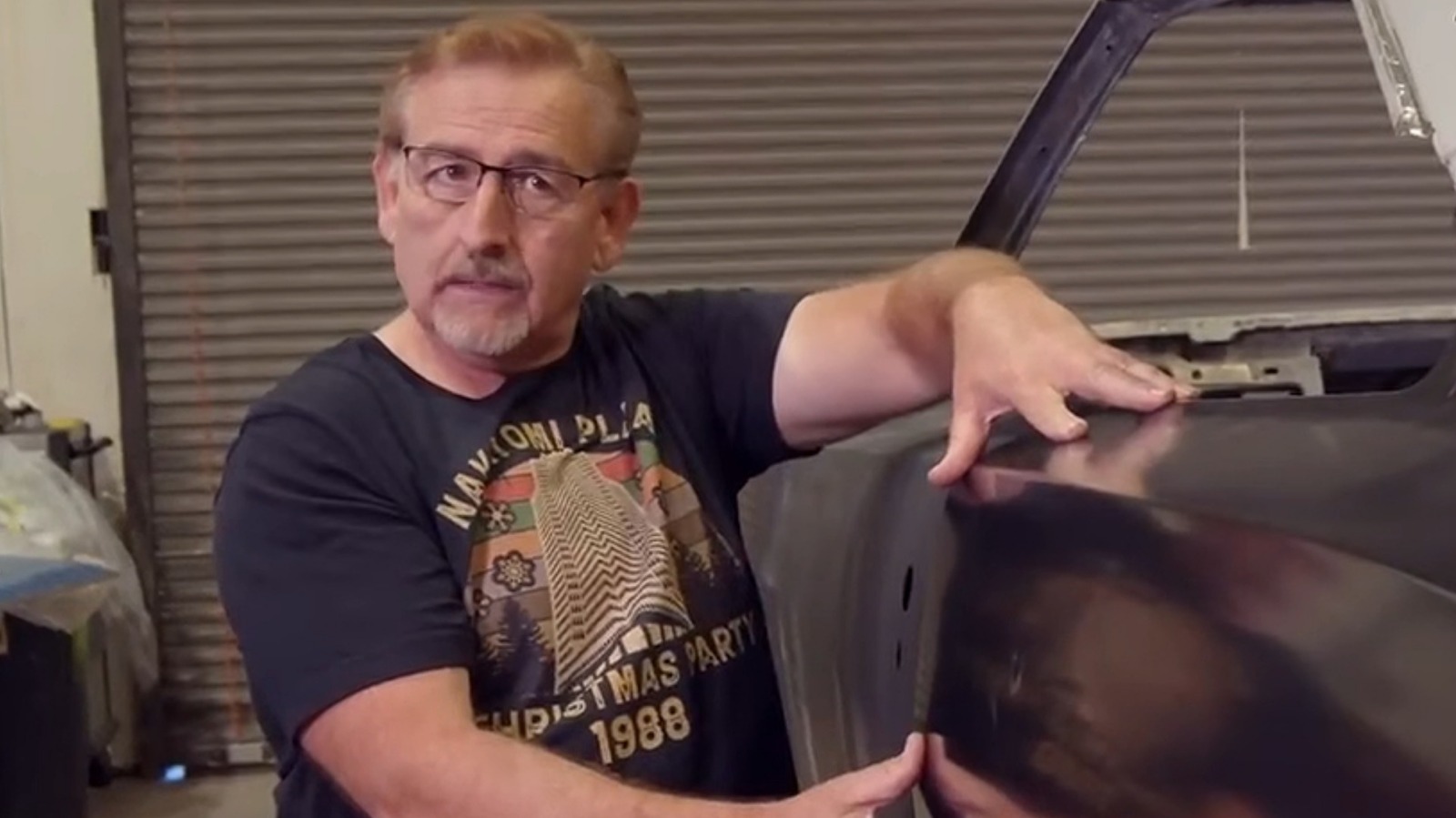
To the average person, an absolutely demolished vehicle will look like a complete lost cause fit only for the scrap heap. To some, though, like those at the forefront of the long-running reality series “Graveyard Carz,” there’s an opportunity for redemption in these seemingly wrecked hunks of junk. The series launched in 2012 and as of publication has seen a staggering 21 seasons. In producing well beyond 200 episodes, viewers have seen some remarkable restorations and more, but there’s just as much to be intrigued by when it comes to all that has gone on while the cameras were off.
Yes, “Graveyard Carz” is a series jam-packed with memorable moments. Who could forget the Season 8 reveal of the screen-used Dodge Charger General Lee from 2005’s “The Dukes of Hazzard,” which took multiple episodes and seasons to revive? Or, the remarkable Season 12 1958 Plymouth Belvedere-to-Fury conversion to honor the ’58 Plymouth Fury from the 1983 big-screen classic, “Christine”? These are landmark moments for the series, but let’s not forget the gaps between them. There’s a lot that the “Graveyard Carz” camera crew didn’t show directly, but has since made its way into the public consciousness.
Throughout its over a dozen seasons on the air, “Graveyard Carz” has shown a lot. What it hasn’t shown us, though, is just as worth talking about.
The Phantom Cuda rises again
To kick off the run of “Graveyard Carz,” series creator and face of the program Mark Worman put a wrecked 1971 Plymouth ‘Cuda — not to be mistaken for the Barracuda — front and center. Dubbed “The Phantom ‘Cuda,” this ride and its story of flying off the road during a high-speed race and ending up demolished supported the show’s pilot episode. To add some theatrics to the restoration project, Worman and his crew attempted to produce a quick clip of the ‘Cuda rising from its grave plot, symbolizing its eventual resurrection. On paper, this is a seemingly simple shot that could add some visual flair to the burgeoning TV show. Unfortunately, the idea turned out to be one challenge after another for the “Graveyard Carz” team.
First off, it took four hours to dig the hole, which was only accomplished with a backhoe doing most of the work. At 18 feet long, 6 feet deep, and 8 feet wide, it appeared the perfect size to bring the wrecked ‘Cuda in and cover it with dirt for its big resurgence. The issue came when the car needed to be pulled out, with the added weight of the dirt proving too much for even heavy machinery to pull it out. At one point, the attempt resulted in a huge chunk of the ‘Cuda being ripped out. Ultimately, the ‘Cuda needed a set of metal ski-like supports placed underneath, giving the machinery something to grab onto to pull it out of the grave as intended.
The nuances of sound capture on Graveyard Carz
As anyone who has spent any time around muscle cars can tell you, while they’re not among some of the loudest cars ever made, they’re never quiet. The same goes for the work put into restoring them, thus making “Graveyard Carz” a rather noisy series to film. According to the show’s sound engineer Gavin Cunningham, the nature of the program can present some serious challenges. Speaking to Audio-TechnicaCunningham shared that the Welby’s Car Care garage is no mere television set. That means audio levels can fluctuate drastically, random audio sources from tools to air compressors to radios are plentiful, and there’s only so much the audio team can do to keep the noise level TV-suitable.
With that said, “Graveyard Carz” is no amateur production. Cunningham knows his audio technology, so he acclimates to the situation by using the right microphone types and the correct number of them. “Most of our shooting is very run-and-gun, so I use an 8-channel field recorder with wireless lavalier mics on the cast to capture the dialogue,” he shared, adding that for things like burnouts and engine revs, shotgun microphones and other supporting mics are crucial to maintain that awe-inspiring quality that classic car sounds evoke in person. It’s not something covered extensively on the show, but it is a crucial element to making “Graveyard Carz” such an attention-grabbing watch.
The real dangers of working on cars
There are some serious highs and lows throughout “Graveyard Carz.” For every successful restoration that leaves audiences floored, there are an equal number of mishaps, mistakes, and not-so-pleasant surprises along the way that can extend a project’s timeline. From episode to episode, some of these flubs get some time on screen, but given the chaotic nature of car repair, surely there are those that have wound up on the cutting room floor. In that vein, time isn’t always given to explaining just how risky and unpredictable the garage can be, and what can happen to those caught unawares, even in a reality TV environment.
Mark Worman went through one such incident in a behind-the-scenes “Graveyard Carz” clip posted to Facebook involving an engine test. Several cast members stood close by, when suddenly a hose clamp failed on the radiator, resulting in dangerously hot water shooting across the shop. Worman explained that while he wasn’t hit by the heated plume, fellow “Graveyard Carz” staple Brian Hilkey was unfortunately burned by the sudden splash. It wasn’t anything too serious, at least as not as serious as it could have been had he stood directly in front, but it just goes to show that just because you don’t see a mishap in an episode of “Graveyard Carz” doesn’t mean it didn’t happen — and give the crew an understandable fright at best, or physical scars at worst.
Creative and professional shake-ups
Even though it’s a reality show, “Graveyard Carz” is a heavily edited and produced television product at the end of the day. Looking purely at what the cameras capture from episode to episode, at most audiences are offered mere glimpses into the decision-making behind the scenes, seeing only who and what the creators want them to. As it happens, matters of the cast and the general presentation of the show are very much debated and changed as deemed necessary. This has been the case from the very beginning, as evidenced by an interview with Racing Junk where Mark Worman pulled back the curtain on cast and creative shake-ups during the program’s early days.
Speaking to the departure of cast members Josh Rose and Darren Kirkpatrick in the midst of Season 4, Worman claimed it was a matter of clashing personalities, both in front of and behind the camera. “None of the arguing you saw on the show was a shtick. It was very real bickering and daily negativity,” he said, hopeful the cast changes would improve morale in the garage. He also spoke to the series’ creative focus, putting heavier emphasis on the cars themselves — calling it a more “carcentric” show — to keep viewers engaged. Worman revealed he previously studied other successful reality shows in hope of figuring out the game-winning formula for “Graveyard Carz.” To think, audiences never see this legwork, only the end result in front of the camera.
The Graveyard Carz crew out and about
Throughout “Graveyard Carz,” viewers get a pretty good idea of what the cast of the show is up to at the Welby’s Car Care garage. At the same time, there’s a lot of “Graveyard Carz”-related activity that camera crews don’t always keep an eye on, like the team’s activity in the wider automotive world. On a long-running TV series, Mark Worman and the rest of the cast were bound to become celebrities to some level. In doing so, they often make their way to public appearances to meet their fans, while also keeping an eye out for incredible handmade cars, staples of the classic car world, and even unorthodox pieces that wouldn’t normally get their own episodes or even segments.
A fine example of this multitasking came during an outing at the Shelton, Washington-based Cruise at the Creek car show. The “Graveyard Carz” crew has attended for multiple years, looking around at the many classic cars on display while mingling with longtime fans of the show and newer watchers alike, taking no shortage of photos and signing countless autographs. Along the way, they even get to take in some unusual sights, like a 1962 Pontiac that was converted decades ago into a makeshift local-use ambulance. It’s a side of the series and the people behind it that rarely takes precedent on the program, where vehicle rehabilitation tends to take priority.