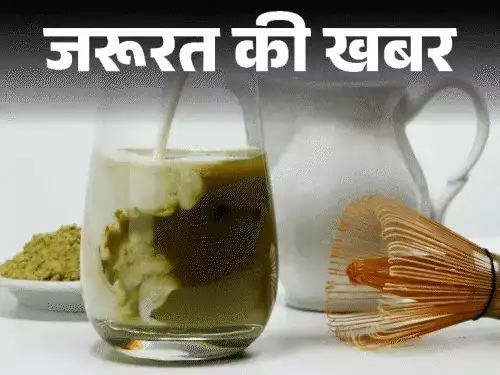
The growing popularity of matcha
A few years ago, matcha was known only as a green powder, but now it has become a trend on café menus and social media. It is being offered as an iced latte and is being experimented with flavors like strawberry, mango, and coconut. Its popularity has increased so much that along with drinking it in cafes, people are also searching for ways to make it at home.
Increase in search trends
According to the search trends released by Google India in September 2026, searches for 'how to make matcha' have increased by 1300 percent. Similarly, searches for 'matcha health' have increased by 1000 percent and searches for 'matcha protein' have increased by 2500 percent. This shows that matcha is no longer just a social media drink, but people are also interested in knowing about its health benefits and preparation methods.
What is matcha?
Matcha is a traditional Japanese green tea, made from specially grown tea leaves. It is protected from sunlight before harvesting, then steamed, dried and ground into a fine powder. Unlike regular green tea, matcha powder is consumed directly by mixing it with water or milk, which also allows fine particles of the tea leaves to enter the body. It has been used in traditional tea ceremonies in Japan for centuries.
Contribution of social media and café
Social media has played a significant role in the popularity of matcha. Its bright green color and attractive presentation make it ideal for Instagram Reels and food videos. Cafés are now offering it in different flavors, such as Iced Matcha Latte, Mango Matcha, and Strawberry Matcha. In many places it is also being used in cakes, pastries, and ice cream. According to a report, the matcha market size in India was estimated to be around $45.7 million in 2025, and it is likely to reach $96.4 million by 2033.
Is matcha better than coffee?
Matcha contains caffeine, so it cannot be considered completely caffeine-free. It also contains an amino acid called L-theanine, which can help with alertness and concentration after drinking. However, it is wrong to consider it as a cure for any disease or a magical solution for weight loss. The choice between matcha and coffee depends on the individual's preference and sensitivity to caffeine.
practice of making matcha at home
Now the craze of matcha is moving from cafes to people's kitchens as well. According to Google data, there has been a surge in searches for methods of making matcha and the equipment needed to whip it. To make it, matcha powder is mixed with hot water and mixed well, then other ingredients can be added as per taste.
The rising popularity of ube and hojicha
Along with matcha, other Japanese flavors like ube and hojicha are also becoming popular in India. Ube is a purple tuber used in drinks and desserts, while hojicha is a roasted green tea that has a slightly nutty flavor. Overall, Matcha's journey has started from a traditional Japanese tea and has reached the cafes and homes of India.