Ola Electric’s Revenue Dips In Q2
Ola Electric’s Q2 FY27 performance told a tale of two extremes. While revenues continued to decline and cash burn persisted, aggressive cost discipline helped narrow some of the losses. With supply chain woes worsening, did Ola Electric pay the price for its past mistakes in Q2?
Here is a quick look at Ola Electric’s Q2 FY27 numbers:
- Operating revenue tanked 39% YoY to ₹421 Cr
- Consolidated net loss narrowed 13% YoY to ₹362 Cr
- Total expenses declined 28% YoY to ₹639 Cr
- Operating EBITDA loss rose 7% YoY to ₹218 Cr, while gross margin tanked 100 bps YoY to 29.9%
Supply Woes Bite: The EV maker’s Q2 performance was defined by supply chain constraints, with component and charger bottlenecks restricting vehicle output and triggering a sharp sales decline. Despite weaker dispatches and rising commodity prices, aggressive cost reductions helped narrow net losses. That said, the management now plans to focus on ramping up supply chain and expects the output to improve to 25,000 in December
The Dealer-Led Pivot: The quarter also saw the EV maker halt orders from company-owned stores and pivoted towards the traditional dealer-led network. By transferring inventory and financing to external partners, Ola Electric aims to trim expenses and streamline working capital cycles. While the initial dealer payouts are expected to compress near-term margins, the company expects improvements in margins as retail velocity stabilises across the new outlets.
The Cash Question: All said and done, Ola Electric continues to report negative free cash flow during the quarter. While the company said that the gap was largely due to capex at the Gigafactory, it claims to have bolstered its cash reserves through fundraises and pared down legacy borrowings. It also expects changes to India’s GST refund mechanism to shorten refund cycles and free up working capital.


With much on its plate, here is how Ola Electric fared on the financial front in Q2…
From The Editor’s Desk
🔲 NVIDIA CEO Quits
- Jensen Huang has resigned as the chief executive officer of the chipmaker, bringing the curtains down on his 33-year old tenure as the head of the company that he cofounded in 1993.
- This follows revelations that he had two extramarital affairs, one of which involved a woman accused of spying for China.
- According to the company’s board, Huang had stepped down as president, CEO and board member with immediate effect. Meanwhile, CFO Colette Kress will take over as the interim CEO of the company while the board searches for a new successor.
💰 PlatinumRx Eyes $32 Mn
- The online pharmacy startup is in talks to raise over ₹300 Cr in a round, which will likely be led by Belgium-based investment giant Sofina Ventures. The proposed transaction is expected to value the Bengaluru-based startup somewhere in the range of $150-200 Mn.
- Founded in 2023, PlatinumRx operates an epharmacy that offers affordable alternatives to prescribed medicines. The startup, which claims to have served over 10 Lakh users to date, previously raised $6 Mn in its Series A round last year.
- The development comes amid continued investor interest in specialised healthcare and pharmacy platforms. This is being driven by a combination of digital adoption, convenience and differentiated models around affordability, assortment and access.
🤖 OpenAI Deepens India Push
- The ChatGPT maker has introduced local inference and data processing for its APIs in India. Initially available only for the GPT-6 Luna model, the service will enable API request processing and the model computation within India.
- With this, OpenAI could be looking to leverage data residency as a key lever to scale enterprise deployments. This also makes India the third country globally, after Australia and Japan, where OpenAI has introduced API inference residency.
- Separately, OpenAI has also launched a new beta offering to enable businesses to claim and manage their profiles on ChatGPT. It also allows merchants to add product feeds and access insights into how users discover and engage with them on the chatbot.
📱 The New UPI Incentive Scheme
- The National Payments Corporation of India has introduced a new initiative, called the UPI Vyapaar Saksham Scheme, to offer incentives to banks and merchants for deploying QR codes and soundboxes to further drive transaction growth.
- The scheme will be funded through a portion of the merchant discount rate earned by banks and other UPI ecosystem participants. The scheme will run for a period of three years from the implementation of UPI MDR, which is yet to be notified.
- Acquiring banks will receive ₹300 for every QR code and ₹750 for every soundbox deployed at an eligible new small merchant. Financial institutions will also be rewarded for growing UPI transaction volumes among its existing and new merchant cohorts.
📊 Turtlemint’s Mixed Q2 Show
- The insurtech company managed to slash its net loss by 67% YoY to ₹25.8 Cr in Q2 FY27 on the back of operating revenue rising 35% YoY to ₹342.2 Cr. However, expenses continued to pinch, rising 25% YoY to ₹375.2 Cr in the quarter under review.
- On the operational front, platform premium zoomed 55% YoY to ₹1,214 Cr in Q2 FY27. The company also claimed that it added 69,000 new digital partners in H1 FY27.
- On IRDAI’s draft framework that proposes lower commissions for agents, Turtlemint declined to share FY28 stress-case numbers and said it will do so once the final rules are out. However, it expects service EBITDA to hold flat in absolute terms next year.
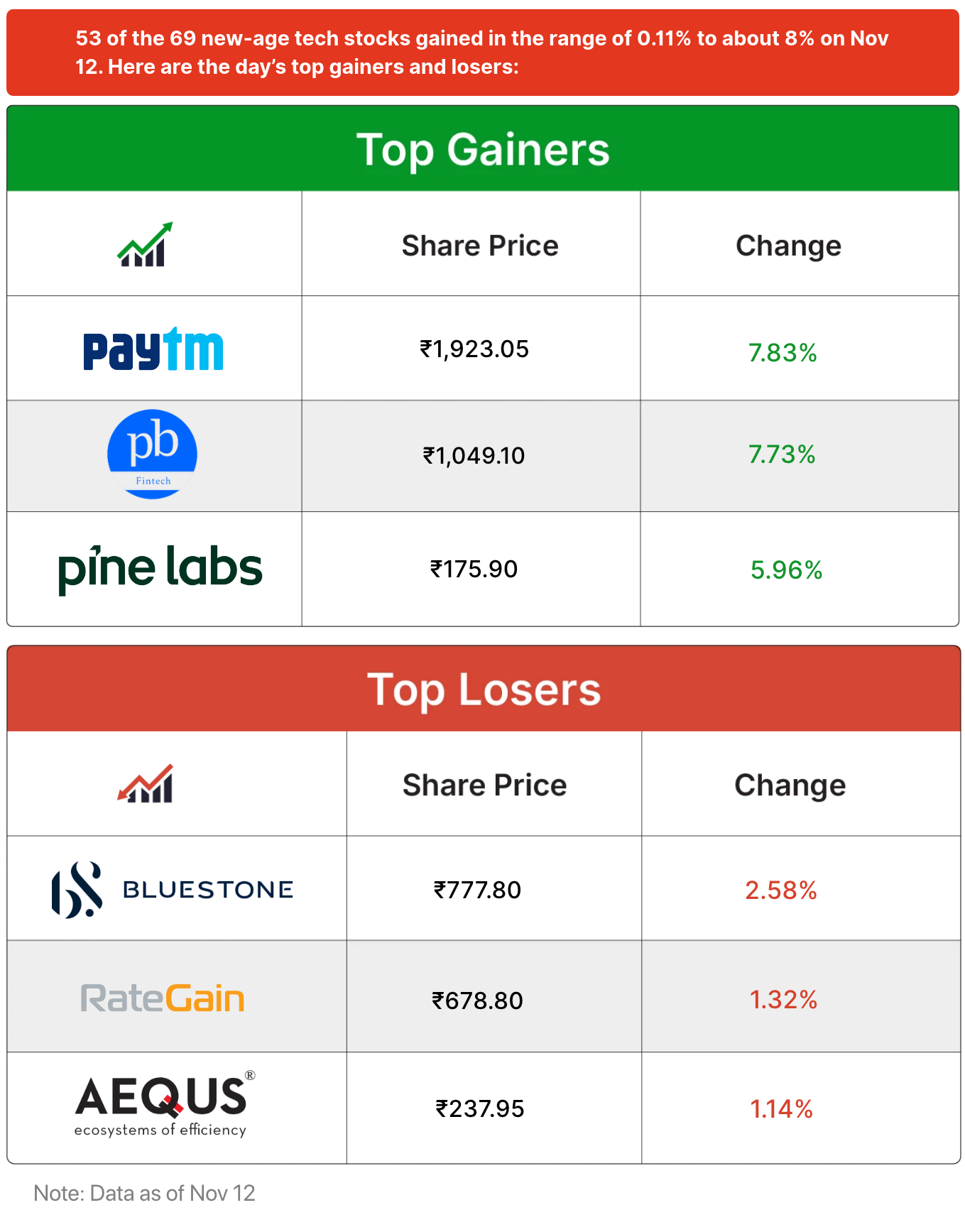
Inc42 Markets
Inc42 Startup Spotlight
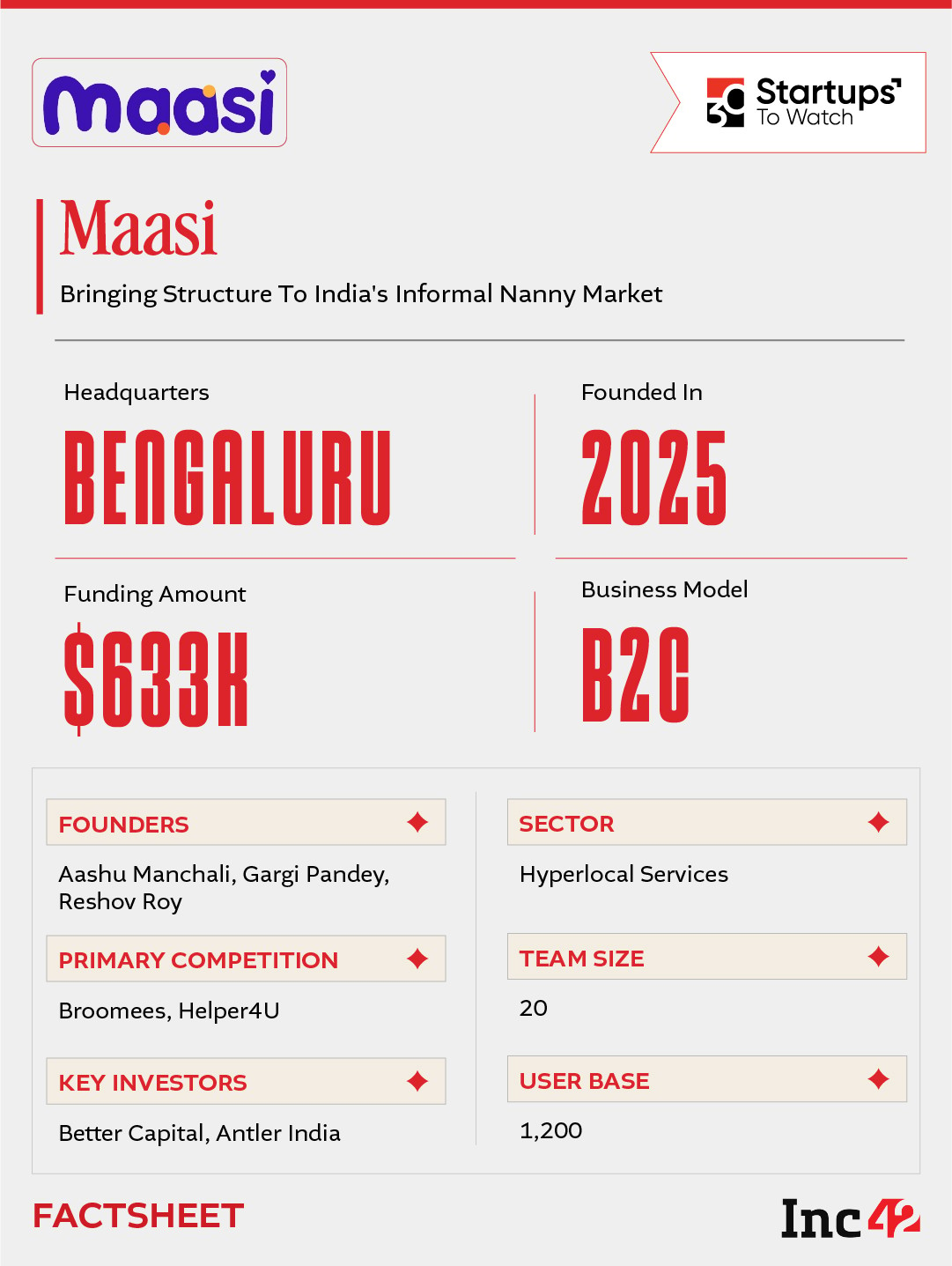
Can Maasi Take The Guesswork Out Of Hiring A Nanny?
For working parents, finding a nanny often means relying on neighbourhood referrals and WhatsApp groups. This leaves many with little clarity on a caregiver’s training, reliability and availability. Maasi wants to turn this informal market into a managed childcare service.
Maasi’s Caregiver Network: Founded in 2025, Maasi connects families with verified, trained caregivers for in-home childcare. Parents can book on-demand nannies starting at ₹199 an hour or choose monthly subscriptions starting at ₹5,999.
Trained Nannies For Kids: Maasi claims that every caregiver onboarded on its platform undergoes a 16-point psychometric assessment and a free training programme, formulated by pre-school directors and nurses. The startup also offers English-speaking governesses, which are trained in screen-free childcare activities.
Growing Traction: Maasi claims to have so far served over 1,200 parents through a network of 500-plus caregivers. Its October 2026 public launch drew a waitlist of over 4,000 parents within five days. Going forward, the startup plans to focus on caregiver recruitment, enhancing its tech stack and expansion in Bengaluru.
Its next challenge will be scaling quality and supply without diluting the trust it promises parents. So, can Maasi bring accountable childcare at the fingertips of parents?
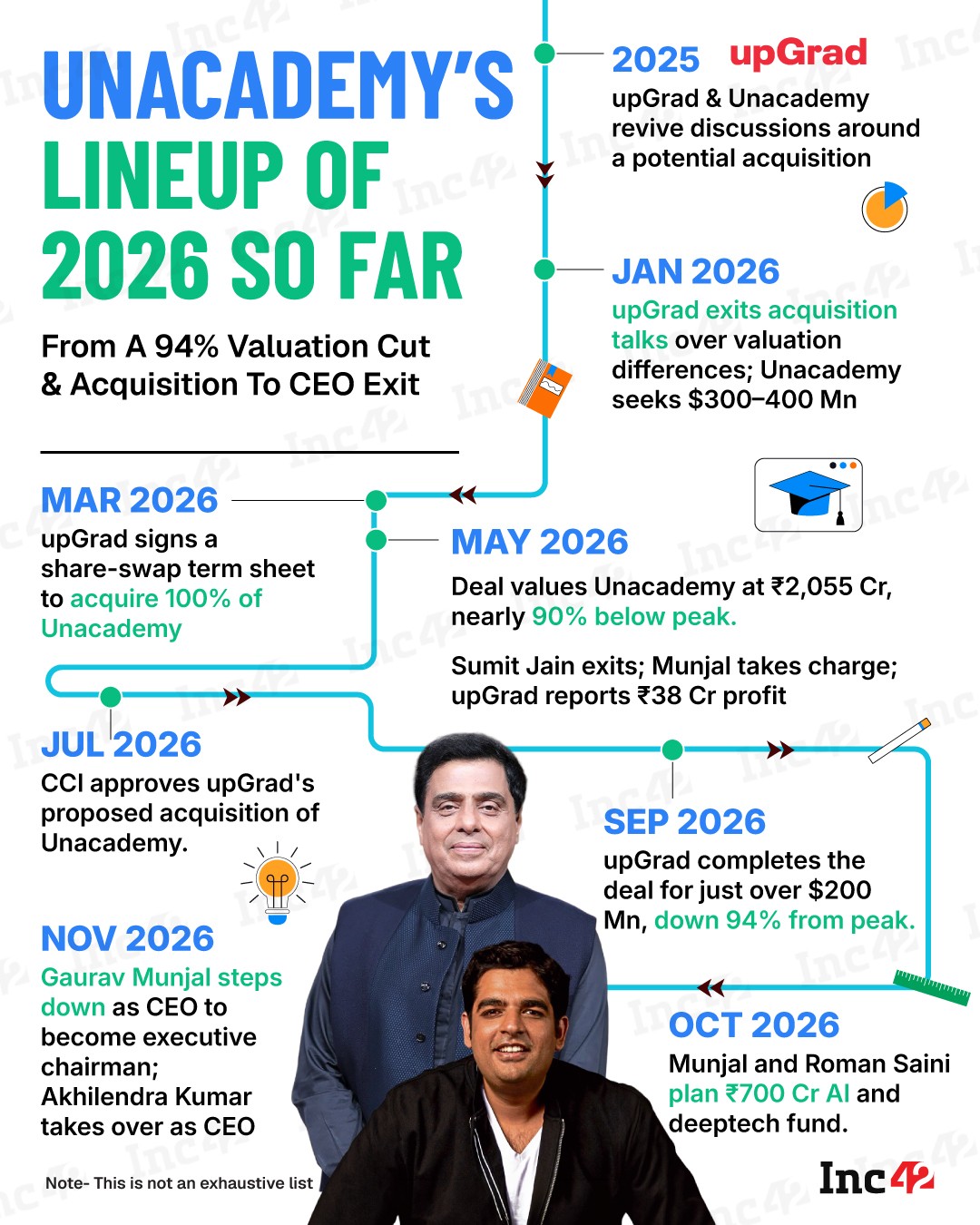
Infographic Of The Day
Gaurav Munjal is stepping down as Unacademy’s CEO. But this is not the first time that the edtech platform has grabbed news headlines this year…