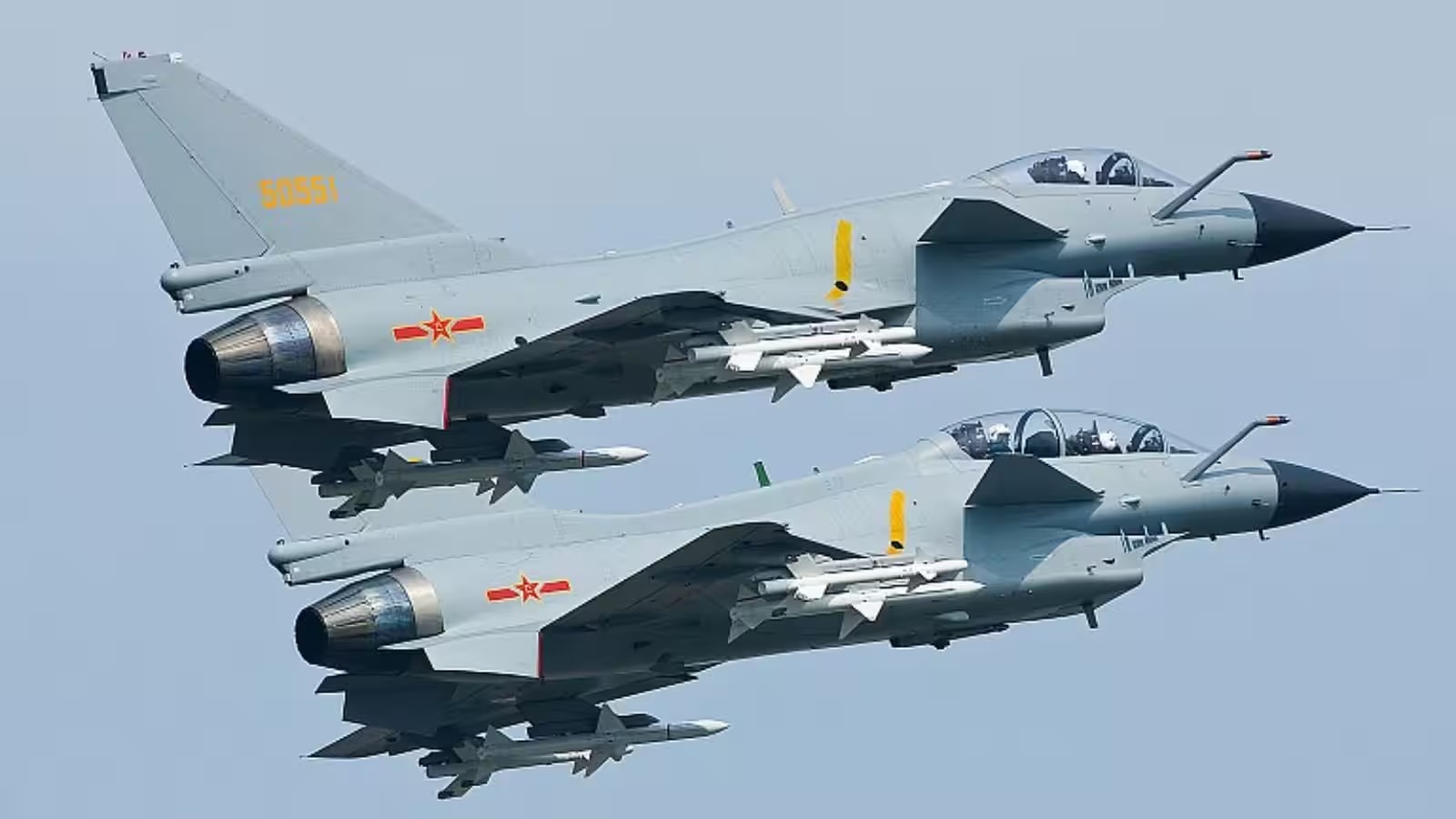
Diplomatic and military equations in the South Asian region seem to be changing very rapidly. According to recent defense developments, Bangladesh is moving fast towards purchasing China-made multi-role fighter aircraft J-10C to strengthen its air force. According to reports, the Bangladesh Air Force (BFA) is planning to induct 20 new J-10C 'Vigorous Dragon' fighter jets into its fleet. This possible deal has not only attracted the attention of security analysts of the Indian subcontinent, but there is also special enthusiasm about it in the neighboring country Pakistan. What is the complete background of the new defense deal between Bangladesh and China? Bangladesh has been working on its 'Force Goal 2030' plan for a long time to modernize its three armies. Under this defense strategy, Bangladesh Air Force wants to replace its outdated Soviet and Chinese origin jets with state-of-the-art multi-role fighter jets. China, which has been Dhaka's largest military equipment supplier, has offered its modern 4.5 generation J-10C aircraft to meet this need. If the deal is finalized, the Bangladesh Air Force for the first time will get advanced fighter aircraft capable of long-range precision strikes and firing BVR (Beyond Visual Range) missiles. Technical capabilities of Chinese J-10C fighter jet and comparison with Indian Rafale China's J-10C is a single-engine, multi-role 4.5 generation fighter aircraft, designed for all-weather operations. It is equipped with Active Electronically Scanned Array (AESA) radar and advanced avionics. This aircraft is capable of carrying China's deadly PL-15 BVR air-to-air missile. The J-10C is often compared among military experts to the French 4.5 generation Rafale jet of the Indian Air Force. Although Rafale has technological superiority like twin-engine protection, advanced Spectra electronic warfare suite and Meteor missile, the presence of J-10C makes the regional air defense landscape significantly more competitive. Why is there a wave of happiness in Pakistan due to this step of Bangladesh? Pakistan has already purchased J-10CE fighter jet from China and included it in its air force and became the first international customer of this aircraft. Bangladesh's adoption of the Chinese J-10C is being seen as a major diplomatic victory in Islamabad's defense circles. Pakistan and China have strong defense ties, and if Bangladesh also adopts similar Chinese military systems, it could increase technological parity and logistics synergy at the military level between the three countries. This is why Pakistani defense experts are seeing this development as a breach in India's sphere of influence. Indian Security Establishment and Its Impact on the Regional Defense Balance Being a neighboring country to India, Bangladesh's defense architecture is directly linked to New Delhi's security perspective. The Indian Air Force (IAF) is already facing dual front challenges on its eastern border and northern borders. Although India and Bangladesh have strong political and economic ties, the induction of advanced Chinese weapons into the Bangladeshi fleet is a matter of concern for Indian defense strategists. India is continuously strengthening its Eastern Air Command with advanced Rafale, Sukhoi Su-30MKI and indigenous Tejas Mk-1A jets so that any possible imbalance can be balanced in time. Chinese Defense Exports to South Asia and the Future Geopolitical Outlook China's defense exports to South Asian countries are not just a trade deal, but part of its broader geopolitical influence. China is deepening its presence in the region by providing advanced military platforms to countries like Pakistan, Myanmar and now Bangladesh. Bangladesh's acquisition of the J-10C will not just be limited to enhancing the air force's capability, but will also lead to Dhaka's long-term dependence on Beijing for maintenance, training and spare parts, which could reshape regional politics in the coming decades.