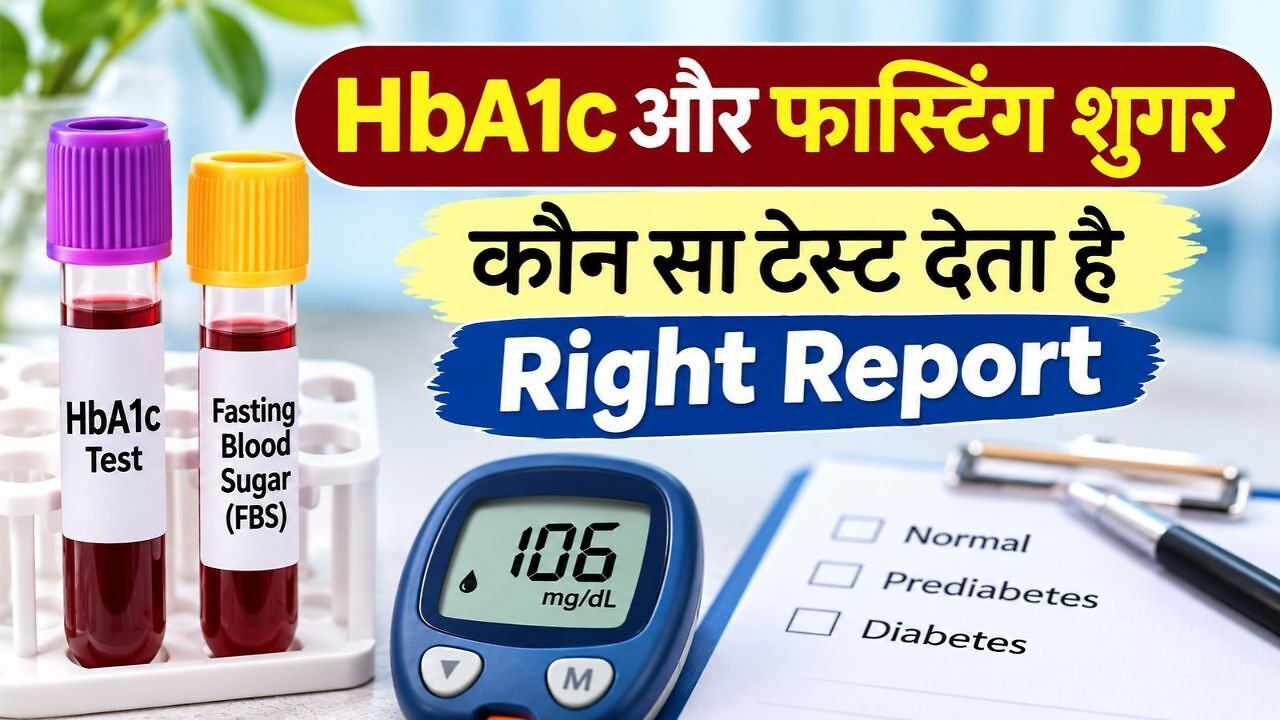
Diabetes is fast becoming a serious health challenge in India, but people are often confused whether the Fasting Blood Sugar (FBS) test done on an empty stomach in the morning or the HbA1c (Glycated Hemoglobin) test is better to accurately detect high blood sugar in the body. According to medical experts and diabetologists, both these tests are not competitive but complementary to each other, as both measure the glucose levels in the body on different time scales. While the fasting test only reflects the immediate sugar level of that particular morning, the HbA1c test gives an accurate account of the average blood sugar of the last 2 to 3 months. Therefore, doctors consider HbA1c test to be more reliable and comprehensive in accurately identifying diabetes and pre-diabetes.
Fasting blood sugar (FBS), taken in the morning on an empty stomach, acts like a 'snapshot'. This tells you what is the amount of glucose in your blood after not eating anything for 8 to 12 hours. One limitation is that if you have eaten a heavy or sugary meal the night before the test, have not had a good night's sleep, or are under mental stress, the morning reading may appear temporarily elevated. In contrast, the HbA1c test measures the percentage of glucose stuck to the hemoglobin present in red blood cells. Since red blood cells have a lifespan of approximately 90 to 120 days, this test shows an average record over the past three months—this report cannot be changed whether or not you abstained the day before the test.
| Test Parameter | Normal level | Pre-Diabetes | Diabetes |
| Fasting Blood Sugar (FBS – on an empty stomach) | 70 to 99 mg/dL | 100 to 125 mg/dL | 126 mg/dL or more |
| Sugar after 2 hours of eating (PPBS) | less than 140 mg/dL | 140 to 199 mg/dL | 200 mg/dL or more |
| HbA1c test (3 month average) | less than 5.7% | Between 5.7% to 6.4% | 6.5% or more |
According to health experts, if a person is experiencing initial symptoms like frequent thirst, excessive urination, sudden weight loss or extreme fatigue, then fasting sugar (FBS) and postprandial sugar (PPBS) can be tested immediately as it is cost-effective and its report is available within a few hours. At the same time, if there is a history of diabetes in your family, you are above 35 years of age, you are overweight or you are already in the category of pre-diabetes, then HbA1c test should be done at least once or twice a year. Apart from this, for patients who are already taking medicines for diabetes, getting HbA1c done every 3 to 6 months is considered the 'gold standard' to check the effect of their treatment and diet. Keep in mind that HbA1c readings may be affected in case of severe anemia or recent blood donation/blood transfusion, in such cases doctors recommend fasting sugar and glucometer monitoring.
The rules for giving samples for both the tests are completely different. To get Fasting Blood Sugar (FBS) done, fasting for at least 8 to 10 hours (maximum 12 hours) is mandatory—during this time you can drink only plain water, while tea, coffee, milk, juice or any kind of snack is completely prohibited. In contrast, the HbA1c test does not require an empty stomach; You can give a blood sample from a vein in your arm at any time of the day, before or after eating. For an accurate diagnosis, doctors often advise first-time test takers to get both fasting blood sugar and HbA1c measured in the same morning, so that both immediate and long-term conditions can be clearly matched. (Note: This article is for general health information only; please consult a qualified physician for any investigation or treatment.)