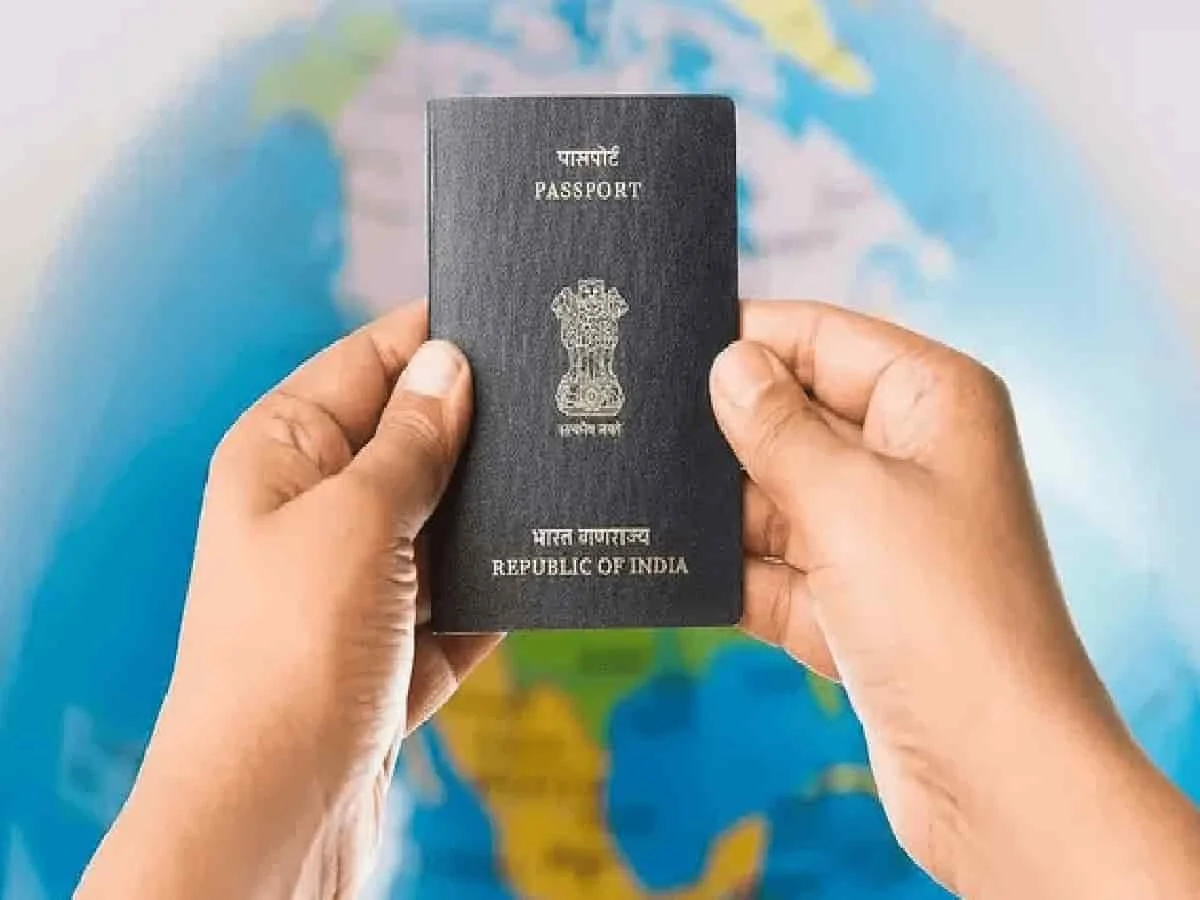
Indian nationals continue to stand at the forefront of permanent global migration, ranking number one worldwide in acquiring citizenship across the world’s wealthiest economies. According to newly released figures in the Organisation for Economic Co-operation and Development’s (OECD) flagship International Migration Outlook 2026 report, an estimated 9,25,737 (approximately 9.25 lakh) Indians obtained citizenship in OECD member nations between 2020 and 2024. That five-year milestone represents a sharp 41.4 percent jump over the 6,54,821 Indians naturalized during the preceding 2015–2019 cycle, placing India far ahead of second-ranked Mexico (5.90 lakh) and third-ranked Syria (5.88 lakh).
Across the entire 38-nation OECD bloc—which encompasses major developed destinations including the United States, Canada, the United Kingdom, Australia, Germany, France, Japan, and South Korea—roughly 87 lakh (8.7 million) people were granted new citizenship between 2020 and 2024. Indian immigrants alone accounted for more than 10 percent of all naturalizations across the developed world. From tech corridors in Bengaluru, Hyderabad, Pune, and Chennai to aspirational households across New Delhi, Chandigarh, Ahmedabad, Kochi, and Lucknow, the data underscores a profound shift from temporary overseas work and study toward permanent settlement.
2024 Naturalization Breakdown: Canada, the US, and Australia Lead Intake
Year-on-year statistics shared alongside the International Migration Outlook 2026 show that naturalization momentum remained remarkably strong in 2024with 2,30,337 (over 2.30 lakh) Indians taking the oath of citizenship in OECD nations—edging past the 2,24,630 recorded in 2023. Three English-speaking destinations absorbed the overwhelming majority of newly naturalized Indian citizens in 2024:
Canada: 87,320 Indians acquired Canadian citizenship in 2024 (up from 78,487 in 2023). Over the full 2020–2024 window, 2.61 lakh Indians became Canadian citizens—an extraordinary 150 percent surge compared to the prior five-year period, fueled by large cohorts of earlier permanent residents completing residency requirements.
United States: 48,820 Indians naturalized as American citizens in 2024, sustaining the US’s position as the second-largest destination for permanent Indian settlement.
Australia: 28,969 Indians received Australian citizenship in 2024, closely followed by significant naturalization numbers in the United Kingdom and continental European economies.
Top Source Countries of New OECD Citizens (2020–2024)
Comparative five-year naturalization data compiled by the OECD highlights India’s wide margin over every other country of origin:
| Country of Former Nationality | New OECD Citizens (2015–2019) | New OECD Citizens (2020–2024) | 5-Year Change |
|---|---|---|---|
| India | 6,54,821 | 9,25,737 | +41.4% |
| Mexico | 6,09,115 | 5,90,248 | -3.1% |
| Syria | 98,463 | 5,88,219 | +497.4% |
| Morocco | 4,24,538 | 5,07,951 | +19.6% |
| Philippines | 4,33,602 | 5,03,679 | +16.2% |
| China | 3,89,316 | 3,42,808 | -11.9% |
New Migration Flows Slow Down, Yet Indian Talent Anchors STEM and Innovation
While citizenship acquisitions reflect immigrants who moved abroad years earlier and are now putting down permanent roots, fresh annual migration inflows to OECD nations have started moderating amid tighter visa rules, student caps, and stricter skilled-worker thresholds in countries like Canada, the UK, and Australia. India remained the largest origin country for new permanent migrants to the OECD in 2024even as annual inflows declined by roughly 19 percent—from 6.07 lakh in 2023 to 4.94 lakh in 2024. Meanwhile, the gap between Indian and Chinese international students across OECD universities narrowed sharply, with 8.3 lakh Indian students enrolled compared to 8.5 lakh Chinese students.
Addressing the economic imperative behind global talent mobility, OECD Secretary-General Mathias Cormann emphasized that immigrants now account for 16 percent of total employment across OECD member economies—and contributed at least half of all employment growth in over half of member states between 2014 and 2024. “With ageing populations and slower productivity growth, countries cannot afford to waste the skills migrants bring,” Cormann noted, calling for smoother credential recognition and stronger support for immigrant entrepreneurs. The report further spotlighted that one in five STEM graduates across OECD nations is foreign-born, with Indian professionals playing an outsized role in scientific research, healthcare, engineering, and startup creation. Even as tighter immigration policies temper new student and temporary worker arrivals over the coming years, analysts note that the massive pool of Indians already holding permanent residency in North America, Europe, and Oceania ensures India will remain at the top of global citizenship rankings for years to come.