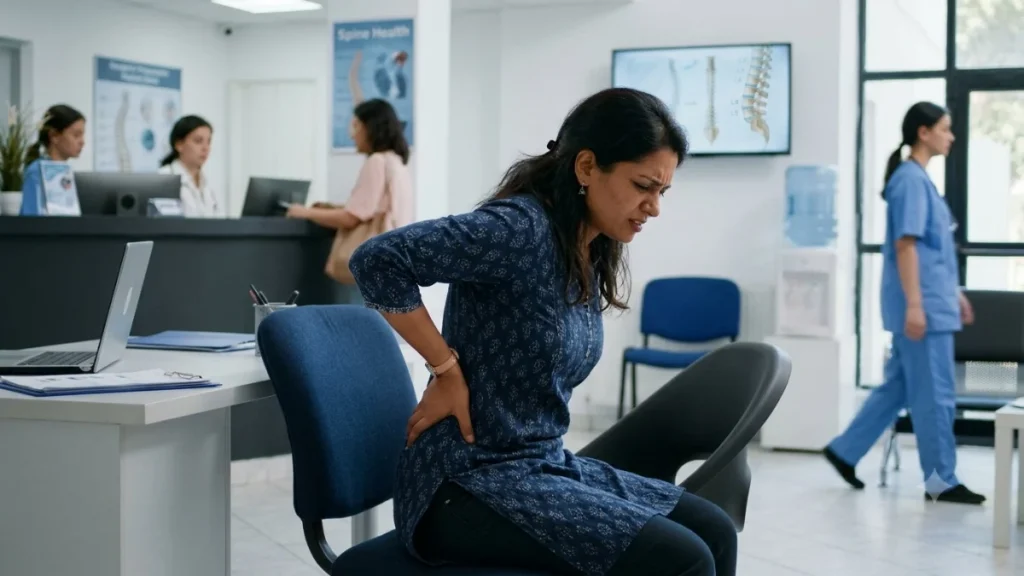
It may seem common to have back pain after a long day's work. Especially this problem is seen more in those women, who have to work sitting for a long time or have to handle the responsibilities of both home and office. However, frequent back pain is not always the result of fatigue or muscle strain. Sometimes, it may also be due to spinal problems, osteoporosis, arthritis or diseases related to women's reproductive system.
It is important to understand the causes of back pain in women, because the treatment for every type of pain is not the same. Instead of suppressing the problem only with the help of balm or painkillers, its real cause should be found out.
1. Wrong posture and working while sitting for a long time
Working continuously sitting in one place for many hours can put pressure on the waist muscles and spine. Especially when a person sits bent over on a chair or does not keep the laptop at the correct height, the problem of pain and stiffness in the lower back can increase.
Sitting in one position for a long time, lack of physical activity and lifting weights in the wrong way can also increase back pain. Therefore, it is important to get up occasionally during work, walk for a while and sit with back support.
2. Osteoporosis and spine fractures
Osteoporosis is a condition in which bones become weak and brittle. Its risk may increase after menopause in women. Due to low bone strength, compression fracture can occur even during normal activities or minor injury to any part of the spine.
In this condition, sudden pain may start in the waist or back. In some cases the pain remains constant. However, osteoporosis or fracture cannot be confirmed based on back pain alone. The doctor may recommend bone density test and other tests as per need.
3. Arthritis problem
Arthritis can also be a cause of back pain. Osteoarthritis in the joints of the spine can cause pain, stiffness and difficulty in walking. Some people feel more stiffness after sitting for a long time or after waking up in the morning.
Changes in joints with increasing age can increase the risk of this problem. However, back pain after menopause in every woman is not a sign of arthritis. To know the exact cause, doctor's advice and necessary tests are necessary.
4. Cramps during periods
Many women experience severe cramps in the lower abdomen during periods. During this time the pain can also reach the waist and thighs. This happens due to contractions in the uterus.
Generally this pain is felt more in the initial days of menstruation. But if there is unbearable pain during periods, daily activities are affected or the pain increases with time, then a gynecologist should be consulted.
5. Back pain during pregnancy
The problem of lower back pain may increase in the second and third trimester of pregnancy. As the size of the uterus increases, the center of gravity of the body starts changing. This changes the way a woman sits and walks.
Additionally, hormonal changes during pregnancy can cause the pelvic ligaments to become loose. Increasing weight and pressure on the abdominal muscles can also cause back pain. If the pain is very severe or is accompanied by fever, burning sensation during urination or bleeding, then a doctor should be contacted immediately.
6. Back labor i.e. severe pain in the waist during delivery.
At the time of delivery, some women feel severe pain in the lower back instead of the stomach. This is called back labour. Many times this happens when the baby's head is downwards in the womb, but his face is towards the mother's stomach. This position is called occiput posterior position.
During this time, the back of the baby's head can put pressure around the mother's spine and tailbone. However, it is not the position of the baby alone that is responsible for back labour. If such pain is felt during delivery, monitoring by the medical team is necessary.
7. Endometriosis can also be the cause of back pain
Endometriosis is a disease related to the reproductive system of women. In this, cells like the inner layer of the uterus start developing outside the uterus. These tissues can usually be found in the ovaries, fallopian tubes, and pelvic area.
This problem can cause severe pain during periods, discomfort in the lower abdomen and back pain. Some women also feel pain during urination or defecation. If there is unbearable pain during periods every month, it should not be ignored as normal cramps.
When should one contact a doctor in case of back pain?
Not every back pain is a sign of a serious illness. In most cases this may be due to muscle strain or other common reasons. But there are some symptoms which can be dangerous to ignore.
- Back pain persists for several weeks or continues to increase.
- You feel more pain at night or do not get relief even after resting.
- Started losing weight without any apparent reason.
- Fever or feeling unwell along with back pain.
- You may feel weakness, tingling or numbness in your legs.
- Control over urination or defecation starts getting affected.
- Feeling numbness around the private parts along with back pain.
Especially in case of sudden loss of control over urination or defecation, increasing weakness in legs or numbness around private parts, emergency medical help should be sought immediately.
What things should be kept in mind to avoid back pain?
To keep the waist healthy, it can be beneficial to change some everyday habits. Avoid sitting in one place for a long time. Take short breaks between work and make a habit of regular walking or exercising as per your physical capacity.
- Provide proper support to the back while sitting.
- Keep the laptop or computer close to eye level.
- Instead of sitting continuously for several hours, take a walk in between.
- When lifting heavy objects, bend your knees instead of your waist.
- Eat a balanced diet and ensure adequate intake of calcium and vitamin D.
- In case of persistent pain, consult a doctor instead of taking medicines on your own.
Remember, the treatment of back pain depends on its actual cause. Therefore, do not ignore frequent pain by considering it as mere fatigue. Getting tested at the right time can help in identifying the problem and providing appropriate treatment.